Login
Login
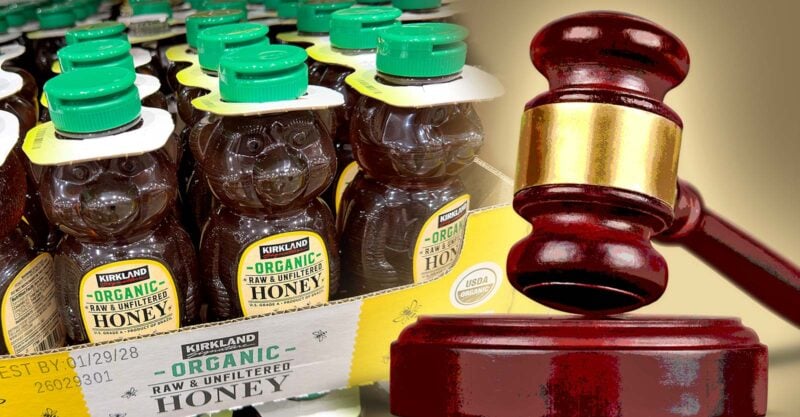


Four major U.S. commercial beekeeping operations are suing the U.S. Department of Agriculture (USDA) for allegedly allowing millions of pounds of imported honey to carry the USDA organic seal through regulatory loopholes unavailable to American producers.
Royal Honey Farm LLC of Washington, Strehlow Bees Inc. and Adee Honey Farms LLC of South Dakota, and Fischer Honey Farm Inc. of Texas filed the complaint today in the U.S. District Court for the Eastern District of Washington.
The producers allege that USDA organic standards make it impossible to mass-produce organic honey in the U.S. At the same time, foreign producers — particularly in Brazil — are allowed to use different, substantially less stringent certification rules, which allow them to bypass USDA standards and mass-produce and export honey to the U.S. that is then stamped with the USDA certified organic label.
This honey is sold to U.S. consumers as “organic” by major distributors, including Costco, without public knowledge that the product likely does not meet U.S. organic standards, the plaintiffs allege.
Rather than seeking monetary damages, the beekeepers are asking the court to stop the alleged “false labeling.” They want the court to order USDA to stop allowing the use of the licensed USDA organic seal on foreign honey labels until the agency brings its certification practices into compliance with federal law.
The beekeepers allege the USDA created multiple loopholes for foreign producers that mislead consumers and push U.S. beekeepers out of the market in violation of the Organic Foods Production Act of 1990.
“US consumers who rely on the USDA organic seal to guarantee honey is produced by bees feeding in an agrichemical-free environment are being defrauded,” Bruce Kaser, an Oregon organic hazelnut farmer and attorney representing the U.S. honey producers who filed the suit, said in a statement.
“We are hoping that this lawsuit awakens the public to the problems,” he told The Defender.


Imported honey dominates market
Approximately 80% of all honey sold in the U.S. is imported, according to the organic watchdog organization OrganicEye. A substantial portion of that honey carries the organic label.
Imported organic honey has significantly altered the U.S. honey market, according to the beekeepers’ lawsuit. They cite figures showing that U.S. beekeepers sold approximately 116 million pounds of honey — both conventional and organic — in 2025, down 14% from the year before. Organic honey imports exceeded 78 million pounds during the same period.
The lawsuit also alleges that roughly 60 million pounds of domestic honey remained unsold in warehouses, with some producers holding as much as three years’ worth of inventory.
Those who did sell honey in spring 2026 sold at a loss, according to the complaint.
Commercial beekeepers must move large numbers of beehives from place to place to pollinate crops and produce honey. Bees fly miles from their hives, and beekeepers can’t control where they forage.
USDA organic standards require bees to forage within a 1.8-mile radius consisting entirely of certified organic farmland or qualifying wildland. That means certified organic honey in the U.S. must come from bees that forage exclusively on certified organic land within a 10-square-mile area.
“That is an impossible standard,” Kaser said, because commercial beekeeping depends on moving hives through landscapes that inevitably include conventional agricultural land.
There are only four certified organic honey operations in the U.S. All are located in Hawaii.
The plaintiffs attribute the downturn in domestic honey sales to what they describe as “cheap, low quality (‘adulterated’) foreign honey imports” produced by companies outside the U.S. that exploit loopholes so they can label their products as “certified organic” even though their products aren’t produced according to USDA organic standards.
Most organic honey imported to the U.S. comes from Brazil. The lawsuit alleges that it is implausible that the 60 million pounds of Brazilian “organic” honey could have been produced by bees with no access to commercial agroindustrial land.
“Based on the number of hives involved and the need to regularly rotate them to new feeding grounds, the reality is quite different — particularly given Brazil’s dominance in worldwide conventional, GMO grain markets,” according to OrganicEye.
Brazilian farmers are not committing fraud, Kaser said — they are using loopholes — created by the USDA — to get certified.
Costco, Whole Foods, Kroger and other major retailers are misleading consumers
In the U.S., the organic certification process includes a site visit, during which a third-party inspector examines a farm to determine if it complies with organic growing practices, which exclude the use of pesticides. The inspection is a key requirement in the U.S. system.
Non-U.S. farmers can instead use “group certification,” a process under which large agricultural organizations receive certification covering multiple individual producers. Kaser said the process was originally intended to ease certification for small farmers in the Global South.
But as demand for organic products has grown, so has reliance on group certification, Kaser said. Today, he said, group certification abroad is often administered by certifiers that review agribusinesses’ agriculture plans rather than inspecting farms directly.
The beekeepers’ lawsuit alleges that Congress never authorized this certification model under the Organic Foods Production Act of 1990.
Another alleged loophole is the U.S.-Canada Organic Equivalency Arrangement, under which the USDA recognizes Canadian organic certification as equivalent to its own. Because Canadian standards are considered equivalent to U.S. standards, honey certified under Canadian rules can also receive the USDA organic seal.
But Canadian standards allow hives to be located near conventional farmland where synthetic fertilizers are used. Canadian standards also apply different rules for pesticide exposure and bee forage.
Canada also allows group certification, and certifying organizations accredited by the Canadian government operate globally, issuing Canadian certification to growers worldwide — who can then use it to obtain the USDA stamp.
According to the lawsuit, these standards are materially different from U.S. law, yet result in honey bearing the USDA organic seal. This creates what they describe as a “hidden certification pathway” that lets producers in Brazil and other countries market honey as USDA organic even though similarly situated U.S. producers cannot.
As a result, the lawsuit alleges, major retailers — including Costco, Walmart — can use what plaintiffs characterize as misleading labeling.
Bottles labeled “Organic Raw Honey” and “Product of Brazil,” bearing the USDA organic seal, communicate to consumers that the honey was produced under USDA organic standards, according to the complaint.
The plaintiffs argue the USDA has effectively created two classes of honey producers: U.S. beekeepers who cannot qualify for organic certification under current standards, and foreign producers who receive more favorable treatment through alternative certification pathways.


This article was funded by critical thinkers like you.
The Defender is 100% reader-supported. No corporate sponsors. No paywalls. Our writers and editors rely on you to fund stories like this that mainstream media won’t write.
U.S. farmers won’t survive if they have to compete against fraud
Mark Kastel, founder of OrganicEye, said the problem extends beyond honey.
“It’s by no means the only case where what we buy in the United States and assume meets the federal standards has been undermined by imports that are skipping the regulatory oversight that U.S. farmers and marketers have to abide by.”
A growing share of organic products sold in the U.S. are imported, Kastel said, including grains fed to chickens that produce “organic” eggs — and producers can use similar loopholes to obtain the USDA label for those products.
That leaves U.S. farmers facing higher costs and more stringent regulations to compete with cheaper imported products that get the same USDA stamp of approval, Kastel said, making it difficult to recruit new farmers into organic growing.
In the last few years, the USDA spent $100 million training new organic farmers. “We recruited and trained these people to fail. If there isn’t a sustainable and secure marketplace and they have to compete against fraud, they’re not going to survive,” Kastel said.
He said the situation is part of a long-standing problem with regulatory capture in the organic industry. Many members of the National Organic Standards Board come from large organic agriculture conglomerates that have an interest in buying cheaper imported goods.
Under the Trump administration, he said, things have gotten worse. The board should have 15 members, but the administration has failed to fill a third of the slots. It has no representative from certifiers.
Update: This article has been updated to clarify that the USDA spent $100 million on training new organic farmers.
Related articles in The Defender
- Organic Industry Watchdog Group Calls on HHS Secretary Kennedy to ‘Save True Meaning’ of Organics
- Texas AG Targets Grocery Stores Over Spraying ‘Undisclosed’ Pesticide on Organic Produce
- Tips for Avoiding Fake Organic Labels — and Buying ‘Real’ Organic
- USDA Must End ‘Don’t Ask, Don’t Tell’ Policy on GMO Vaccines in Organic Livestock, Watchdog Group Says