Login
Login
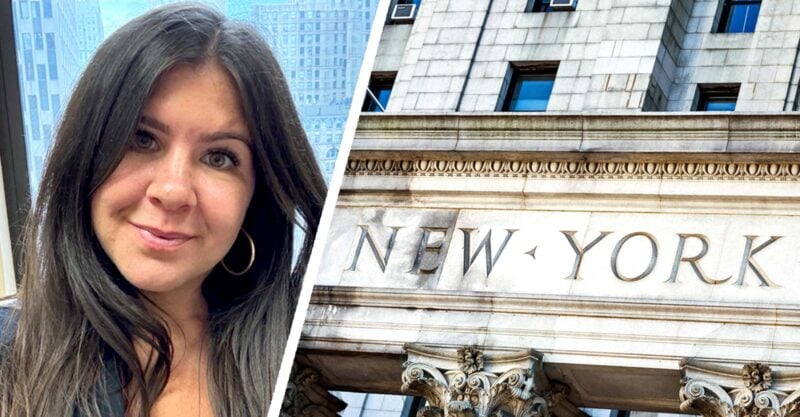


An attorney representing a former New York City sanitation worker who sued the city for denying his request for a religious exemption from the city’s COVID-19 vaccine mandate says a federal judge unjustly sanctioned her.
Christina Martinez is speaking out about a July 21 decision by U.S. District Judge Lewis J. Liman that partially granted New York City’s motion for sanctions against her firm, Martinez & Loiacono, PLLC.
Liman sanctioned Martinez, ruling that the lawsuit she filed on behalf of the sanitation worker included false claims.
Courts typically sanction lawyers when they violate professional rules of conduct, breach court orders, or engage in deceitful or frivolous behavior during litigation.
The case involves Vincent Maiorino, a practicing Roman Catholic and former New York City Department of Sanitation employee, who sued the city in January 2025. Maiorino alleged the city violated his First Amendment right to religious freedom and state and city human rights laws by denying his request for an exemption from the city’s vaccine mandate.
The city moved for sanctions under Rule 11 of the Federal Rules of Civil Procedure, arguing that Maiorino’s second amended complaint contained factual allegations that his attorneys knew were false — specifically, claims that the city had a blanket policy of denying religious accommodations to Catholic employees.
Martinez disputed the city’s characterization of the allegations as knowingly false, saying she “believed the allegations when they were filed” and continues to believe the evidence shows the city used constitutionally discriminatory criteria in evaluating religious accommodation requests.
“Government officials were deciding whether his belief was ‘Catholic enough’ to qualify for protection,” Martinez told The Defender. “That is the constitutional problem at the heart of this case.”
City says it didn’t discriminate against Catholics
In a January court filing, city attorney Brigid Lynn argued that Maiorino’s lawyers possessed sworn deposition testimony from Eric Eichenholtz, the New York City Law Department’s managing attorney, that directly undercut Maiorino’s claims that the city discriminated against Catholics who requested religious exemptions.
Eichenholtz testified in a related case that the city’s review panel evaluated each religious accommodation request individually and had “no automatic disqualifications.”
The city also cited a Department of Sanitation spreadsheet showing that 102 of 358 Catholic employees who sought religious exemptions were approved.
The city believes Maiorino’s attorneys violated Rule 11 because they obtained the testimony and records before filing the amended complaint in November 2025.
The city is seeking attorneys’ fees and costs associated with the sanctions motion. They also want the court to order the attorneys to remove the disputed allegations from the complaint.
Both city attorneys did not respond to requests for comment from The Defender.
Federal Rule of Civil Procedure problematic?
Legal experts believe the Maiorino case is a microcosm of a larger legal debate.
Attorney Sujata Gibson, who was familiar with the case, alleges that Rule 11 has been used against her following the judge’s July 21 ruling via safe harbor notices for cases she had against the city. These notices offer a 21-day period to fix the erroneous paperwork or face sanctions.
Under Rule 11, a lawyer who signs and files something in court promises the judge the legal arguments aren’t frivolous, and that the facts outlined in the filing are actually backed up by evidence. If a lawyer breaks that promise, the judge can require the attorney to pay for the other side’s legal fees.
“The city is now extending this tactic well beyond the particular language at issue in the Maiorino lawsuit,” Gibson said. “In some instances, the city’s asserted basis for sanctions is little more than vague, disputed, or internally contradictory testimony from one of its own defendants.”
Gibson added:
“Rule 11 should not be used to force plaintiffs’ lawyers to rewrite complaints to conform to a defendant’s preferred version of genuinely disputed facts before discovery has occurred. No court has sanctioned me. But the developing pattern is deeply concerning.”
Gibson said she disagrees with the judge’s ruling to sanction Martinez in the Maiorino case.
She referenced Kane v. de Blasio, in which the 2nd U.S. Circuit Court of Appeals ruled that New York City’s COVID-19 vaccine mandate for school staff was constitutional on its face.
However, the court also found that the city’s process for reviewing religious exemption requests was unfair and discriminatory, ordering that the teachers’ specific accommodation requests be reevaluated under a fairer standard.
“That is why I disagree with Judge Liman’s conclusion that a ‘categorical’ policy can have only one conceivable meaning: that not a single Catholic applicant was ever approved,” Gibson said. “Whatever one’s views about the COVID-19 mandates, Rule 11 should not be used to intimidate civil-rights counsel or insulate government conduct from meaningful merits review.”
Judge says Catholics weren’t ‘categorically’ or ‘automatically’ denied exemptions
In his order, Liman agreed with the city on one point: that Maiorino’s repeated claim that Catholics were “categorically” or “automatically” denied exemptions could not be reconciled with the undisputed fact that many Catholic applicants were, in fact, approved.
The judge wrote that it was “objectively unreasonable” for Maiorino’s attorneys to allege a total bar on Catholic applicants once they possessed a spreadsheet documenting more than 100 approvals.
The judge referenced testimony from Eichenholtz, who said, “There were no automatic disqualifications,” and that the city had approved accommodations for Catholic employees whose objections were religious.
As a result, Liman ordered allegations struck from the complaint and directed Maiorino’s attorneys to pay the city’s fees and filing costs of the sanctions motion.
But the judge went no further. He rejected the city’s request for a broader injunction covering the firm’s conduct in other, separate lawsuits.
The judge also emphasized that deposition testimony alone — without the corroborating spreadsheet — would not have been enough to justify sanctions, since a single witness’s account does not conclusively resolve a factual dispute.
The ruling did not decide Maiorino’s underlying claim that his individual religious accommodation request was unlawfully denied.


This article was funded by critical thinkers like you.
The Defender is 100% reader-supported. No corporate sponsors. No paywalls. Our writers and editors rely on you to fund stories like this that mainstream media won’t write.
Martinez: City mischaracterized sanitation worker’s claims
Before the ruling, Martinez had urged the court to deny the sanctions motion entirely, arguing that the city was mischaracterizing her client’s claims.
She contended the complaint never alleged that no Catholic employee was ever approved, but rather that the city applied theological criteria — such as whether a belief was officially “required” by a religion — that disadvantaged Catholic applicants even when some were occasionally granted exemptions.
“The city’s position seems to be that because some Catholics made it through the process, the challenged criteria could not have existed,” Martinez told The Defender. “I simply do not think that follows.”
Martinez also questioned the city’s reliance on a Department of Sanitation spreadsheet showing that 102 Catholic employees received exemptions. She said the records did not resolve the central issue: “What criteria did government officials use when deciding whether an individual employee’s religious belief qualified for protection?”
Martinez said she will continue litigating the case by “developing the factual record” around the city’s religious accommodation process throughout COVID-19 vaccine mandates.
“I do not want the sanctions issue to obscure the people at the center of these cases,” Martinez said. “City workers lost careers, income and years of their lives fighting over whether government officials were entitled to decide what their faith required of them.”
Related articles in The Defender
- New York Workers Denied Religious Exemptions From COVID Vaccine Mandates Weigh Next Steps After Appeals Court Sides With City
- Bhattacharya, Makary Supported New York City Workers Fired Over COVID Vaccine Mandates
- New York Teachers Vow to Keep Fighting After Supreme Court Turns Down Religious Exemptions Case
- ‘Huge’ Victory: New York Supreme Court Reinstates 10 Teachers Fired for Refusing COVID Vaccine
- NY City Teachers Back in Court to Argue City’s COVID Vaccine Mandate Policy Violates Constitution