Login
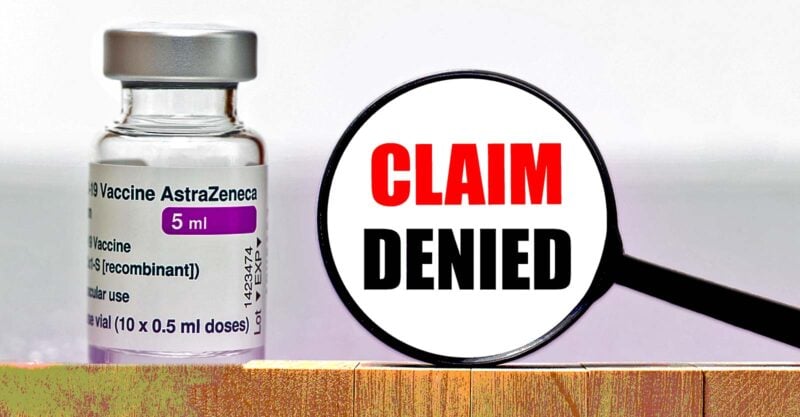


A British nurse who sustained permanent injuries after receiving the AstraZeneca COVID-19 vaccine was denied compensation for her injuries because she is “not disabled enough” to meet the threshold set by the U.K.’s Vaccine Damage Payment Scheme (VDPS). The Telegraph first reported the story last week.
Marie-Claire Hoyle, now 44 and a mother of three, worked for Royal Liverpool University Hospital in 2020, when she volunteered for AstraZeneca’s U.K. COVID-19 vaccine clinical trial.
Within two weeks of receiving her second dose, Hoyle developed transverse myelitis, a rare and permanent neurological condition caused by inflammation of the spinal cord that interrupts nerve signals between the body and the brain.
The condition left Hoyle “in agonising pain and unable to use her limbs fully,” The Telegraph reported.
While rare in the general population, hundreds of cases of transverse myelitis have been recorded among people injured after receiving the COVID-19 vaccine.
According to The Telegraph, Hoyle’s injury was “alarming” enough that it resulted in a temporary global pause of AstraZeneca’s clinical trials, “while scientists evaluated the situation and assessed the severity of her symptoms.”
Hoyle filed a claim with the VDPS, the U.K.’s government-run vaccine injury compensation scheme. VDPS offers approved recipients a one-time payment of 120,000 pounds (approximately $160,000) — if they meet its 60% disability threshold and can prove their disability directly resulted from their vaccination.
VDPS rejected Hoyle’s claim as her current condition “no longer meets the required disability threshold,” GB News reported.
Hoyle now works for the National Health Service England as a network manager for high-consequence infectious diseases. However, despite her partial recovery, she still experiences nerve pain, weakness and sensory problems.
MRI confirmed ‘it was the vaccine and there was no other cause’
Caroline Pover, chair of trustees of UKCVFamily, a registered charity providing support to the vaccine-injured and their families, said Hoyle’s injuries and the rejection of her claim are unsurprising.
“As the chair of trustees of the only registered charity in England and Wales supporting around 3,000 people who have been injured or bereaved by a COVID vaccine, I hear about these injuries every single day,” Pover said.
Pover is also the author of “Worth a Shot?: Secrets of the Clinical Trial Participant Who Inspired a Global Movement — Brianne Dressen’s Story.” The book is about Dressen, a participant in AstraZeneca’s U.S. trial for its COVID-19 shot in 2020.
Dressen, who was 39 when she was vaccinated, was diagnosed with post-vaccine neuropathy in 2021 and is unable to work due to her injuries. She sued AstraZeneca for breach of contract. The case is still pending.
Hoyle told The Telegraph that VDPS “acknowledged that the vaccine caused my transverse myelitis” and that her initial injuries met the 60% threshold. Hoyle recalled that she felt neck and spine pain within an hour of receiving her second dose — followed later by more severe symptoms.
“Exactly 14 days after my second dose, I remember being on shift and I felt a pain going into my neck [and] into my spine. It started spreading into my shoulders, and within an hour or so it was radiating down into my hands. I couldn’t use my fingers properly and I was just in extreme agony,” Hoyle said. “I couldn’t hold a pen.”
An MRI two days later confirmed a diagnosis of transverse myelitis.
“The medical teams that independently reviewed it all said that it was the vaccine and there was no other cause. I didn’t have an underlying medical condition so it could only have been the vaccine,” Hoyle said.
‘The bigger story’: AstraZeneca resumed trial despite Hoyle’s injury
News of Hoyle’s injury reached AstraZeneca, leading the company to pause its clinical trial. But as Hoyle began recovering from the most severe symptoms of her condition, AstraZeneca resumed its trial.
It was then that VDPS told Hoyle, “You aren’t [injured] now, so you don’t need the payment” — even though a more recent MRI showed Hoyle’s spinal cord damage “will never heal.”
According to the Daily Sceptic, “the bigger story” is not Hoyle’s injury, but that AstraZeneca’s clinical trial “was not ended and the jab withdrawn when this occurred.”
“We can only wonder at what strings were being pulled behind the scenes to keep the show on the road,” the Daily Sceptic wrote.
Dr. Clare Craig, a diagnostic pathologist and co-chair of the Health Advisory and Recovery Team, agreed.
“However long it took for confirmation to come that Hoyle’s injury was vaccine-related, at that point every trial participant around the world should have been informed and investigated for any similar symptoms before any trials should have continued,” Craig said.
Pover said that in Dressen’s case, AstraZeneca claimed that its investigation found her injury was caused by “unknown underlying conditions” and not a direct outcome of vaccination.
AstraZeneca’s vaccine partner compensated Hoyle
Craig said VDPS “is not a compensation scheme” but was instead “designed to provide a prompt lump sum so that people have some money while they pursue a legal case for full compensation.” However, “it has become a farce in which more has been spent running the scheme than paid out to claimants.”
The Telegraph reported that although Hoyle did not receive VDPS compensation, she “was given a high five-figure sum out of court” by Oxford University, which co-developed the vaccine with AstraZeneca.
Pover said that unlike VDPS’ rejection of Hoyle’s claim, the compensation she received from Oxford is unusual.
“VDPS rejects 98% of claimants, but I am surprised that Oxford University settled out of court with Hoyle,” Pover said. She said she hopes more information about the settlement will be made public.
‘There needs to be a change’
Hoyle has now become an advocate for VDPS reform, telling The Telegraph that “there needs to be a change.”
“It should be more modern in terms of what’s justifiable to the person and what they have now. And it should be a scaleable payment, as opposed to a cut-off,” she said. This sliding scale would consider the ongoing impact of an injury.
Hoyle is not alone in calling for reform of VDPS. Heather Hallett, who led the UK Covid-19 Inquiry, last year proposed reducing the lump-sum payment and expanding the program’s eligibility criteria, so more vaccine injury victims can receive compensation.
According to The Telegraph, the U.K. government is considering Hallett’s proposals.
Craig said VDPS requires a “fundamental overhaul,” noting that its “assessment contractor alone has been paid around 48 million pounds [$64 million], while about 250 claimants have received payments totalling roughly 30 million pounds” ($40 million).
“Claims take several years to decide, and some recovery inevitably occurs in that time,” Craig said. Claimants are then told, “either that they cannot prove causation or that they are not disabled enough.”
Last week, the U.K. government accepted another of Hallett’s recommendations — to link medical records from hospitals and general practitioners to monitor vaccine safety. No timeline was announced for the implementation of this proposal.
The Defender is 100% reader-supported. No corporate sponsors. No paywalls. Our writers and editors rely on you to fund stories like this that mainstream media won’t write. 

This article was funded by critical thinkers like you.
Decisions made in a ‘concealed back room’
Wayne Rohde, an expert in global vaccine injury compensation programs and author of “The Vaccine Court: The Dark Truth of America’s Vaccine Injury Compensation Program” and “The Vaccine Court 2.0,” said VDPS is comparatively more generous than the federal compensation program for COVID-19 vaccine injuries in the U.S., the Countermeasures Injury Compensation Program.
However, the process of determining if the victim meets VDPS’ 60% threshold occurs outside of the public eye, in a “concealed back room,” Rohde said.
Craig said the 60% threshold is outdated — “a holdover from industrial injuries, where limbs and eyes were lost.” As such, “it is not an objective measure of harm.”
Rohde said that while the injured in the U.K. can sue vaccine makers, “the burden is on them — they are responsible for funding the suit.”
In a statement to The Telegraph, AstraZeneca expressed sympathy for Hoyle but said its COVID-19 vaccine “has continuously been shown to have an acceptable safety profile.”
Over 80 lawsuits filed in the U.K. alleged injuries caused by the AstraZeneca shot.
In 2024, AstraZeneca withdrew its COVID-19 vaccine from the market — but claimed the withdrawal was due to waning global demand, not safety concerns or the legal challenges in the U.K.
Related articles in The Defender
- Will AstraZeneca Have to Pay Medical Expenses for Woman Injured During COVID Vaccine Trial?
- ‘Historic’: Federal Court Says AstraZeneca Not Immune From Liability in Case Involving Woman Injured by COVID Vaccine During Clinical Trial
- AstraZeneca Promised to Pay Medical Expenses for Anyone Injured During Its COVID Vaccine Trials — Now It Wants Immunity
- AstraZeneca Begins Withdrawing COVID Vaccines Worldwide, Says Decision Not Linked to Lawsuit
- More Than 80 Lawsuits in UK Allege AstraZeneca COVID Vaccine Caused Deaths, Severe Injuries
- Big Pharma Pushes Back After RFK Jr. Proposes Plan to Improve Compensation for COVID Vaccine Injuries