Login
Login


Editor’s note: After this story went to press, the West Virginia Supreme Court ruled that the school boards have until March 26, 2026, to finish their appeal. The parents will have 45 days, until May 11, 2026, to file a respondent’s brief, and then the board of education will have until June 1, 2026, to file a reply brief. Once the June 1 deadline is passed, the court could decide the case on its merits without oral arguments, or set the case for oral arguments and then decide the case on its merits.
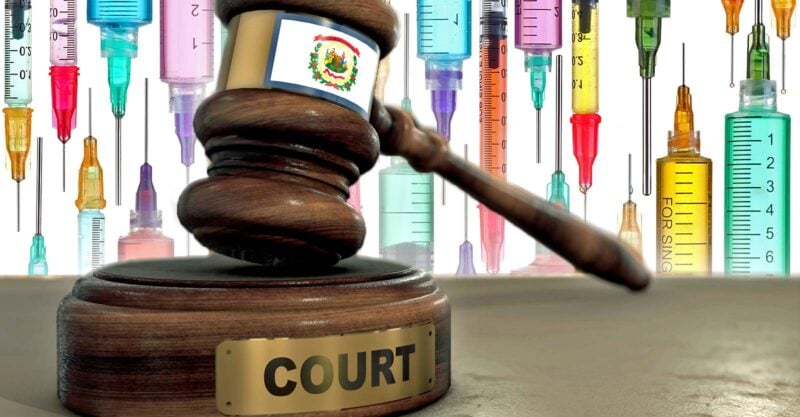
The West Virginia Supreme Court will review a state court’s ruling allowing religious and philosophical exemptions to school vaccination requirements, West Virginia Watch reported Monday.
The state’s highest court last week granted the West Virginia Department of Education’s motion for an expedited review of a Nov. 26 ruling in favor of parents seeking religious exemptions for their children, The Intelligencer reported.
The Nov. 26 ruling, by the Circuit Court of Raleigh County, found that West Virginia Gov. Patrick Morrisey had the authority under the state’s Equal Protection for Religion Act of 2023 to issue an executive order in January allowing religious and philosophical exemptions.
Under the governor’s order, parents are required only to provide a written statement explaining their objection to vaccination.
In June, the state’s education department voted unanimously to instruct county boards of education not to accept religious exemptions, in defiance of Morrisey’s order.
The West Virginia Supreme Court subsequently blocked the Nov. 26 ruling to allow an appeal to be filed, local ABC affiliate WCHS reported. The state’s education department then filed an appeal with the Intermediate Court of Appeals of West Virginia in parallel with its motion for the state Supreme Court to review the ruling.
The education department suspended its compulsory vaccination policy following the Nov. 26 court’s ruling — but reinstated the policy after the state Supreme Court suspended the ruling pending appeal.
Attorney Greg Glaser, who is not involved in the case, said the West Virginia Supreme Court’s decision to hear the case now suggests that the court recognizes it as “a matter of urgent, statewide constitutional magnitude that cannot wait.”
“By taking this case immediately, the court is acknowledging that the lower court’s ruling touches on fundamental questions of religious freedom that require a final, authoritative resolution,” Glaser said.
659 students granted religious exemptions in West Virginia this year
In March, the West Virginia House of Delegates rejected Senate Bill 460, which would have codified religious exemptions into law. However, Morrisey’s executive order remained in effect.
In June, Raleigh County parents Miranda Guzman and Carley Hunter sued the state and county boards of education and the county schools superintendent after their children’s school denied their requests for religious exemptions. A third parent, Amanda Tulley, later joined the suit.
In July, the parents won a preliminary injunction barring the school from enforcing state vaccine mandates.
West Virginia requires children to receive vaccines for chickenpox, hepatitis B, measles, meningitis, mumps, diphtheria, polio, rubella, tetanus and pertussis (whooping cough) before starting school. COVID-19 shots are not required.
Before Morrisey’s order, West Virginia was one of only five states that did not recognize religious or philosophical exemptions to school vaccine mandates. The other states are California, Connecticut, Maine and New York.
On Monday, Children’s Health Defense (CHD) sued New York in a bid to restore religious exemptions in that state.
West Virginia Watch, citing state health officials, reported that 659 religious exemptions were granted statewide for the 2025-26 school year.
Christy Day, communications director of the West Virginia Department of Education, earlier this month told The Defender that the department believes these exemptions are no longer valid.

Religious exemptions put ‘herd immunity’ at risk, education officials said
The West Virginia Department of Education said in its motion that “herd immunity” among schoolchildren would be placed at risk if Morrisey’s order is allowed to stand.
According to the motion, “Pertussis killed three children in Kentucky in the past year,” and measles “is proliferating” in nearby states. In South Carolina, health officials blamed an ongoing measles outbreak on the unvaccinated.
Brian Hooker, Ph.D., CHD chief scientific officer, said the education department’s claims are not supported by science and “need to be balanced against the very well-established risk” associated with some required childhood immunizations.
“If these vaccines were actually effective in preventing mortality and long-term disabilities and sickness, that might be cause for such an action,” Hooker said. “However, the DTaP [diphtheria, tetanus and pertussis] vaccine actually causes individuals to become asymptomatic carriers of pertussis and spread the disease.”
Hooker said that using a nearby measles outbreak as a justification to eliminate religious exemptions and blaming the unvaccinated for that outbreak overstates the risk that measles infection poses for children.
“The case fatality rate for measles before the introduction of the measles vaccine in 1963 was just 2 per 10,000 cases. I would argue that even within this very limited risk of mortality, confounding factors such as bacterial pneumonia and not measles are the actual cause of death,” Hooker said.
Hooker accused the education department of ignoring evidence showing that the DTaP vaccine “contains neurotoxic levels of aluminum” and weakens the innate immune system. The measles-mumps-rubella (MMR) vaccine is associated with “death and anaphylaxis,” he said.
According to 2021 figures, West Virginia has the lowest vaccination rate for children below school age, at 56.6%. However, the state exceeds the national average for measles vaccination. During the 2023-24 school year, 98% of the state’s kindergartners had received the vaccine, compared to 93% nationwide.
During a June press conference, Morrisey said he supports the parents’ lawsuit.
“As governor, I will always defend the religious liberty of West Virginians, and I won’t allow unelected bureaucrats at the state Board of Education to stand in the way. … Religious liberty is already enshrined in West Virginia law — and we are going to enforce that law.”
Morrisey was joined at that press conference by attorney Aaron Siri, who represents the plaintiffs in the Raleigh County lawsuit and has represented plaintiffs in several vaccine injury cases.
Several West Virginia lawsuits seek clarity regarding religious exemptions
According to West Virginia Watch, the Raleigh County lawsuit is one of “at least five” lawsuits relating to the state’s religious exemption requirements.
In October, a judge in Kanawha County ruled against a mother seeking a religious exemption for her son, finding that the governor does not have the authority to enact laws, even by executive order.
In May, the American Civil Liberties Union of West Virginia and Mountain State Justice sued state health officials over their enforcement of Morrisey’s order. In July, a West Virginia court dismissed that lawsuit on procedural grounds. The organizations refiled their complaint in August.
In September, a Berkeley County judge denied an injunction sought by nine families who wanted their local school board to accept their religious exemption requests. They asked for voluntary dismissal of their case so that they could join the class-action lawsuit in Raleigh County.
In August, the U.S. Department of Health and Human Services warned West Virginia that it may lose $1.37 billion in federal health funding if the state’s health departments don’t follow laws recognizing religious freedom — including religious exemptions to childhood vaccination.
Related articles in The Defender
- ‘You Cannot Sideline Parents,’ RFK Jr. Warns, as HHS Launches Probe Into School That Ignored Religious Exemption
- ‘Seismic Shift’: HHS Warns West Virginia May Lose $1.37 Billion in Funding if Health Departments Don’t Allow Religious Exemptions
- Mom Sues West Virginia School District That Denied Daughter’s Religious Exemption Despite Governor’s Executive Order
- West Virginia Schools Ordered to Defy Governor on Religious Exemptions
- ‘Huge Win’: West Virginia Governor Issues Executive Order Allowing Religious Exemptions
- Breaking: Children’s Health Defense Sues New York in Bid to Restore Religious Exemptions