Login
Login
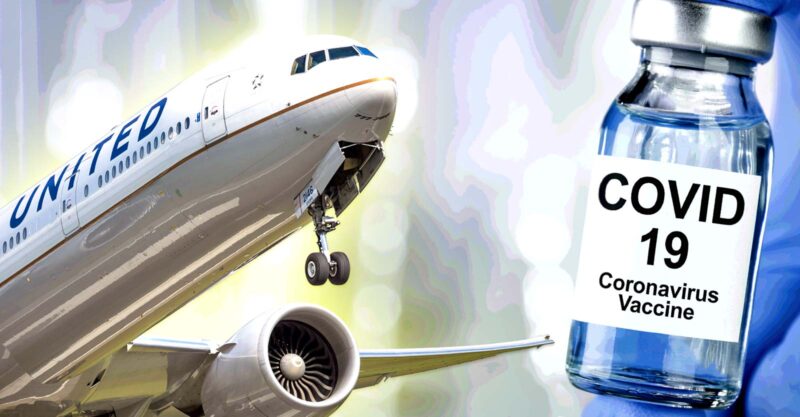


A class action lawsuit against United Airlines over the airline’s COVID-19 vaccine religious exemption policy can move forward, a federal appeals court ruled this week.
The 5th U.S. Circuit Court of Appeals upheld a lower court’s 2024 ruling that United discriminated against the employees by placing them on unpaid leave after granting their religious exemptions to the vaccine.
The lawsuit involves 2,221 employees who form “the core of the class action lawsuit,” according to Aviation A2Z.
Two other employee subclasses originally sued United: employees who applied for a religious or medical exemption and were at risk of being placed on unpaid leave or fired, and a group of employees who were allowed to continue working only if they complied with the airline’s masking and testing requirements.
In its 2024 ruling, the U.S. District Court for the Northern District of Texas, Fort Worth Division, denied class-action certification for the two subclasses. The 5th Circuit this week upheld that portion of the lower court’s ruling, but allowed the “unpaid leave” subgroup to form a class and proceed to trial.
According to The Traveler, this “closely watched” lawsuit “is one of the most prominent private-sector challenges to a corporate vaccine mandate to reach this stage.”
A judgment in favor of the workers “could encourage similar suits against other large employers that relied on unpaid leave or job reassignments as tools to enforce coronavirus safety rules,” The Traveler reported.
The case will now go back to the District Court for discovery and a jury trial.
As of now, United has not been found liable for any wrongdoing. But according to the Tampa Free Press, the 5th Circuit’s ruling “sets the stage for a high-stakes trial focused on the airline’s treatment of religious objectors.”
Attorneys for the plaintiffs did not respond to The Defender’s request for comment.

United’s policy violated Title VII of the Civil Rights Act
United announced its COVID-19 vaccine mandate in August 2021. The company allowed employees to submit requests for medical or religious accommodations. Employees were given five weeks to get vaccinated or request an exemption.
United was the first major U.S. airline — and one of the first major corporations in the U.S. — to enact a COVID-19 vaccine mandate. The mandate took effect three months before the Biden administration, in November 2021, imposed a vaccine mandate for all private businesses with 100 or more employees.
According to the 5th Circuit ruling, 5,885 United employees requested religious accommodations. The airline granted 4,070 of them.
In September 2021, as the exemption process was still unfolding, a group of employees sued United, seeking a restraining order to prevent the company from placing exempted employees on unpaid leave.
In October 2021, the District Court granted the plaintiffs a temporary restraining order. However, the following month, the same court denied a preliminary injunction against United’s policy.
In November 2021, United enacted an amended policy, allowing “non-customer-facing” employees who received religious or medical exemptions to continue working, as long as they complied with the company’s masking and testing policies.
“Customer-facing” employees — including pilots and cabin crew — remained on indefinite unpaid leave but were allowed to apply for non-customer-facing roles within the company.
In their lawsuit, exempted employees argued that United never considered a less stringent accommodation for them.
In this week’s ruling, the 5th Circuit agreed with those employees. The court found that under Title VII of the Civil Rights Act, a company that receives a religious accommodation request from one or more employees must work through all possible alternatives, not just impose its preferred policy.
According to the Civil Rights Act, an employer can reject a less stringent accommodation only if implementing it would constitute a substantial burden.


This article was funded by critical thinkers like you.
The Defender is 100% reader-supported. No corporate sponsors. No paywalls. Our writers and editors rely on you to fund stories like this that mainstream media won’t write.
In 2024, the District Court found that class action status could proceed for the category of employees who were placed on unpaid leave.
The District Court rejected the claims of the other two groups of employees who had sought medical exemptions under the Americans with Disabilities Act. The District Court found that their situations were too individualized to be litigated together in a single class action lawsuit.
Following the District Court’s ruling, the employees and United both appealed to the 5th Circuit. United sought to dismiss the class action status of the “unpaid leave” subgroup of employees, while the employees from the other subgroups sought class action certification.
Other lawsuits are also challenging United’s vaccine mandate.
For instance, in December 2025, an unvaccinated former United employee sued the company, citing religious discrimination under the Civil Rights Act. She was fired in 2021 after her religious exemption request was denied.
Several other religious exemption lawsuits against employers across the U.S. have succeeded in recent years.
Last month, the Trump administration’s Religious Liberty Commission heard testimony for the first time from an unvaccinated worker who was fired after her employer denied her religious exemption request.
Related articles in The Defender
- ‘Demonized and Ostracized’: Worker Fired Over COVID Shot Testifies Before Religious Freedom Commission
- Two New Wins in Religious Exemption Lawsuits Add to String of Recent Victories
- Woman Fired for Refusing COVID Shot Wins $12.7 Million in Jury Trial
- Jury Awards $4 Million to St. Louis School Employees Denied Religious Exemptions From COVID Vaccine
- Supreme Court Strikes Down OSHA Mandate, Says Vaccine Mandates for Healthcare Workers Can Proceed
- Senate Votes to Repeal Biden Vaccine Mandates for Employers