

 Login
Login
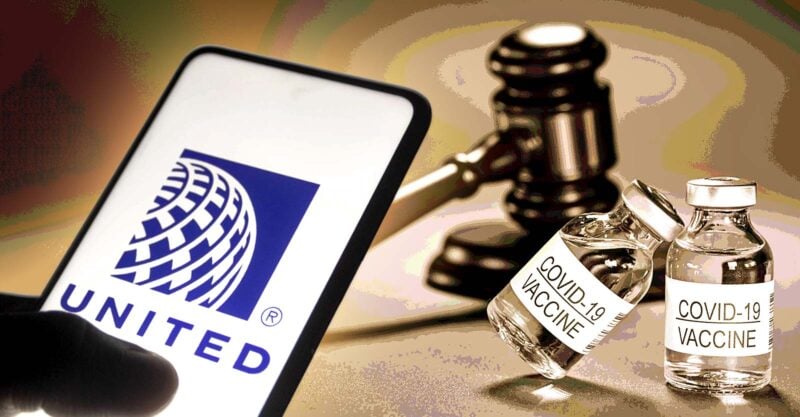


United Airlines is asking the U.S. Supreme Court to step into a five-year legal fight over its COVID-19 vaccine mandate. The airline alleges that a lower court improperly allowed roughly 1,000 employees with individual religious exemptions to sue as one class, TrialSite News reported.
In a petition filed earlier this month, United asked the justices to review a March ruling by the U.S. Court of Appeals for the 5th Circuit that upheld class certification for the employees.
The Supreme Court has not yet decided whether to hear the case, United Airlines v. Kincannon.
The immediate issue is narrow: Can these employees continue their lawsuit together as a class, or do they have to pursue their claims individually?
But the answer could have broader consequences for employees who challenge workplace policies on religious grounds — and for how courts handle class actions when people may have similar experiences but different individual circumstances.
1,000 individual cases cannot be treated as one, United says
The dispute began in September 2021, after United required employees to be vaccinated against COVID-19 while allowing workers to seek medical or religious accommodations.
According to a June 2024 ruling by the U.S. District Court for the Northern District of Texas, Fort Worth Division, 5,885 employees requested an accommodation, and the airline granted 4,070 of them.
The class at issue is much smaller. It consists of workers who interact directly with travelers — such as pilots and flight attendants — who sought religious accommodations, received them and were then placed on unpaid leave.
All employees were allowed to return to work in March 2022.
The employees said that unpaid leave was not a meaningful accommodation and that United should have considered alternatives, including masking, testing or reassignment.
United argued that the workers’ claims cannot be resolved by a single set of answers because the circumstances were different for each employee.
For example, the airline argued that a court or jury may have to determine whether each employee’s religious belief was sincere, what alternative jobs were available, whether masking or testing could have worked for that particular job, and how much the employee lost in wages.
United also argued that damages would require individual calculations based on factors such as each worker’s earnings and work schedule.
The airline’s Supreme Court petition said allowing those issues to be handled later could turn the class action into hundreds of individual proceedings — essentially, a series of mini-trials.
United argued that this is exactly what class-action rules are designed to prevent. The airline said a class action should provide common answers to the questions that determine liability, not simply gather people who have some questions in common.


5th Circuit says workers have enough in common to sue together
In March, the 5th Circuit rejected United’s challenge to the class certification.
The three-judge panel found that important questions could be answered for the class as a whole, including whether unpaid leave was a reasonable religious accommodation and whether alternatives such as masking and testing would have imposed a substantial burden on United.
The court also noted that United had treated the workers similarly by allowing religious accommodation requests, reviewing them and applying the same unpaid leave policy across the group, according to View from the Wing.
However, the 5th Circuit acknowledged the difficulty in addressing religious sincerity — an issue at the heart of United’s Supreme Court petition.
U.S. Circuit Judge Don Willett, who agreed with the outcome, separately raised concerns about treating “religious sincerity as a common issue.” He pointed out that if United challenges an employee’s sincerity, a jury could have to hear that individual employee’s testimony and judge that person’s credibility.
“Courts may not evaluate ‘the “truth” of a belief,’ but we must determine whether it is ‘truly held,’” he wrote.
Willett also argued that there was no single piece of evidence necessarily relevant to every employee’s sincerity, noting that each worker’s exemption request, third-party attestation and decision to accept unpaid leave would have to be evaluated separately.
“What these class members have is not the same evidence; it is merely evidence of the same type,” he wrote. “There is not one piece of evidence that is even relevant across the board.”
United’s Supreme Court petition cited Willet’s concerns as one reason why the class should not have been certified in the first place.
Flores: United has a point, but damages can still vary
Ray Flores, senior outside counsel for Children’s Health Defense, said United has raised a legitimate concern about whether the employees’ individual claims can be treated as one case.
“United Airlines raises a valid point in questioning the 5th Circuit’s certification of the class, along with a reservation to later assess each individual,” Flores said. “That may destroy commonality, which is a necessary element for class certification.”
But Flores said differences in the amount of money individual employees could receive do not, by themselves, prevent a class action. “Individual damages vary, and it is not uncommon for a monetary award in a class action to vary by individuals,” he said.
That distinction is important in this case.
United is challenging the class partly because the employees’ losses may differ. But the 5th Circuit found that the underlying questions about United’s accommodation policy could still be addressed collectively, even if individual damages later had to be calculated separately.
What could Supreme Court’s decision mean?
The Supreme Court is not being asked to decide whether United actually discriminated against the employees — it’s being asked whether the employees’ claims can proceed as a class action.
United has not been found liable for wrongdoing in the case.
If the Supreme Court agrees to hear the case and ultimately sides with United, it could make it harder for employees to bring large class actions when their claims require looking at individual religious beliefs, job duties, accommodations or damages.
United argued that the 5th Circuit’s approach could affect class actions well beyond employment disputes, including cases involving securities, mass torts and other claims in which plaintiffs may share a broad theory but still have important individual differences, according to View from the Wing.
But for employees, there is a competing concern.
If every worker affected by the same company policy has to bring a separate lawsuit, challenging a large-scale workplace policy can become much more difficult.
That makes the United case about more than the company’s 2021 vaccine policy. It raises a basic question about class actions: When hundreds of people are subjected to the same policy, how much can their individual circumstances differ before they can no longer seek justice together?
The Defender is 100% reader-supported. No corporate sponsors. No paywalls. Our writers and editors rely on you to fund stories like this that mainstream media won’t write. 

This article was funded by critical thinkers like you.
Discrimination claims can continue, regardless of Supreme Court
The justices could decline United’s request, leaving the 5th Circuit’s class-certification ruling in place and allowing the case to continue in the lower court.
Flores said he doesn’t expect the Supreme Court to take the case.
“The 5th Circuit has supported issues important to health freedom that other circuits and the Supreme Court haven’t,” Flores said. “But I cannot predict how the high court would rule. It’s wait and see.”
If the Supreme Court declines to review United’s petition to reject the class certification, the 5th Circuit’s ruling would continue to protect the employees’ individual religious claims.
“The 5th Circuit will continue to stand for health freedom,” Flores said. “However, this case is still ongoing, so there could be an unfavorable Supreme Court ruling down the road.”
And even if United succeeds in breaking up the class, that would not necessarily end the employees’ legal claims.
“Religion has been our only winning argument. It is essentially untouchable,” Flores said. “Even if United Airlines prevails, individual claims would still be available.”
Related articles in The Defender
- United Airlines Must Face Class Action Lawsuit Over COVID Vaccine Religious Exemption Policy
- ‘Demonized and Ostracized’: Worker Fired Over COVID Shot Testifies Before Religious Freedom Commission
- Two New Wins in Religious Exemption Lawsuits Add to String of Recent Victories
- Woman Fired for Refusing COVID Shot Wins $12.7 Million in Jury Trial
- Jury Awards $4 Million to St. Louis School Employees Denied Religious Exemptions From COVID Vaccine
