Login
Login
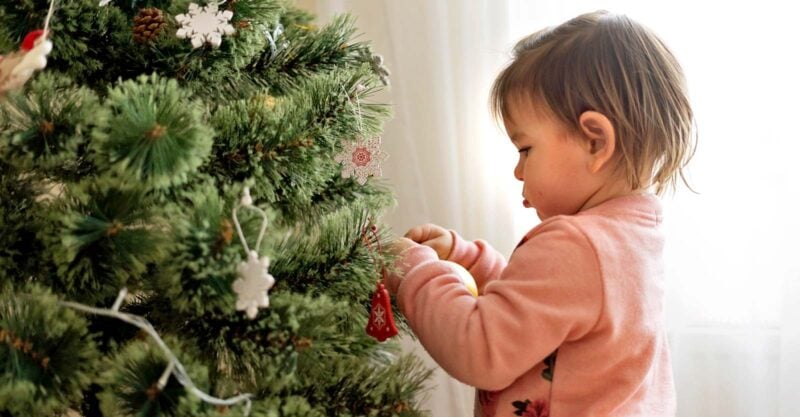


The Center for Biological Diversity and Alliance of Nurses for Healthy Environments petitioned the U.S. Environmental Protection Agency (EPA) and the president’s Make America Healthy Again (MAHA) Commission on Dec. 4 to address the health risks posed by the heavy use of toxic pesticides on Christmas trees.
Tree farms in Oregon, Michigan, Pennsylvania, California, Florida and Texas that produce nearly two-thirds of the Christmas trees harvested in the U.S. have reported spraying 270,000 pounds of pesticides each year.
Many of these pesticides include products known to be potent endocrine disruptors, carcinogens and neurotoxins that impede children’s brain development.
The pesticides are chlorothalonil, simazine, glyphosate, hexazinone, carbaryl, chlorpyrifos and dimethoate.
“Christmas is a wonderful time of the year, and Americans should be able to bring a Christmas tree into their home that doesn’t carry dangerous chemicals that can harm their children’s development or poison their pets,” said J.W. Glass, EPA policy specialist at the Center for Biological Diversity.
“For hundreds of years we’ve celebrated Christmas without pesticide-drenched trees, but in recent decades the EPA has ignored the risks to children posed by heavy pesticide use on Christmas tree farms. We need the EPA to protect our kids and ensure that all Americans are safe from pesticides this holiday season.”
The request for the EPA to conduct a thorough assessment of the risks posed by the harmful pesticides used on Christmas trees comes as the White House prepares for tonight’s annual lighting of the National Christmas Tree, a 35-foot-tall red spruce harvested from a national forest in Virginia.
The Dec. 4 petition requests a “special review” of those risks under the Federal Insecticide, Fungicide, and Rodenticide Act.
While the EPA has assessed exposures from treated turf or household bug sprays, it has failed to adequately assess the risk to children from lingering pesticide residues on Christmas trees.
This is a consequential omission, as children are especially vulnerable to these pesticides because they are more likely to spend time beneath the tree, inhale contaminated dust or consume fallen needles. Heat from string lights can also increase the risk of pesticides getting into the air that children breathe.
Pesticides used on Christmas trees, such as chlorpyrifos and carbaryl, have been linked to developmental problems, especially in children, with chlorpyrifos already banned for food uses in California, Hawai‘i, Maryland, New York and Oregon, as well as 44 other nations.
Although pesticides such as chlorpyrifos, dimethoate and carbaryl have been used on Christmas trees for decades, the EPA has never assessed the risk they pose to U.S. households.
Katie Huffling, executive director of the Alliance of Nurses for Healthy Environments, said:
“As people across the nation prepare for the holiday season, we urge the EPA to conduct a special review on the pesticides used on Christmas trees. Christmas tree production involves substantial pesticide use, including many highly toxic chemicals that are banned or restricted in other countries and known to cause harm to children, yet the EPA has never assessed residential exposure to pesticides from Christmas trees.”
Huffling continued:
“This omission is alarming as even low levels of pesticide exposure can permanently harm young children’s neurological and behavioral development. While the EPA is required to determine the safe level of pesticide residue permitted on food no such requirement exists for Christmas trees.
“We need the EPA to ensure that families across the country are both protected from and aware of the potential health risks from exposure to pesticide-coated Christmas trees.”
For centuries, Christmas trees were grown without intensive chemical treatments and primarily harvested from the forest. In fact, the first National Christmas Tree displayed on the White House lawn by President Calvin Coolidge in 1923 was a 48-foot-tall balsam fir cut from a forest in Vermont.
It was not until after World War II that chemical-intensive agriculture and large-scale Christmas tree farming converged, resulting in heavy drenchings of pesticides to produce perfectly manicured Christmas trees.
While many Americans still harvest trees from national forests across the country, the vast majority purchase trees from farms or on lots that use pesticides.
Following his re-election, President Donald Trump expressed his own concerns that the U.S. continues spending “billions and billions of dollars on pesticides,” compared to the European Union and has far worth health outcomes.
He pledged that his administration would “ensure that everybody will be protected from harmful chemicals, pollutants, [and] pesticides.”
As part of that pledge, he nominated Robert F. Kennedy Jr. as secretary of the U.S. Department of Health and Human Services and signed an executive order establishing the MAHA Commission.
Kennedy previously said that chlorpyrifos — a pesticide used on Christmas trees — is “clearly dangerous” while calling on the Biden administration to “ban this neurotoxic pesticide.”
In April, the MAHA Commission noted that children are uniquely vulnerable to permanent harm from even minor pesticide use and significantly at risk of cumulative chemical exposure.
In its final report, the commission claimed it is imperative that the pesticide review process is “continually evaluated to ensure that chemicals and other exposures do not interact together to pose a threat to the health of our children.”
“The many joys of Christmas shouldn’t come with invisible dangers from pesticides,” said Nathan Donley, environmental health science director at the Center for Biological Diversity.
“We sincerely hope that EPA Administrator Lee Zeldin makes sure families don’t have to choose between celebrating with a decorated Christmas tree and protecting our children.”
Originally published by the Center for Biological Diversity.