Login
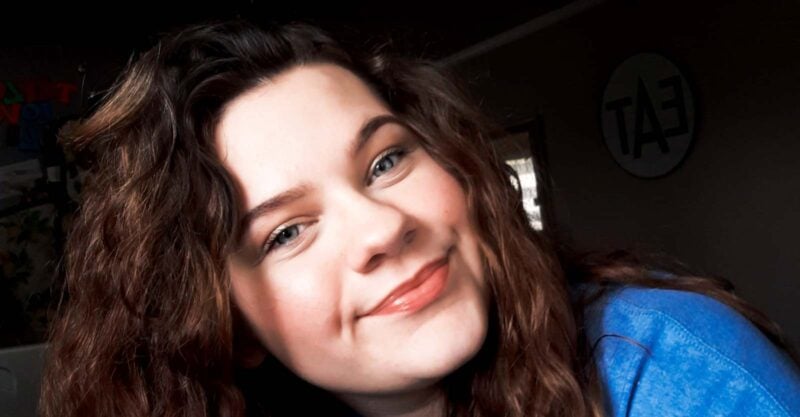


Four years ago this week, 18-year-old Trista Martin of Oklahoma had a bright future ahead. A recent high school graduate, she was working, helping care for her younger brother and planning to attend college.
“She was a fierce supporter and advocate of everyone she loved — and she had the world’s best laugh and the best sense of humor,” said her father, Allen Martin. Her mother, Taylor Martin, called her “a great big sister.”
But on Nov. 9, 2022, Trista woke up complaining of pain. She went back to sleep, but when her sister later tried to wake her, Trista was unresponsive. She soon stopped breathing and was rushed to the hospital. By that afternoon, she was dead.
Doctors were unable to definitively explain Trista’s sudden death, though they discovered an enlarged heart and blood clots.
While Trista was in the hospital, a friend of hers told her parents that Trista had recently received a dose of the Pfizer-BioNTech COVID-19 vaccine — something she had asked her friend to keep secret.
The Martins initially dismissed the revelation. But as they searched for answers in the weeks following Trista’s death, they discovered that several of her symptoms and medical conditions were linked to COVID-19 vaccine injuries.
A vaccination card found among Trista’s belongings confirmed she had received the shot in June 2022. The family later discovered that her vaccine batch, FN2908, is associated with reports of at least 12 deaths and hundreds of adverse events.
The discoveries launched the Martins on a years-long effort to seek justice for their daughter and advocate for other vaccine injury victims.
However, their efforts to file a claim with the federal Countermeasures Injury Compensation Program (CICP), which handles compensation claims for injuries and deaths linked to products administered during public health emergencies, including the COVID-19 vaccines, have been stymied by technicalities.
“It’s been a nightmare,” Taylor said.
The Martins, who created a website and produced a documentary, “Shot Dead,” documenting Trista’s death, spoke to The Defender about the legal challenges they’ve launched and their efforts to raise awareness of vaccine injuries.
Trista concerned about COVID vaccine mandates before getting the jab
According to Trista’s parents, their daughter was in good health before her vaccine injury. “She jogged and was probably the healthiest of all of us,” Allen said.
After turning 18, Trista asked her parents if she could choose her own primary care doctor. According to Allen, the family’s longtime physician was a personal friend of Trista’s, and she wanted a doctor with whom she felt more comfortable discussing sensitive health matters.
During the summer of 2022, Trista also expressed concern about possibly being mandated to get a COVID-19 vaccine when starting college. “I said, ‘Well, just go to a different college,’” Allen said. He recalled that Trista “just kind of shrugged it off” and didn’t bring it up again.
According to Allen, “we were not anti-vaxxers,” but the family was concerned about the COVID-19 vaccine in particular. Taylor said this was because of “the way it was rolled out,” with limited safety testing.
“There was no long history of it. There was no way of telling what was in it, what was going to happen from it. We just didn’t feel like it was time yet,” Taylor said.
Allen said he and Taylor began noticing that Trista “was acting really tired” and “sleeping a lot more than she normally did.” Her face “was getting a little more thin,” which her parents attributed to a maturing body.
Taylor recalled that twice during that summer, Trista was sent home from work due to illness. In one instance, she immediately vomited after eating.
Parents learned about Trista’s vaccination after the fact
According to Taylor, when Trista woke up in pain on the morning of Nov. 9, 2022, she said she felt like she was dying — but her parents initially brushed it off as something people say when they’re in discomfort.
But when Trista was later found unresponsive, Taylor said the situation quickly became traumatic. “It’s something that I will never get out of my head, ever.”
Paramedics temporarily revived Trista, but on the brief ambulance ride to the hospital, her heart stopped twice. At the hospital, doctors said Trista required dialysis, but were unable to perform it because, unless her condition was stabilized, the dialysis would place her at risk because her organs were failing.
According to Allen, Trista’s D-dimer level was 128,000 nanograms per liter of blood. D-dimer is a test that can indicate if someone has a blood clotting condition. A normal D-dimer level for adults is 0.50 micrograms (500 nanograms) per liter.
Doctors struggled to stabilize Trista, noting that her heart was enlarged and that they were seeing blood clots “everywhere.” They also diagnosed Trista with bowel ischemia — where blood flow to the intestines decreases or is blocked.
Trista’s condition appeared to stabilize, and doctors prepared to transfer her from the emergency room to the intensive care unit for dialysis. But the move further strained her already fragile condition.
“By the time they got her there, she was back down into a bad place. She had declined rapidly just going a couple floors up,” Taylor said.
At that time, one of Trista’s friends told her parents about the COVID-19 vaccine her friend received earlier that summer.
“We had no idea,” Taylor said. However, she and Allen initially didn’t think much of the news because “at the time, there was no news about anything happening to people. We just thought that we wished she wouldn’t have done that.”
As Trista’s condition worsened, doctors told her parents they would have to “make some decisions.” Her parents insisted that medical staff continue trying to save her, but as the hours passed, fewer doctors and nurses attended to her.
At 5:05 p.m. that day, Trista died.
Vaccine injury posts censored on Facebook
Doctors and paramedics initially suspected Trista had died of a drug overdose, “probably fentanyl,” Allen said. But toxicology tests found no evidence of drugs, and her parents said drug use would have been out of character for their daughter.
As they awaited Trista’s autopsy results and began to process her death, her parents launched their own investigation. Taylor recalled searching for “all the things that we remembered them telling us in the emergency room.” Their research soon led them to suspect a vaccine injury.
“It was the one thing that popped up on every search,” Allen said. “Everything said this could be because of a recent COVID vaccination … or ‘caused by an mRNA COVID vaccine.’”
The Martins sought confirmation on social media platforms, but found that at the time, “nobody was talking about anything,” as those topics were widely censored.
“I go out to Facebook … and boom, banned,” Allen said. He recalled that Twitter, now known as X, was the only major social media platform where users could openly discuss vaccine injuries, though such discussions often drew hostile responses. For the Martins, that hostility reinforced their belief that they were on the right track.
“The more flack you get means that, you know, you’re over the target,” Allen said.
The Martins’ interactions on X soon introduced them to the parents of children who were injured or killed after COVID-19 vaccination — including Stephanie and Maddie de Garay, and Dan Hartman, whose 17-year-old son, Sean, died after getting the Pfizer shot.
Family’s anguish ‘started to turn into anger’
The Martins turned to advocating on behalf of vaccine injury victims. “Our anguish, our sadness — it started to turn into anger,” Taylor said.
“We had to help other people. We made it a mission. Trista was all about helping other people, and especially children. If she heard and knew that this was happening … and that we were not doing anything, we were not trying to save other children, I feel like she would be furious with us,” Taylor said.
However, the process has been challenging — with Taylor describing it as “a nightmare on top of a nightmare.” One obstacle the Martins faced was obtaining Trista’s medical records from the physician who vaccinated her.
“They even tried to say that Trista wasn’t a patient there,” Allen said. “We ended up having to prove that my daughter even went there,” which the Martins achieved with insurance billing records.
The documents showed that Trista’s June 2022 vaccination was never recorded or submitted to the Oklahoma State Immunization Information System. Because of this, hospital physicians were unaware she was vaccinated.
Allen said the Oklahoma Medical Examiner’s Office “took over eight months” to complete Trista’s autopsy. While the report lists the official cause of Trista’s death as “unknown,” the autopsy notes that she was an “otherwise healthy, recently vaccinated 18-year-old female.”
The autopsy also listed conditions known to be adverse events linked to the COVID-19 shots. “Clots everywhere,” Taylor said. “It destroyed her poor little body.”


This article was funded by critical thinkers like you.
The Defender is 100% reader-supported. No corporate sponsors. No paywalls. Our writers and editors rely on you to fund stories like this that mainstream media won’t write.
CICP ‘unconstitutional,’ a ‘crap organization’
Allen said their efforts to file a claim with CICP have also faced obstacles. He said that the filing was submitted in October 2023 — less than a year after Trista’s death and less than three months after completion of the medical examiner’s report.
However, when CICP responded — a year and a half later — it rejected the claim because Trista’s vaccination card, a copy of which was uploaded as part of the application, “had a wrinkle through the date” and was therefore “not legible enough.”
CICP rejected insurance billing documents confirming Trista’s vaccination date. Another delay followed — and in September, CICP denied the Martins’ claim.
“They said that we filed too late, because they measured it from … the day that she received the first shot.” CICP rejected evidence that Trista may have also received a second dose of the Pfizer-BioNTech shot on Oct. 28, 2022. Allen called the strict one-year CICP filing limit “ridiculous” and “unconstitutional.”
“It’s basically just a crap organization,” Taylor said in reference to CICP, which is known for its stringent filing criteria, long delays and 98% rejection rate.
These setbacks have further motivated the Martins to seek legal recourse. The family joined a lawsuit challenging the constitutionality of the Public Readiness and Emergency Preparedness (PREP) Act, which grants a liability shield to those who manufacture or administer countermeasures during a public health emergency.
The Martins are also pursuing a separate claim in Oklahoma regarding faulty record-keeping by Trista’s physician. And they hope to work with doctors who could test Trista’s tissue samples for further signs that the Pfizer shot caused her death.
According to Allen, the Oklahoma Office of the Chief Medical Examiner keeps these samples for up to five years, making this the final year they will be preserved.
“We’ve had several doctors say they were going to test her samples, and then nothing happened,” Allen said. “If we don’t get somebody that can test these samples before the end of this year, then we’re done.”
Related articles in The Defender
- Federal COVID Vaccine Injury Program Pays for Another Death — But Denials Still Hover Above 98%
- Lawsuit on Behalf of Vaccine-injured Seeks to Strike Down ‘Unconstitutional’ PREP Act
- Israel, Pfizer Knew COVID Vaccine Caused Fatal Heart Condition — But Waited Months Before Alerting Public
- U.S. Sen. Johnson Holds News Conference With Families Injured by COVID Vaccines, Ignored by Medical Community
- ‘I Just Want My Life Back’ Says 16-Year-Old Who Developed Neurological Symptoms After Pfizer Vaccine
- Pfizer COVID Vaccine Linked to Rare Blood Clot Disorder, Israeli Researchers Say