Login
Login
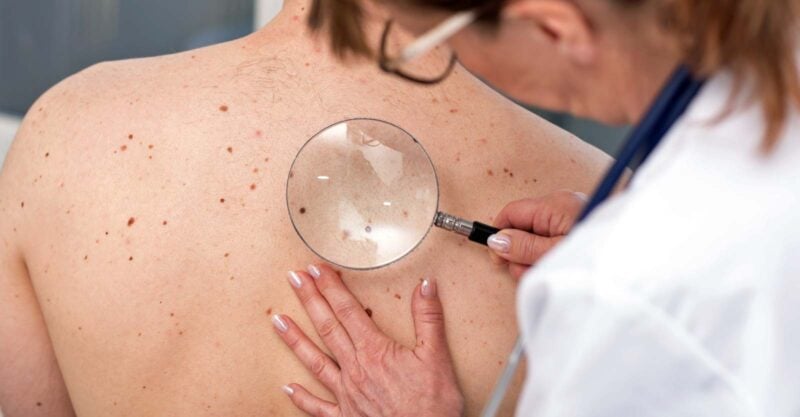


Occupational exposure to pesticides and non-melanoma skin cancer (NMSC) is the subject of a literature review published in Cureus. The analysis of U.S. adults includes basal cell carcinoma and squamous cell carcinoma.
The review, conducted by an international team of researchers, highlights a disproportionately elevated cancer risk among workers.
“Across the included studies, workers with prolonged pesticide exposure, frequent dermal contact, longer employment in agricultural settings, and inconsistent use of personal protective equipment generally had a higher risk of NMSC,” the authors reported.
They continued, “Several studies also described biological mechanisms, including oxidative stress, chronic inflammation, and DNA damage, that may explain this relationship.”
This evidence supports an association between long-term occupational pesticide exposure and increased NMSC risk.
Background
In the U.S., skin cancer is the most common form of cancer. According to the Centers for Disease Control and Prevention, approximately 6.1 million adults are treated for basal cell carcinoma and squamous cell carcinoma at a cost of about $8.9 billion.
The researchers stated, “Although ultraviolet (UV) radiation is the major risk factor, occupational exposure to pesticides has been proposed as an additional contributor among agricultural and other outdoor workers.”
As previously covered in Daily News, farmworkers face the brunt of pesticide exposure on a daily basis, not just in the form of acute exposure but also long-term residues that drift in from the field on clothing, footwear or other mediums. (See Agricultural Justice on farmworkers’ exposure to pesticides, deficiencies in their regulation by the U.S. Environmental Protection Agency, and the origins of Beyond Pesticides’ mission to eliminate toxic petrochemical-based pesticides and transition to organic.)
Previous evidence from the Agricultural Health Study, through the National Institutes of Health, examines cancer incidence among pesticide applicators in relation to several commonly used pesticides.
This includes studies on acetochlor, diazinon and metolachlor, which “contribute to understanding the carcinogenic potential of occupational pesticide exposure.”
Additional research from the Agricultural Health Study documents trends in the incidence of both basal cell carcinoma and squamous cell carcinoma. (See study here.)
Methodology and results
In the current literature review, a total of 26 studies that were published between January 2015 and March 2026 are analyzed.
The researchers noted:
“Eligible studies were observational investigations, including cohort, case-control, and cross-sectional studies, conducted among adults in the United States. Studies were included if they contributed directly or indirectly to evaluating the relationship between occupational pesticide exposure and skin cancer risk.”
To compare the research, data from the studies were extracted and analyzed, including study design, sample size, pesticide type, duration and frequency of exposure, NMSC outcome, and more.
As a result, the authors find that the strongest evidence connecting occupational pesticide exposure to skin cancer is from a study published in the American Journal of Industrial Medicine.
This study documents “that dermal exposure to pesticides and fertilizers among U.S. farmers and ranchers was associated with higher odds of physician-diagnosed skin cancer.”
Additional scientific literature supports the association between occupational pesticide exposure and skin cancer incidence.
One study, a long-term follow-up of the Agricultural Health Study, broadly shows cancer incidence among pesticide applicators, while many studies focus on specific pesticides and pesticide classes, including glyphosate, dicamba, pyrethroids, atrazine and carbaryl.
In summary, the researchers stated:
“This systematic review identified direct and supporting observational evidence relevant to the relationship between occupational pesticide exposure and NMSC risk among U.S. adults.
“Although a limited subset of studies directly evaluated pesticide or agrochemical exposure in relation to skin cancer outcomes, the broader evidence base provided information on pesticide carcinogenicity, NMSC epidemiology, UV exposure, occupational behaviors, and other potential confounding or modifying factors.”


Previous coverage
A study published in Environment International finds higher rates of various cancers among agricultural workers, with multiple myeloma and melanoma disproportionately impacting female farmers.
Although research studies link cancer risk to genetic and external factors (e.g., cigarette smoke), there are increasing reports and scientific studies that pesticide exposure augments the risk of developing increasingly common cancers like melanoma and less common cancers like multiple myeloma.
The study finds a total of 23,188 cancer cases in which melanoma of the skin and multiple myeloma instances are higher among women working in agriculture compared to the general population.
In addition, the study finds elevated rates of prostate cancer among men working in agriculture compared to the general population. (See Daily News here.)
Herbicide use is associated with an increased risk of developing cutaneous melanoma, a skin cancer, according to a meta-analysis published in the Journal of the European Academy of Dermatology and Venereology.
For those working on farms and in other occupations with frequent exposure to herbicides, the risk is another in a long list of pesticide-induced diseases. (See “Increased Risk of Skin Cancer Tied to Use of Weed Killers, as Researchers Call for a Precautionary Standard.”)
In another study, epidemiologists at the University of Iowa, the National Institute of Environmental Health Sciences and the National Cancer Institute find that agricultural workers who apply certain pesticides to farm fields are twice as likely to contract melanoma, providing support for the hypotheses that agricultural chemicals may be another important source of skin cancer risk. (See here.)
Daily News, “Farmers Face Elevated Cancer Risks Tied to Chemical Soup of Pesticide Exposure,” documents how researchers at the University of Caxias do Sul (Brazil) identified 29 peer-reviewed scientific studies with statistically significant findings that tie pesticide use to cancer diagnoses.
The literature review is published in Saúde Debate. This collection of clinical trials, as well as epidemiologic, case-control, and experimental studies — from the U.S., Brazil, India, France, Egypt, Colombia, Ecuador, Mexico, Italy and Spain — add to the hundreds of peer-reviewed independent analyses connecting synthetic chemical dependency in food production and land management with mounting public health concerns.
A path forward
Have your voice heard on governmental actions that are harmful to the environment and public and worker health, increase overall pesticide use, or undermine the advancement of organic, sustainable and regenerative practices and policies with Action of the Week.
This provides one concrete action that you can take each week on topics such as toxic chemical use, pollinator protection, organic agriculture and land use, global climate change and regulatory or enforcement violations. To stay informed, sign up here to receive Action of the Week and Weekly News Updates delivered right to your inbox.
Plan Now to Join Us as we come together to empower effective action and chart a path for a livable and sustainable future.
You are part of the solution! With groundbreaking scientists speaking at Beyond Pesticides’ 2026 National Forum, focused on the pesticide threat to human health and ecosystems, we empower ourselves and our communities with the compelling reasons to act urgently.
The forum, “Advancing Science on Pesticides, Taking Action in Harmony with Nature, and Sustaining Life,” brings us into conversation with the science — made simple — that we need to use as a tool for advancing changes required for a livable future.
The failure of decision-makers and policymakers to respond to the seriousness of the current pesticide-induced threats continues at our peril.
The science, if widely discussed and understood, provides the impetus to adopt sustainable practices that are available to us.
Originally published by Beyond Pesticides.