Login
Login
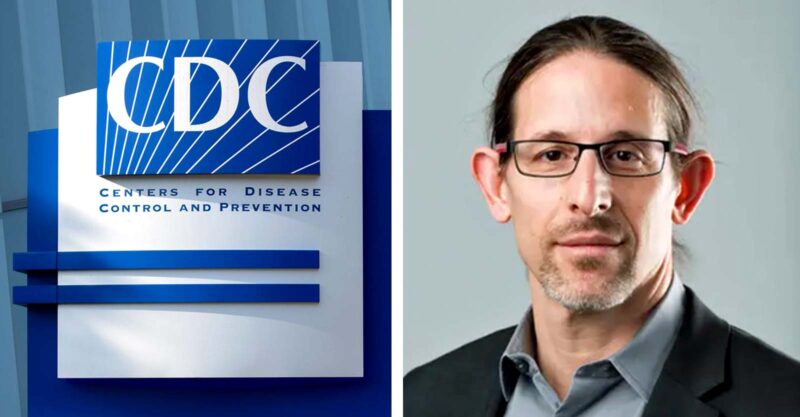


A key member of a federal vaccine advisory committee, which was blocked from meeting last month by a federal court ruling, called the ruling “unfortunate” and “highly politicized.”
Retsef Levi, Ph.D., a member of the Advisory Committee on Immunization Practices (ACIP) and head of the committee’s COVID-19 workgroup, suggested the committee faced a “constant struggle” due to significant external pressure and opposition by pro-vaccine groups.
Levi, a professor of operations management at the MIT Sloan School of Management, presented data on COVID-19 vaccine safety to the committee before the court disbanded it.
In an exclusive interview with The Defender, Levi said ACIP’s members did their best to “follow the science” and foster a culture of debate on vaccine safety — despite constant “hostility and adversity” from medical organizations.
One of those organizations, the American Academy of Pediatrics (AAP), filed the lawsuit that resulted in last month’s ruling.
In July 2025, the AAP and other medical groups sued the U.S. Department of Health and Human Services (HHS) and its secretary, Robert F. Kennedy Jr., over changes to COVID-19 vaccine recommendations for children and pregnant women.
The groups amended their lawsuit several times in response to new actions by the HHS and the Centers for Disease Control and Prevention (CDC), including changes made to ACIP, which advises the CDC on vaccine policy.
Soon after his confirmation last year, Kennedy dismissed all 17 sitting members of ACIP, citing conflicts of interest stemming from their financial ties to Big Pharma. He replaced them with a slate of new members, leading to accusations that Kennedy remade the committee with members who share his “anti-vax” views.
The AAP sought an injunction seeking to block the new members and their recommendations.
Levi said the AAP was motivated by a loss of the significant influence it traditionally held over ACIP recommendations.
In his interview, Levi discussed ACIP’s now-postponed meeting, which would have focused on COVID-19 vaccine injuries, and revealed whether he would seek to join a reconstituted ACIP.

Federal court ruling put politics over science
Remarking on last month’s ruling — which HHS has not yet appealed — Levi said the court put politics over science.
“It’s … a sign that we are continuing to politicize things that should be debatable scientifically,” Levi said.
He said politicization was at the core of opposition to changes Kennedy made to ACIP ever since he appointed his initial slate of eight new members in June 2025. “This has been the case from the moment this new ACIP committee was appointed,” he said.
U.S. District Judge Brian E. Murphy, who issued last month’s ruling against HHS, questioned the scientific credentials and expertise of ACIP’s new members, even though he is not qualified to make such an evaluation, Levi said.
“I’m puzzled by the fact that the judge felt that he could evaluate the qualifications of these ACIP members to serve on ACIP. I don’t understand how the judge thought that he has the qualifications by himself to assess that.”
Levi said this makes Murphy’s ruling “highly problematic from a legal perspective” and suggested that the ruling was reflective of AAP’s view that vaccine-related discussions “should be limited to people from very narrowly defined disciplines, like vaccinology, like epidemiology and perhaps some physicians.”
AAP had ‘very large influence’ over ACIP decision-making before RFK Jr.
The AAP and other medical organizations have long held sway over ACIP’s members, Levi said — mirroring Kennedy’s view that the committee’s previous members were biased because of their conflicts of interest with Big Pharma.
“It’s quite obvious that the AAP and similar organizations had a lot of power to essentially — I don’t want to say dictate — but have a very large influence on the recommendations that came out of ACIP, through multiple mechanisms,” Levi said.
One mechanism was AAP’s “very extensive representation” in ACIP workgroups.
“People need to understand, most of the work of ACIP is done through its workgroups,” Levi said. “And basically up to June 2025, the liaisons of these organizations, the AAP and the other medical associations, had many, many seats within these workgroups and … were involved in recommending and approving and suggesting the names of the ACIP members themselves.”
Noting that AAP receives substantial funding from vaccine manufacturers, Levi said the presence of AAP members on ACIP workgroups as liaisons was a “major conflict of interest” and a long-standing violation of the Federal Advisory Committee Act, which governs how federal agencies use advisory committees.
“If you actually judge by what kind of recommendations they made over the years, they were always aligned with the interests of the vaccine manufacturers,” Levi said.
The AAP receives funding from Pfizer, Moderna, Merck and Sanofi. After the AAP sued Kennedy last year, the CDC booted the groups from ACIP workgroups on vaccine policy.
In January, Children’s Health Defense, two physicians and the parents of three vaccine-injured children who died sued AAP, accusing the group of operating a racketeering scheme to defraud the American public by concealing the risks of the childhood vaccination schedule.
Levi said it was “striking” that the AAP, in its lawsuit against Kennedy and HHS, contested the individual-based decision-making that ACIP had recommended for several vaccines, “based on the concern that that’s actually going to take too much time for their members.”
“Essentially what they’re saying is, they don’t have time to run appropriate informed consent and talk to their patients,” Levi said.
Parents ‘want to understand the nuances’ of vaccine safety
Levi contrasted organizations like the AAP, which sought to block ACIP’s activities, with the new slate of ACIP members, which he said developed a robust “culture of debate.”
“If you consider the track record of the current ACIP, almost none of the recommendations were voted unanimously,” Levi said. “In most cases, we actually had quite a debate, and sometimes intense debate. I think that’s something very different than … prior ACIPs and I think it’s actually an improvement.”
Levi said that, through such debate, ACIP members had the opportunity to discuss the nuances of vaccine safety issues. “This is how it’s supposed to happen, because things are actually nuanced and are gray, more than black-and-white,” he said.
Levi suggested that parents “want to understand the nuances beyond just the bottom-line recommendations” because “they want to be in a position to make smart choices based on transparent information and based on the input of their physicians about the health of their children.”
Levi said the diverse range of backgrounds among the new ACIP members also positively contributed to the committee’s work. He said:
“What you need is people that can actually understand risk-benefit analysis, people that understand how healthcare is being administered and how healthcare data is being created, because that will affect significantly how you will interpret the data. People that understand also the patient and the parent’s perspective.
“It’s not something that belongs to one discipline. It’s something that has to be analyzed through many perspectives … I actually feel that the current ACIP has a composition of expertise that is far more diverse and relevant to have that holistic discussion than the previous ones.”
According to Levi, ACIP accomplished this even though “the external pressure and the scrutiny from the mainstream media, as well as the medical associations, made a lot of the meetings and the process of the meetings very contentious.”
System of evaluating COVID vaccine injuries ‘grossly broken’
Noting that ACIP only recommends policy but doesn’t issue binding decisions, Levi said that none of the recommendations the committee’s new slate of members made reduced vaccine access or choice for any American.
“None of our recommendations inhibited, prevented or limited access to any vaccine whatsoever,” Levi said. “All of our recommendations were … aligned with either what the majority of physicians already do and parents already do [or] were aligning the U.S. more with what are currently the policies in most other developed countries.”
Levi cited ACIP’s September 2025 recommendation that children under 4 still get the MMR (measles-mumps-rubella) and varicella (chickenpox) vaccines, but separately — not in one combined shot. “That’s what 85% of doctors and parents already chose to do, and we just formalized that as a recommendation.”
Nevertheless, even though the CDC accepted all of ACIP’s recommendations, Levi said not all of them were implemented in practice.
“If you look at many of the recommendations we made, it took a very long period of time for their implementation — and, in fact, some of them were never implemented de facto,” Levi said.
He cited “very specific recommendations” ACIP made regarding the vaccine information statements for the COVID-19 vaccines. Those recommendations weren’t implemented.
“This kind of suggests to me that there’s some work to do to build muscles in the CDC and maybe in other health agencies to be able to not only make recommendations and accept them — but translate those recommendations into actual action and actual change,” Levi said.
According to Levi, ACIP’s members were hampered by a noncooperative CDC, which “had the narrative that there are certain things that should be out of scope.”
Levi suggested that such obstruction helped lead to changes at CDC — including the firing of former CDC Director Susan Monarez in August 2025. Levi said HHS “made the decision to actually support the approach that we took.”
“After that departure, I think we were able to establish a very reasonable working relationship with many of the CDC staff members,” Levi said.
ACIP’s now-cancelled March 2026 meeting would have taken a necessary look at “prolonged or chronic vaccine injuries from the COVID-19 products” and the “grossly broken” system of evaluating such injuries.
“Especially for injuries that don’t fit a specific diagnosis, like myocarditis, we don’t currently have the clinical [or] pharmacovigilance infrastructure to monitor, identify these patients, diagnose these patients, treat these patients,” Levi said.
“There are no formal diagnostic guidelines” and “no investment in therapeutics” for COVID-19 vaccine injuries, he said. “Our approach as a society to this issue is very concerning.”


This article was funded by critical thinkers like you.
The Defender is 100% reader-supported. No corporate sponsors. No paywalls. Our writers and editors rely on you to fund stories like this that mainstream media won’t write.
Levi may consider joining a reconstituted ACIP
Last week, another Kennedy appointee, Dr. Robert Malone, resigned from ACIP following a dispute with HHS over whether it would appeal the federal court’s ruling that shut down the committee and overturned recent changes to federal vaccine guidelines.
Malone said he would not rejoin ACIP if invited.
Levi said he had no knowledge of what HHS plans to do in response to the ruling. He said it was unfortunate that Malone announced his departure, praising him for his “substantial … expertise and contributions” to ACIP.
Levi was noncommittal about his own future with ACIP but suggested that he would consider rejoining the committee if and when it is reconstituted.
“At present, nobody has asked me anything and nobody informed me about the future of ACIP. If and when there will be an opportunity, I will, at that point, consider that.”
Related articles in The Defender
- Breaking: Federal Court Blocks ACIP Meeting, Changes to Childhood Vaccine Schedule
- Federal Judge Weighs AAP Emergency Motion to Block Vaccine Policy Overhaul
- COVID Vaccine Injuries to Take Center Stage at Upcoming ACIP Meeting
- Federal Judge Clears Path for AAP to Sue RFK Jr. Over Vaccine Policy Changes
- Breaking: Children’s Health Defense Hits AAP With RICO Suit Over Fraudulent Vaccine Safety Claims
- AAP, Other Medical Groups Want Court to Block New CDC Vaccine Schedule
- Breaking: HHS Makes Sweeping Changes to Childhood Vaccine Schedule