Login
Login
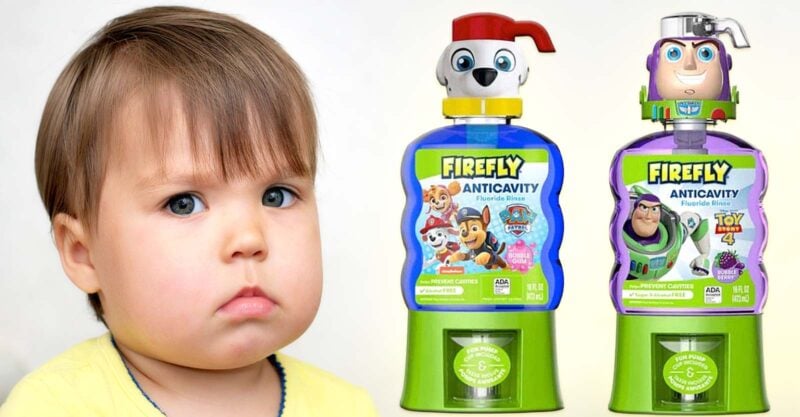


Parents have dropped a class action lawsuit against Perrigo, maker of children’s fluoride mouthrinse, after the company agreed to stop selling the product.
According to the dismissal notice, filed last week, Perrigo — which sold the popular children’s FireFly Anticavity Mouth Rinse — “has made a business decision not to continue commercialization of the products at issue beyond any phase out activities.”
The case was one of six class action lawsuits filed last year accusing major dental product manufacturers of deceptively marketing fluoride-containing products to young children, and misleading parents into believing the products are safe for toddlers.
According to the complaints, the companies design their product labels with candy and fruit juice flavors and images and cartoon characters to appeal to young children, often leading children to believe the products are meant to be consumed as food.
As a result of that marketing, the lawsuits contend, parents unwittingly allow their children to use more mouthwash and toothpaste than recommended, making small children vulnerable to serious health risks from ingesting excess fluoride. These include flu-like symptoms from acute toxicity, dental fluorosis, neurotoxicity and endocrine disruption.
Firefly’s packaging looks like a toy and features cartoon characters popular among preschoolers, including Paw Patrol and Buzz Lightyear.
“Every aspect of the packaging is designed to appeal to very young children,” according to the complaint against Perrigo.
Perrigo denied that it designed the Firefly packaging with a toy-like appearance and candy flavors to appeal to young children, and maintains the product was not designed to appeal to young children.
Yet, the popular kids’ show Paw Patrol is aimed at children ages 2-5 and rated appropriate for all children.
Parent reviews on the Firefly website report children as young as 1-3 excited to use the mouthwash because they recognize the characters featured on the bottle — like Paw Patrol or L.O.L. — and they like the candy and bubble gum flavors.
The mouthrinse, once widely available, can no longer be purchased from major sellers such as Amazon. The Paw Patrol rinse is still in stock online at Walmart, but won’t be restocked once it sells out if the company stops commercialization.
The company did not immediately respond to The Defender’s request for comment.

Perrigo not the first company to back down after legal challenges
Perrigo’s decision to stop selling its kids’ fluoride mouthrinse came about nine months after Procter & Gamble (P&G) was forced to limit its deceptive marketing of Crest fluoride toothpaste to children in response to a similar lawsuit filed by Texas Attorney General Ken Paxton.
Under the terms of a December 2025 agreement, P&G’s advertising of its children’s toothpaste to children under age 6 would reflect age-appropriate toothpaste amounts, beginning in January 2026.
The Centers for Disease Control and Prevention, the American Dental Association, the American Academy of Pediatrics and others recommend that children under age 3 use no more than a “smear” of fluoride toothpaste. Children ages 3-6 should use no more than a “pea-sized” amount.
Crest’s marketing materials often show images of a toothbrush with a full strip of toothpaste, implying a full strip is the recommended quantity.
Research has shown that advertising and labeling tactics by toothpaste manufacturers prompt parents to use more toothpaste than is safe, leading children to overconsume toothpaste.
A 2024 study in Nature found that parents tend to overload toothbrushes by a factor of six to seven times the recommended amount.
In May 2025, Paxton launched an investigation into the makers of Colgate and Crest toothpastes for marketing fluoride toothpaste products to parents and kids in ways that are “misleading, deceptive, and dangerous.”
Paxton reached a similar agreement with Colgate-Palmolive in September 2025.


This article was funded by critical thinkers like you.
The Defender is 100% reader-supported. No corporate sponsors. No paywalls. Our writers and editors rely on you to fund stories like this that mainstream media won’t write.
Regulators are taking notice
In October 2025, the U.S. Food and Drug Administration (FDA) restricted the sale of unapproved prescription fluoride supplements for use by children under age 3 and for older children at low or moderate risk of tooth decay.
It warned four companies selling the supplements — which the agency never approved — that it may take action against them.
The fluoride supplements, which come in tablet or lozenge form, have been routinely prescribed for decades — even to babies as young as 6 months old — to prevent cavities.
The supplements typically contain between 0.25 and 1 milligram (mg) of active fluoride per tablet.
The recommended amount of fluoride in toothpaste for a child under 3 is 0.1 mg, and for children ages 3-6 it is 0.25 mg, so fluoride supplements may have been regularly exposing children to fluoride levels well above the recommended doses.
The lawsuits contend that the amount of fluoride exposure for children in toothpaste and mouthrinse due to deceptive marketing practices is significantly higher — between 0.5 and over 1 mg per day.
In January 2025, top government scientists published a review in JAMA Pediatrics showing that early fluoride exposure was linked to lower IQ scores in children.
In response, the FDA moved to restrict fluoride supplements. FDA Commissioner Marty Makary announced in May 2025 that the FDA Center for Drug Evaluation and Research would evaluate the risks of fluoride exposure from the supplements.
The deluge of research published in top journals and by the federal National Toxicology Program over the last several years linking fluoride exposure to neurotoxic effects in children also compelled the U.S.Environmental Protection Agency’s Office of Water to “expeditiously” implement a “gold standard” review of the risks of fluoride exposure.
However, at the same time, the EPA appealed the 2024 landmark federal ruling that ordered it to regulate the chemical.
Although an appeals court struck down the ruling in May, towns, cities and two states eliminated fluoride from their drinking water, and manufacturers of fluoride products for children are being compelled to stop deceptive marketing practices or to pull their products from the market.
Related articles in The Defender
- Breaking: 6 Lawsuits Filed Today Accuse Makers of Children’s Fluoride Toothpaste of Violating Federal Law
- P&G Agrees to Stop Deceptive Marketing of Crest Toothpaste to Kids
- Texas AG Launches Investigation Into Toothpaste Makers Colgate, Crest for Deceptive Marketing to Kids
- EPA Promises ‘Gold Standard’ Review of Fluoride, as Agency Appeals Decision in Landmark Lawsuit
- Breaking: Federal Court Strikes Down Landmark Fluoride Ruling on Technicality — ‘Not the Science’