Login
Login
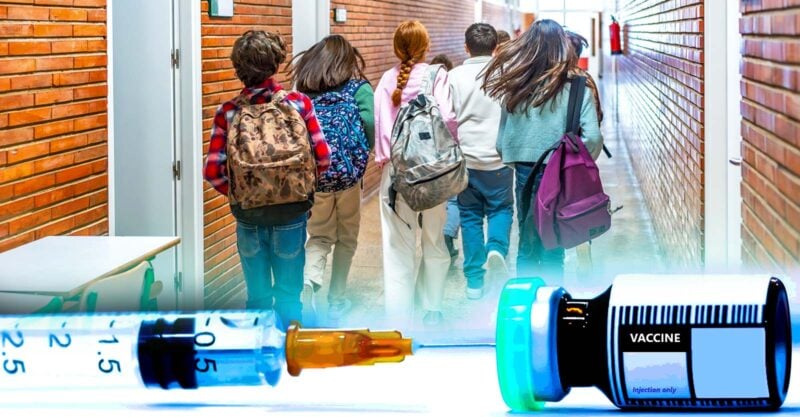


Pennsylvania’s Department of Health (DOH) wants to broaden state health officials’ authority to prevent and manage infectious disease outbreaks — but critics warn the proposed regulations would threaten parental rights by allowing minors to consent to vaccination without their parents’ consent.
Critics also warn the proposed changes could lead to the kind of governmental power overreach reminiscent of the COVID-19 era.
The changes would allow health officials to speak privately with students at school about vaccination without a parent’s knowledge or consent — and school staff would be prohibited from interfering in those conversations.
The DOH began drafting the changes in 2024. However, it wasn’t until early last month that the department published the proposed changes and launched a 45-day public comment period, according to the Pennsylvania Coalition for Informed Consent (PCIC).
The publication of the proposed new regulations and the public comment period come amid a measles outbreak in Pennsylvania, and conflicting reports about measles-related deaths.
Pennsylvania citizens have until Sept. 21 to submit comments, according to a Children’s Health Defense (CHD) action alert.
Even though it’s a busy time of year as children return to school, it’s important that people, particularly parents, weigh in, PCIC wrote in a blog post about the proposed changes.
People don’t have to comment on all aspects of the 502-page proposal. “You don’t need to comment on every provision. Pick the issue that matters to you and tell DOH why,” PCIC wrote.
Commenters should be aware that all comments are posted online, so it’s important to not include any private information.
How changes would grant ‘sweeping powers’ to health officials
Megan O’Malley, a member of CHD’s Pennsylvania Chapter, told The Defender the proposed changes were “a power grab attempt by public health in the face of significant waning influence.”
According to CHD’s action alert, the proposed changes would give “sweeping powers” to state health officials. Changes would include:
- Increasing the reportable disease list for schools from 52 to 125 conditions.
- Broadening the conditions under which DOH can exclude unvaccinated students from school during disease outbreaks.
- Requiring healthcare providers to report all vaccines given to individuals to the state’s information system, PIERS, unless a patient objects in writing.
- Adding words that justify increased disease-control measures, such as mask mandates.
- Allowing state and local health officials the authority to enter “an apartment, building, health care facility, school, college or university, or other location as necessary to conduct its investigation.”
- Requiring every school in Pennsylvania to give the department “reasonable and timely access” to students in private for contact tracing or “partner services,” without requiring explicit parental knowledge or consent.
- Creating a birth defects registry.
According to O’Malley, “These sweeping changes are not necessary, and they will degrade people’s privacy, personal liberty, and parental rights. Now is the time to express your opposition.”
Provision allows for minors to consent to vaccines without parents’ knowledge
The most concerning proposed change would require schools to give state or local health officials private access to students for contact tracing and for what the DOH called “partner services,” according to Amanda Richardson, PCIC’s director of organizational operations and community engagement.
“The proposal’s definition of ‘partner services’ includes services related to sexually transmitted diseases and expressly includes ‘hepatitis screening and vaccination’ among possible services,” Richardson said.
The provision does not expressly require advance parental notice, parental consent, a parent’s presence or notification after the meeting takes place, Richardson told The Defender.
That’s a problem, she said, because Pennsylvania has a minor-consent law. Under that law, minors can consent to medical and health services to determine the presence of or treat a sexually transmitted or other reportable disease without parental consent.
Richardson explained that if health officials can meet with students without their parents’ knowledge or consent, and “partner services” include “hepatitis screening and vaccination,” and under the minor consent law, minors can consent to treatment, the proposed regulations could lead to minors consenting to vaccines without their parents’ knowledge.
The provision reads:
“The Department proposes to require a school to provide the Department or local health authority with reasonable and timely access to a person for the purpose of contact tracing or partner services, including access when classes are in session or at any other time the person is present at school, on school premises or attending a school function. …
“… The Department proposes to require a person, including an employee or official of a school, to permit the Department or local health authority to meet and speak with a student or other person, in private, and to prohibit the person from interfering with the student or other person’s ability to exercise their right to give consent.”
In an Aug. 27 statement, Pennsylvania State Rep. Jill Cooper also flagged the provision as interfering with parental rights.
“Stripping parental knowledge and consent from school interactions to conduct contact tracing or offer medical treatments runs entirely counter to our values,” Cooper wrote.
Supreme Court said DOH didn’t have authority to mandate masks — unless it rewrote regulations
Pennsylvania’s proposed changes stem, at least in part, from a lawsuit it lost during the COVID-19 pandemic. In November 2021, Pennsylvania parents sued the DOH over the agency’s attempt to institute a statewide mask mandate in schools.
In December 2021, the Pennsylvania Supreme Court sided with parents, ruling that the health department did not have the authority to impose a mask mandate. However, the court noted that the agency could change its regulations to give itself that authority in the future.
That’s exactly what the DOH is doing now, noted health writer Sayer Ji on Substack.
On page 3 of the proposed changes, the DOH spells out the 2021 state Supreme Court decision. The agency pointed to the ruling as one of the reasons for the proposed changes.
On Aug. 26, Pennsylvania House Republican Leader Jesse Topper called on Shapiro’s administration to withdraw the proposed changes. Topper said in a statement:
“Oppressive COVID-era policies were viewed with skepticism by Pennsylvanians of every demographic. Submitting these regulations seems to be devoid of any understanding of our recent history of dangerous government overreach and the resulting public backlash.”
In a later Substack post, Sayer also criticized the DOH for proposing to create a state-level reporting system for adverse reactions to the smallpox vaccine — but not for vaccines that are given more routinely.
The smallpox vaccine is “a vaccine almost no Pennsylvanian receives,” Ji wrote. The shot is no longer recommended for the general population, according to the Centers for Disease Control and Prevention.
Lawmaker: We need more legislative oversight on public health regulations
Because the proposed changes apply to agency regulations, rather than a law, elected officials won’t vote on them, the PCIC explained in an Aug. 30 presentation.
Instead, once the written public comment period closes, the state’s Independent Regulatory Review Commission (IRRC) will hold a meeting to hear in-person comments.
Following that meeting, the DOH will submit a finalized version of the proposed regulation to the IRRC, according to the IRRC FAQs. The IRRC will vote on whether to approve or disapprove the proposed regulation in its entirety.
Pennsylvania Sen. Michele Brooks said she believes there should be more legislative oversight before any changes to public health regulations are approved.
The proposal should also set more time limits for when the DOH’s expanded powers end, Brooks said.
In an Aug. 12 memo, Brooks said she plans to introduce legislation that would require new DOH regulations to include a mandatory sunset date and be approved by the General Assembly before taking effect.
As of press time, Pennsylvania appears to be the clearest example of states seeking to bolster their public health authority.
Some states are moving in the opposite direction. On Feb. 18, Nebraska passed a law requiring its health directors to obtain written approval from a majority of elected representatives before issuing community-wide directed health measures.
Nebraska’s law also clarifies that community health measures must be ratified by a community’s local health board and will expire after seven days unless reauthorized.
On Feb. 26, Arizona’s House of Representatives passed a bill that, if enacted, would bar the state government, businesses and schools from requiring residents to obtain a medical intervention — including a vaccine — to work, enter a public space or attend school.
Pennsylvania’s DOH and Shapiro’s office did not respond to our comment request by the deadline.
Related articles in The Defender
- Pennsylvania Coroner Investigating Death of Second Child With Positive Measles Test
- Coroner Contradicts Pennsylvania Health Officials, Says Measles Didn’t Cause Newborn’s Death
- 2 ‘Measles-Associated’ Deaths in Pennsylvania Spark Media Blitz — But Officials Won’t Release Details
- New York’s Proposed Minor Consent Law ‘Dangerous’ and ‘Misleading,’ Critics Say
- CHD, Parents Take on Philadelphia Health Officials in Bid to Overturn Law Allowing Kids to Get Vaccines Without Parents’ Consent