

 Login
Login
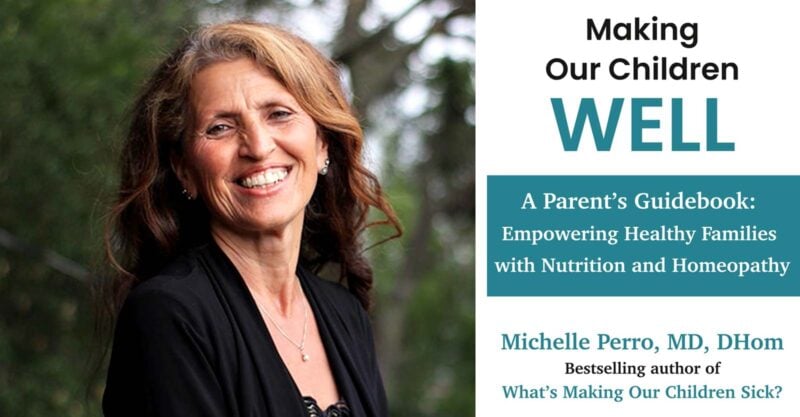


Pediatrician Dr. Michelle Perro wants to bring health back to the basics by showing parents what they can actually do, day-to-day, to support their children’s well-being, she said on “Good Morning, CHD.”
That’s the focus of her new book, “Making Our Children Well — A Parent’s Guidebook: Empowering Healthy Families with Nutrition and Homeopathy.”
In a recent conversation with Dr. Paul Thomas, Perro made it clear who her audience is. “I wrote for parents and not for scientists, not for physicians,” she said. “This is a parent-focused book.”
Her goal is to make health practical and affordable. “I have these 12 steps that people can do,” she said. “And they’re doable.”
Perro traced the rise in digestive issues, neurodevelopmental challenges and immune problems in children to a mix of modern exposures, including ultraprocessed food, pesticides, disrupted gut health and environmental toxins.
She said she first noticed a change after opening an integrative urgent care practice around 1999.
“I started seeing kids for acute issues, ear infections, rashes, eczema, the usual stuff,” she said. Then things shifted. “I started seeing an uptick in autism … and I also saw that they were having a host of digestive issues. And I thought, ‘What the heck?’”
When colleagues told her that she was just getting better at diagnosis, she disagreed. “Your grandmother can diagnose autism,” she said.
That experience pushed her to dig deeper and focus on what families could do for themselves.
She emphasized “low and slow” changes at home. This isn’t an overnight overhaul, but steady steps that add up — especially around food, environment and daily habits, she said.
Much of what she recommends isn’t new. It’s what families used to know, she said.
“We’re resurrecting information that our families once knew, passed on via great-grandparents, grandparents, parents,” she said. “And it’s gotten kind of muddied and I want to just resurrect what we once knew.”

‘We have missed the mark’
Food is a starting point.
“I spent a lot of time on pre-pregnancy, pregnancy, both nutrition and homeopathics on how to create the most robust microbial environment for mom, hence baby,” she said.
What a mother eats during pregnancy shapes what a child prefers later, according to Perro. “If mom includes … ferments, for example, babies have more of a predisposition to try and like these foods,” she said. “So those taste preferences begin in utero.”
She also raised concerns about infant formula. “Infant formula is the first ultraprocessed food for babies,” she said. Because so many families rely on it, quality matters even more. “It behooves all of us to have the best formula possible.”
Perro was part of a team that tested 20 baby formulas, all of which came back positive for toxic metals. By about six months of age, approximately two-thirds of U.S. babies are using formula.
“I would love to see a national movement to protect our babies and their first foods,” she said.
Perro also looked closely at gut health, including the use of probiotics. In the book, she offers guidance on what to buy based on ingredients and sourcing.
“I like to see who’s producing their probiotic,” she said, noting that some products source microbes from large industrial suppliers. She cited one company that purchased its microbes from a supplier owned by chemical giant DuPont.
“I’m trying to do the best I can to support local manufacturers that have clean products,” she said of the list of recommended products in her book.
She also connected gut health to mental health. “A lot of psychiatric issues are gut generated,” she said, citing anxiety and depression.
If families ignore factors like pesticide exposure, glyphosate-based herbicides and genetically modified food, “we have missed the mark,” she said.
Detox tips include adding plants, shutting off router
Perro walked through other parts of the home environment — water, air and everyday exposures.
“Air is one of the biggest drivers of chronic health diseases in children,” she said.
Her solution is simple and accessible. “I wrote about 10 different plants that parents can buy that filter air. One of my favorites is the spider plant. I have spider plants literally all over my house … ferns, peace lilies.”
For Perro, the appeal is both practical and aesthetic. “There are all types of plants you can buy that will filter and clean your air. I mean, how beautiful is that?” she said.
She also encouraged families to reduce exposure to wireless technology and screens.
“Shutting off your router at night, almost anyone can do,” she said. “And hardwiring is not so hard either.”
She tied that to what she has observed in children today. “Now we have children who can’t do cursive writing, some kids who can’t tell time because they’re so used to digital devices,” she said.
“There is a digital detox revolution happening,” she said.


This article was funded by critical thinkers like you.
The Defender is 100% reader-supported. No corporate sponsors. No paywalls. Our writers and editors rely on you to fund stories like this that mainstream media won’t write.
‘There’s always an opportunity to get better’
Getting kids outside is another simple step. Parks, fresh air and time in nature all matter.
So does growing food, even in small jars on a windowsill.
“You live in a city apartment, grow herbs in your window so everybody can do it,” she said. “And kids will eat more of those foods and herbs if they participate in the growth process.”
She also pointed to low-cost ways families can support detox at home.
“One of my favorite tools — every family can do this — are detox baths” using ingredients like Epsom salts and baking soda, she said. “All affordable minerals; all will help children detox.”
Throughout the book, Perro keeps the focus on what parents can control.
“These are things parents can do,” she said. “A lot of them don’t cost anything, or it’s a minimal cost.”
The book isn’t “judgy,” Perro added. It’s not about what isn’t being done, but what can be done. “Wherever parents are is where we meet. Even if you’re eating mostly waffles and canned food, there’s always an opportunity to get better.”
Watch Perro discuss her steps for parents on ‘Good Morning, CHD’ here:
Related articles in The Defender
- Glyphosate Poses ‘Profound and Permanent’ Risks to Kids: Children’s Health Defense Urges U.S. Supreme Court to Rule Against Bayer
- Autism Not a Genetic Disorder, New Peer-Reviewed Study Shows
- ‘Operation Stork Speed’: HHS, FDA Launch Plan for More Testing, Scrutiny of Infant Formula Ingredients
- ‘High Certainty’ Cellphone Radiation Linked to Cancer in Animals, WHO Study Finds
- Even Tiny Doses of Glyphosate Fed to Pregnant Mice Damaged Gut Health in Offspring
