Login
Login
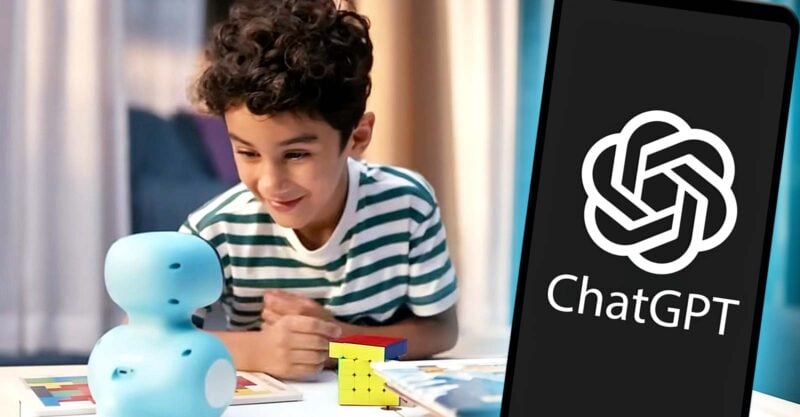


Artificial intelligence (AI) systems that tech companies say are not appropriate for children are increasingly embedded in kids’ toys, according to a new report from the U.S. Public Interest Research Group (PIRG) Education Fund.
The report, “Not for Kids. Found in Toys,” warns that the flawed policies of major companies such as OpenAI and Anthropic allow powerful chatbot technologies to make their way into products designed for children.
“Look online and you’ll find a growing number of AI toys — talking stuffed animals or toy robots — powered by chatbots like ChatGPT,” an article PIRG published with the report says. “There’s just one problem: some AI companies say those same chatbots aren’t for kids.”
PIRG found it is easy to enter into an agreement with major AI companies to access their technology and use it to create toys — even though the companies say they prohibit the use of those technologies for products targeting children.
Jason Christoff, a behavior modification and psychology researcher who hosts the “Psychology of Freedom” podcast, told The Defender that AI toys open the door to psychological programming of children.
“I think it’s important to understand that a child’s brain is much easier to influence than an adult’s,” he said. “Children operate at much different brain wavelengths, making them easier to program and influence.”
According to Christoff:
“A child’s unique brain wave activity makes them highly suggestible. Throughout history, all mind control programs have coveted a child’s suggestibility to produce a more effective adult end product. AI isn’t organic, it’s programmed by someone else.
“Whoever programs the AI will have direct access to your child’s brain, in regards to these chatbot toy applications. To say that caution is warranted here would be an understatement.”


AI models restricted for children — but still powering toys
Many leading AI companies say they prohibit children from directly using their chatbot platforms. Some limit access to users over 13, while others set even higher age limits.
“OpenAI, Anthropic, and xAI all have said publicly that their own chatbots aren’t for children, and don’t permit users under 13 to access their models directly. Neither does Meta, according to its fine print,” the authors of the PIRG report wrote.
Google has explicit rules against the use of the Gemini API in products for users under 18.
Yet PIRG found that these same companies allow outside developers to access their AI systems and embed them in consumer products — including toys.
For example, ChatGPT allows developers to use its products, through its API, to build products for children. An API is a set of rules and protocols that allows two different software programs to communicate with each other and exchange data.
ChatGPT, owned by OpenAI, bans the use of its API only in cases where it will be used to build products that may “exploit, endanger, or sexualize anyone under 18 years old.” However, it also appears to encourage such uses by offering prompt examples clearly aimed at children.
PIRG found 20 AI toys sold online using OpenAI’s technology. These include Bondu, a stuffed dinosaur marketed for kids ages 4-8 and the “AI intelligent conversation companion toy” teddy bear for sale online at Walmart.
Even FoloToy, which OpenAI said it banned after PIRG’s research found it would discuss sexual topics with kids and give them step-by-step instructions for lighting a match, is still on the market.
In another example, although Google’s API explicitly prohibits developers from using its Gemini generative AI in products directed at users under age 18, PIRG found toys — including a stuffed animal called BubblePal and a small robot called Miko — that are powered with Google’s AI.
PIRG’s report underscores a contradiction in how AI tools are regulated: the technology may be deemed inappropriate for children on the companies’ own platforms, yet still power toys designed for them.
“The result is a market for kids’ AI products where the job of ensuring child safety is largely left up to unvetted third parties,” PIRG wrote.
Researchers say companies ask almost no questions
To test how difficult it would be to build an AI toy, PIRG researchers attempted to sign up as developers with several major AI companies.
The process required very little scrutiny, they said.
They registered using the name “PIRG AI Toy Inc” to make it obvious they may be planning AI products for children. Four of the five AI companies — Google, Meta, OpenAI and xAI — “asked no substantive vetting questions, requiring only basic information like an email address and credit card, and checking a box that we had read the fine print,” the report states.
Only one company, Anthropic, asked if the developers intended to create products for minors.
Researchers said the minimal oversight makes it easy for developers to incorporate powerful AI systems into products intended for children.
After obtaining access to the models, PIRG’s team attempted to create its own AI toy.
“Once we got developer access, we then built a chatbot simulating an AI-powered teddy bear for kids on three of the platforms,” the report states. “Each took less than 15 minutes.”
They added, “It’s easier than ever for anyone to build AI applications without much experience or specialized skill — including products for kids.”
AI toys are listening, learning — and shaping young minds
In its last report on AI toys, PIRG noted that AI toys also raise concerns about privacy and emotional influence.
Many toys include microphones or cameras that allow them to listen to children’s conversations.
“AI toys record children’s conversations,” PIRG researchers wrote, noting that some products also collect additional data, including images or biometric information.
“How will child behavioral data like this be used in the future? What sort of applications could be created? The potential for mass surveillance, manipulation, brainwashing, and reality warping are off the scales!” Tim Hinchliffe, editor of The Sociable, told The Defender.
Child development experts have also raised concerns about AI companions for children.
“We don’t know what having an AI friend at an early age might do to a child’s long-term social wellbeing,” said Kathy Hirsh-Pasek, Ph.D., a psychology professor at Temple University and senior fellow at the Brookings Institution.
“If AI toys are optimized to be engaging, they could risk crowding out real relationships in a child’s life when they need them most,” she added.
“Apart from collecting massive data on children, putting AI chatbots in toys is like having mini robot influencers whispering in children’ s ears,” Hinchliffe said. “Not only listening, but conversing with them, shaping their perceptions and warping their realities.”
Children are highly impressionable, and they don’t necessarily have the skills to distinguish between AI toys and real people, others have argued.
“Young kids’ minds are like magical sponges. They are wired to attach,” Dr. Jenny Radesky, developmental behavioral pediatrician, explained in a 2025 Fairplay advisory on AI toys signed by around 80 experts and 80 organizations.
“This makes it incredibly risky to give them an AI toy that they will see as sentient, trustworthy, and a normal part of relationships,” she added.
The Defender is 100% reader-supported. No corporate sponsors. No paywalls. Our writers and editors rely on you to fund stories like this that mainstream media won’t write. 

This article was funded by critical thinkers like you.
Hidden risks: wireless radiation exposure in children
AI toys must connect wirelessly to the internet to function.
Anything that needs a wireless network to function will likely emit harmful levels of radiofrequency (RF) radiation, said Miriam Eckenfels, director of Children’s Health Defense’s Electromagnetic Radiation (EMR) & Wireless Program.
She said children are particularly vulnerable to the ill effects of wireless radiation because they have thinner skulls, smaller heads and a developing nervous system.
She added:
“One primary recommendation to reduce the impact of RF radiation is keeping sources at a distance from the body. So, if this technology is embedded in toys, children will likely have them close, sleep with them, sit with them for prolonged periods of time, or have them close to their heads, which is not something we recommend, at all.
“We know too much about the dangers of wireless radiation to be careless about it.”
Eckenfels pointed to recent research by Paul Héroux, Ph.D., establishing a link between EMR and Type 2 diabetes, as one of many serious health effects children may suffer from such exposure.
“It’s just not something we want our kids to be exposed to 24/7. Embedding wireless technology in toys can have devastating long-term consequences and we should be very careful about it,” she said.
Meta, Google, Anthropic and OpenAI did not immediately respond to requests for comment.
Related articles in The Defender
- AI Toys for Young Kids? Chatbots Could Stunt Children’s Emotional Growth, Experts Say
- ‘Normalizing Surveillance From a Young Age’: More Schools Using Facial Recognition, AI Technologies to Monitor Kids
- Today’s Kids Are Caught in a Dangerous Digital Trap. What Can Parents Do?
- EMR Radiation From Cell Towers, Wireless Devices Linked to Diabetes Epidemic
- AI ‘Nanny Bots’ Promise Kids ‘Genuine Friendship’ — But Experts Warn of Harm to Cognitive, Social Development