Login
Login


By Carey Gillam and Johnathan Hettinger
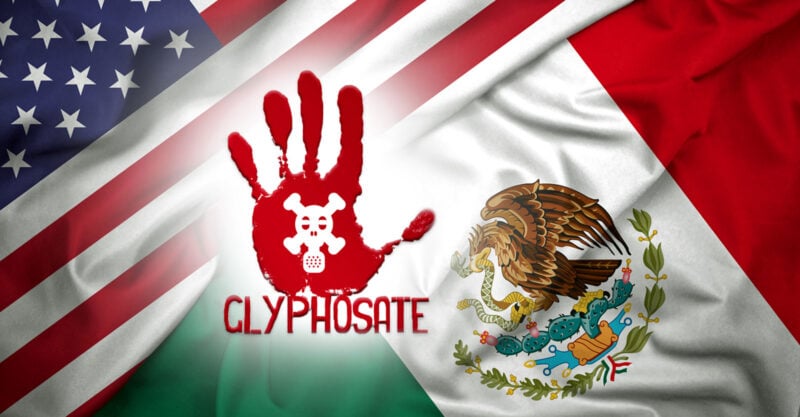
After standing firm for more than three years on plans to enact a ban on the weed killer glyphosate starting today, Mexican officials said they were delaying the ban.
Mexico is currently embroiled in a trade dispute with the U.S. over its unwillingness to accept genetically modified (GM) corn, typically altered to tolerate being sprayed with glyphosate and to manufacture toxins that repel pests, and Mexican officials have repeatedly stated that they consider both GM corn and glyphosate as threats to the health of the Mexican population as well as to the health of the environment.
But in a surprising reversal, less than a week before the ban was to kick in on April 1, government officials announced that glyphosate use could continue until other options for weed control are found.
The move came amid reported heavy lobbying from powerful global agrochemical companies and pressure from U.S. trade officials.
Similarly, in 2019, Thailand backed down from a planned glyphosate ban after pressure from U.S. officials and industry actors.
Fernando Bejarano, of the Pesticide Action Network in Mexico, said that the move comes after pressure from industry and U.S. officials.
Glyphosate is the active ingredient in the Roundup herbicide brand launched decades ago by Monsanto and now owned by Bayer, which bought Monsanto in 2018.


Monsanto developed genetically engineered corn, soybeans, canola and other crops to tolerate being sprayed with glyphosate, a trait that allows farmers to spray the pesticide over the tops of growing crops without killing them while killing weeds.
Opposition to glyphosate and crops sprayed with it has escalated over the years, particularly after the World Health Organization’s International Agency for Research on Cancer classified glyphosate as a probable human carcinogen in 2015 based on published and peer-reviewed scientific research.
Foods made with crops sprayed with glyphosate commonly carry residues of the weed killer, which people then consume through their daily diets, a factor cited by Mexican officials.
Mexican President Andres Manuel Lopez Obrador issued the decree to start phasing out glyphosate in 2020.
The New Lede recently published a story revealing previously secret emails between U.S. officials and agrochemical industry players pertaining to Mexico and other countries that have tried to ban glyphosate or other pesticides.
The emails lay out how deeply the work of U.S. taxpayer-funded officials is entwined with the interests of big agrochemical companies, such as Chinese-owned Syngenta and Germany’s Bayer AG.
The emails outline how the Office of the U.S. Trade Representative, the federal agency responsible for American trade policy, works to benefit seed and chemical companies while shrugging off evidence presented by foreign governments that the products pose dire risks to the safety of their environment and their citizens.
Similarly, the U.S. Department of Agriculture and the U.S. Environmental Protection Agency are shown in the emails helping push back against countries that try to ban pesticides linked to human health issues and the demise of crucial species.
In communications with CropLife America, the lobbying arm for the agrochemical companies, one government official states how hard his office is working to defend the industry’s products.

The documents show that for years, the U.S. government has been working to sway Victor Villalobos, Ph.D., the Mexican Secretary of Agriculture and Rural Development.
Villalobos was among the officials announcing the delay on a glyphosate ban.
Villalobos, a plant geneticist, was viewed as a potential way to get the glyphosate ban turned over.
The records show that both U.S. Secretary of Agriculture Tom Vilsack and U.S. Trade Representative Katherine Tai held discussions with Villalobos.
A U.S. briefing memo prepared for a July 2021 meeting between Tai and Villalobos noted:
“Approximately 40 percent of herbicides used in Mexico have glyphosate in their formulas. Secretary Vilsack and Secretary Villalobos have discussed the importance of access to glyphosate-containing products to Mexican farmers.”
Originally published by The New Lede.
Carey Gillam is the managing editor at The New Lede.
Johnathan Hettinger is a freelance journalist and investigative reporter.