Login
Login
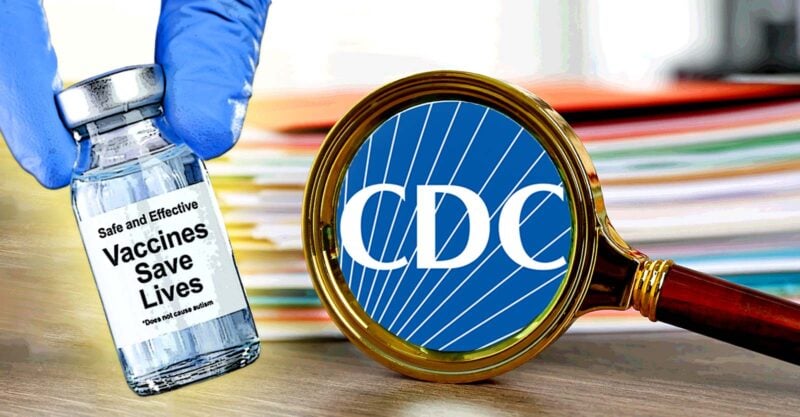


Lawmakers are pressing U.S. Health Secretary Robert F. Kennedy Jr. on why the Centers for Disease Control and Prevention (CDC) blocked publication of a study claiming COVID-19 vaccines reduced serious illness — but some scientists said the study was flawed and the CDC was right to reject it.
The paper was supposed to be published in the March issue of the CDC Morbidity and Mortality Weekly Report (MMWR). But the agency’s acting director, Jay Bhattacharya, rejected it, citing concerns with the methodology used to reach the conclusions.
News that the CDC rejected the paper prompted a backlash by mainstream science and media outlets. The Washington Post reported that the move “raised concerns among current and former officials that information about the vaccine’s benefits are being downplayed” because they conflict with Kennedy’s views on vaccines.
According to NBC News, “Many public health experts see this as part of a broader effort to sow doubt in vaccine safety and make vaccines less available to the public.” Sen. Dick Durbin (D-Ill.) suggested that the CDC is “muzzling scientists.”
But in an op-ed published in the Post, Bhattacharya wrote that he didn’t block the study — he merely “raised specific concerns about the statistical methodology chosen for the study in question.” He said those concerns “go directly to the validity of the study’s conclusion.”
Bhattacharya wrote:
“Scientific disagreement is not interference. When methodological limitations could meaningfully affect findings — especially on an issue as consequential as vaccine effectiveness — it is not only appropriate but necessary to pause, question and scrutinize.”
Retsef Levi, Ph.D., a member of the CDC’s Advisory Committee on Immunization Practices (ACIP), agreed with Bhattacharya.
“The CDC does not block the scientists who wrote the study from submitting it for publication in any scientific journal they wish, but merely disagrees to publish it in MMWR, an outlet that typically reflects the formal standing of the CDC, because of serious scientific concerns regarding the study’s methodology,” Levi said.
Levi, a professor of operations management at the MIT Sloan School of Management, said he shared the same concerns and had discussed them at ACIP’s September 2025 meeting.
The paper — which was leaked to Inside Medicine late last month after the CDC rejected it — presented data suggesting that the COVID-19 vaccines for the 2025-2026 season were 53%-55% effective in preventing serious infections and hospitalizations among healthy adults.
Vaccine proponents used the data as evidence that the COVID-19 shots remain safe and effective — and suggested that the CDC’s decision not to publish the paper put the public at risk.
In their letter to Kennedy last week, Reps. Frank Pallone Jr. (D-N.J.), Diane DeGette (D-Colo.) and Yvette D. Clarke (D-N.Y.) suggested Kennedy and the U.S. Department of Health and Human Services (HHS) took actions that “deliberately misrepresent the risk of vaccinations.”
As a result, “many Americans may needlessly forgo immunization, and as a result get sick, hospitalized, or die,” they wrote.
When asked about the study and Bhattacharya’s decision not to publish it in the MMWR, HHS referred The Defender to Bhattacharya’s op-ed in the Post.

Bhattacharya: Paper used methodology with ‘well-known limitations’
In his op-ed in the Post, Bhattacharya took issue with the CDC researchers’ use of the test-negative design.
JAMA Evidence defines test-negative design as follows:
“In a test-negative design, the study population consists of people tested for the disease of interest, typically because they exhibit specific symptoms. … Those with positive diagnostic test results are test-positive cases. Test-negative controls meet the criteria for testing but have negative diagnostic test results.6 Thus, their symptoms are due to a cause that the vaccine does not target.”
According to NBC News, the test-negative design is a “common way to evaluate the effectiveness of vaccines.”
However, according to Bhattacharya, the test-negative design “has been used before but has well-known limitations.” He wrote:
“The core problem is that, to measure the effectiveness of a vaccine in keeping people out of a hospital (for instance), this method throws away all data about people, vaccinated or not, who are never hospitalized. Instead, it replaces data with unverifiable assumptions, leading to bias.
“Factors such as prior infection, behavioral differences and who shows up for care can all skew results in ways that are hard to adjust for. The vaccine effectiveness estimates this method yields could be an overestimate or an underestimate; it’s impossible to tell.”
In an interview with The Defender last month, Children’s Health Defense (CHD) Senior Research Scientist Karl Jablonowski said the test-negative design is untenable at a time when few Americans are getting COVID-19 boosters.
“Who is still getting boosted for COVID-19 in the 2025-26 season?” he asked, suggesting that significant differences between the groups could skew results. “The idea that the two groups … are identical … is absolutely ridiculous.”
Jablonowski said a CDC flu vaccine efficacy study using the test-negative design reported a tie for the second-highest efficacy on record during the 2024-2025 season. However, a Cleveland Clinic study from that same season found that people who got the flu vaccine were more likely to get the flu.
In an interview last week, Jablonowski told The Defender that the test-negative design “is only valid if the behaviors that lead to communicable disease exposure and healthcare-seeking behaviors of the two groups, vaccinated and unvaccinated, are similar — and better if they are statistically identical.”
According to Jablonowski, one reason the CDC has preferred the test-negative design is that it is “among the cheapest and easiest” of study designs.
“If the vaccinated group is more likely to seek healthcare or seek testing on lesser symptoms, negative test results will increase the measurement of vaccine efficacy. If an unvaccinated is more likely to seek healthcare on greater symptoms, positive test results will increase the measurement of vaccine efficacy,” Jablonowski said.
Why didn’t CDC researchers choose an alternative methodology?
Levi told The Defender that there are “multiple other methodologies” the CDC researchers could have pursued.
According to NBC News, one such methodology is a cohort study, “which tracks vaccinated and unvaccinated people over time, then compares the rates of illness.” But such a study “is far costlier and typically requires a larger sample size and longer follow-up period,” NBC News reported.
The same report said that some federal health officials are calling for “more randomized controlled trials,” in which a group of vaccinated people would be compared to a group of people who received a placebo instead of a real vaccine.
“But in the case of Covid shots, the method poses ethical concerns because such a trial would require withholding an approved vaccine from some participants,” NBC News reported. According to the Post, “using such an approach would be unethical because the current recommendation is to give the vaccine.”
Some critics suggested that random trials and peer review would delay publication of vaccine safety data. But according to Sam Posner, Ph.D., who formerly led the CDC’s Office of Science, quick results are no longer needed for COVID-19 vaccines now that the pandemic has ended.
“There is not uniform agreement about the test-negative design,” Posner said. “There is plenty of science to suggest that there are alternative methods, and, if anything, using them will make the evidence stronger.”
Use of test-negative methodology part of ‘structural weakness’ with vaccine studies
While the study’s authors acknowledged some of the limitations of their methodology, the paper “does not fully grapple with their implications,” according to TrialSite News, which said the paper didn’t adjust for prior infection — “a critical omission in 2025, when natural and hybrid immunity dominate population-level protection.”
“Without that adjustment, it becomes difficult to separate the effect of the vaccine from the effect of past exposure. The result is not necessarily wrong, but it is uncertain — more conditional than definitive,” TrialSite News reported.
The TrialSite News analysis also stated:
“The central assumption is straightforward: vaccinated and unvaccinated individuals are comparable except for their infection status. In practice, they are not. Vaccinated individuals tend to seek testing more often, engage more frequently with the health care system and adopt different risk behaviors.
“Unvaccinated individuals, by contrast, often differ in age, prior exposure to the virus and patterns of care. These are not minor distortions. They are structural.”
In a separate analysis, TrialSite News said this is part of a broader “structural weakness” with vaccine-related studies, many of which rely “on observational methods that assume away the very biases that define real-world data.”
The Defender is 100% reader-supported. No corporate sponsors. No paywalls. Our writers and editors rely on you to fund stories like this that mainstream media won’t write. 

This article was funded by critical thinkers like you.
Bhattacharya: Scientific rigor, not politics, behind decision not to publish
In an interview with NBC News, Dr. Fiona Havers, formerly a CDC medical epidemiologist who oversaw the agency’s COVID-19 hospitalization but who resigned last year in protest of Kennedy’s ACIP appointees, called the CDC’s concerns politically motivated.
“I’m not saying that they haven’t stopped other publications or forced changes to them, but to wholesale stop this report from coming out, given that it is such a well-established platform and such a well-established methodology, does strike me as a new level of political interference into CDC’s scientific process,” Havers said.
But Brian Hooker, Ph.D., CHD chief scientific officer, said the CDC’s practices under previous administrations were the politically motivated ones, citing studies linking autism with the measles-mumps-rubella (MMR) vaccine and thimerosal — a mercury-based preservative — as examples.
“We have a historically one-sided CDC that produces ‘Johnny One-Note’ studies lauding the benefits of vaccines, but when they get called on it by their new management, they whine like little babies,” Hooker said.
In his op-ed, Bhattacharya said he has called for the development of a peer-reviewed CDC journal, to operate separately from MMWR, “to complement it and elevate scientific rigor across all CDC publications.”
“Peer review remains the gold standard because it subjects findings to independent scrutiny, forces transparency about limitations and strengthens confidence in the results,” Bhattacharya wrote.
But some suggested that transparency on the part of federal health agencies should also include the publication of flawed papers.
Daniel O’Connor, founder and CEO of TrialSite News, told The Defender, “Science does not lose credibility because it is imperfect. It loses credibility when institutions hide the imperfections from public view. In a post-pandemic world, transparency is no longer optional — it is the price of trust.”
Related articles in The Defender
- Paul Offit Tried to Write an Anti-Vax Playbook. It Backfired.
- Key Takeaways From Last Week’s Meeting of New CDC Vaccine Advisers
- CDC Scientist Who Drove COVID, RSV Vaccine Policies Resigns in Protest
- ‘The Narrative is Cracking’: CDC Adviser Who Promoted COVID Vaccines for Pregnant Women Resigns
- ‘Deeply Concerning’: This Year’s Flu Shots Led to 27% Higher Risk of Flu
- Kennedy Calls for ‘Radical Transparency’ at Government Health Agencies, as Sanders Demands CHD Stop Selling Onesies