Login
Login
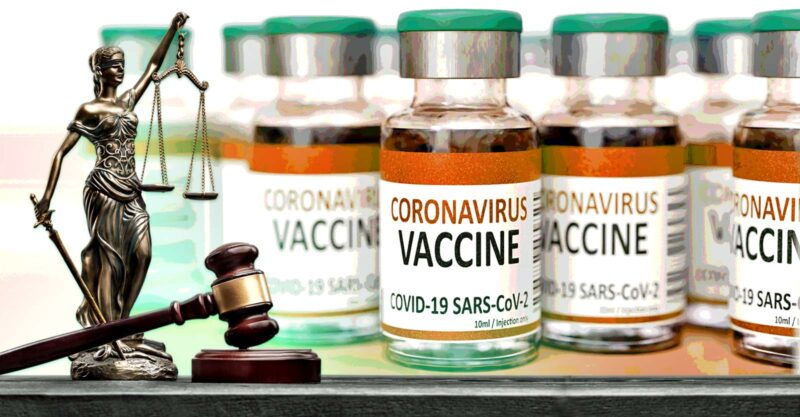


Several people injured by COVID-19 vaccines are renewing their fight in court after filing an amended lawsuit alleging the federal government’s COVID-19 compensation program violates Americans’ constitutional rights to due process and a jury trial.
The four plaintiffs, including the father of a minor who was injured by the vaccine, first filed their suit first filed their suit in federal court in Texas in 2024. Three of the plaintiffs alleged that the claims they filed with the Countermeasures Injury Compensation Program (CICP) were rejected or ignored. A fourth missed the one-year window for filing a claim because she was focused on seeking treatment for her injuries.
According to the complaint, CICP “is void of critical due process protections afforded in virtually every other administrative context.” As a result, people seeking compensation through the CICP are “deprived of their liberty and property interests, resulting in gross substantive and procedural unfairness.”
The CICP is hampered by a significant backlog in cases and high barriers for potential claimants, the lawsuit states.
These barriers — which include a short filing window and no right of discovery or to be represented by one’s own attorney — violate the Fifth Amendment’s due process clause and the Seventh Amendment right to a jury trial, according to the plaintiffs.
The plaintiffs include:
- Theodore Cabaniss, whose son, T.C., was a “thriving straight-A student” and a black belt in taekwondo. After receiving the Pfizer COVID-19 shot, he sustained “a cascade of debilitating injuries,” including a permanent blood disorder. T.C.’s claim was filed more than three years ago. CICP has not responded.
- Jessica Smith, who received the Pfizer COVID-19 shot in September 2021 and sustained “numerous injuries including severe dysautonomia and tinnitus.” Smith filed a claim with CICP more than three years ago, but despite a diagnosis stating that her injuries are vaccine-related, CICP has not responded.
- Elizabeth Thiele, M.D., Ph.D., a professor of medicine at Harvard and practicing pediatric neurologist who, following her COVID-19 vaccination, developed a shoulder injury and psoriasis with arthropathy, making it “nearly impossible” for her to treat patients. She missed CICP’s one-year filing window because she was unaware of the program’s existence.
- Dr. Joel Wallskog, who “sustained serious injuries” after getting the Moderna COVID-19 shot. These injuries include transverse myelitis and autoimmune dysfunction. The injuries forced Wallskog to shut down his “once thriving practice as an orthopedic surgeon.” CICP denied his claim and a subsequent appeal.
The plaintiffs seek a declaration that CICP is unconstitutional, a permanent injunction blocking the operation of CICP, and the opportunity to pursue their “state and common law claims in a court of competent jurisdiction.”
Defendants include the federal government; President Donald Trump; the U.S. Department of Health and Human Services (HHS); the Health Resources and Services Administration (HRSA), which oversees CICP; HHS Secretary Robert F. Kennedy Jr.; and HRSA Administrator Thomas J. Engles in their official capacities.
‘Morally and ethically bankrupt program’
People injured by the COVID-19 vaccine can seek compensation through the federal CICP, established under the Public Readiness and Emergency Preparedness Act (PREP Act) of 2005.
The PREP Act grants blanket liability protection to COVID-19 vaccine manufacturers — including Moderna, Pfizer and Novavax — for nearly every type of injury caused by the vaccines. It also shields those administering those vaccines. The law requires the vaccine-injured to file their claims through CICP rather than an ordinary court.
“The PREP Act stripped vaccine injured individuals of the ability to bring common law and state law claims for … negligence, intentional infliction of emotional distress, and products liability,” the complaint states.
Attorney Aaron Siri, one of the lawyers representing the plaintiffs, told The Defender the CICP “is a morally and ethically bankrupt program that violates every aspect of procedural due process and is designed to deny claims.” He added:
“Calling [CICP] a kangaroo court is an insult to kangaroo courts. Those injured by COVID-19 vaccines often desperately need compensation to support their families. This program adds gross insult and serious harms to each petitioner’s vaccine injury.
“The government took away every petitioner’s right to sue the manufacturer and so the very least it can do is provide a substitute that is just and adequate.”
Wayne Rohde, an expert in vaccine injury compensation and author of “The Vaccine Court: The Dark Truth of America’s Vaccine Injury Compensation Program” and “The Vaccine Court 2.0,” said the amended lawsuit is “extremely well written.”
“The strength of this amended complaint focuses on the lack of access to the federal court system,” Rohde said. “The CICP provides no meaningful review and has exclusive jurisdiction for all COVID injuries. Meaning, the CICP denies judicial access. No appellate pathway or option.”
Only 44 claims compensated so far
In 2020, then-HHS Secretary Alex Azar declared a public health emergency in response to the COVID-19 outbreak, extending liability protection to COVID-19 countermeasures — including the vaccines — to those administering vaccines and other countermeasures.
That declaration has been renewed 13 times since then, most recently in 2024, when the liability shield was extended to 2029.
As of March 1, CICP has received 14,129 COVID-19 claims. Of those, 6,732 claims were denied, and more than half — 7,302 — are still “pending review or in review.”
Of the 6,827 rulings CICP made, only 95 claims were found eligible for compensation, and only 44 were compensated.
The lawsuit filed last week notes that CICP has compensated 0.31% of COVID-19 claims filed. Other than two outliers (award amounts of $5.9 million and $370,376), the average payout for a successful COVID-19 vaccine injury claim is a “pitiful” $5,052.57.
According to the complaint, claimants face several obstacles that contribute to these “pitiful” outcomes and to a higher number of potential claims that never have the opportunity to be filed.
One factor is the CICP’s one-year filing deadline. According to the CICP’s rules, the one-year “clock” begins ticking at the moment the countermeasure is administered.
This creates a substantial burden for potential claimants, who are often unable to locate physicians who can diagnose a vaccine injury within the CICP’s one-year window. The complaint cites the “reluctance” of many doctors to definitively assert that a vaccine likely caused a patient’s injury, because they fear professional repercussions.
The complaint also notes that the CICP’s one-year filing window falls short of established processes of discovery in ordinary judicial cases, including state laws “whereby the statute of limitations does not start until the plaintiff knows or reasonably should have known about his or her injury and its cause.”
The federal government has also failed to widely publicize CICP’s existence, leaving Americans “completely in the dark” about “their available recourse options.”
“Without a reasonable filing deadline, CICP claimants are deprived of a meaningful and realistic opportunity to be heard and are permanently barred from recovery,” the complaint states.
HHS hasn’t established a COVID vaccine injury table
Claimants are also not allowed to present evidence in CICP cases — namely, “any scientific evidence supporting a connection between the vaccine and claimed injury,” denying them a reasonable opportunity to support their claims.
Once a claim is filed, claimants receive no updates about when a decision on their claim is being rendered and are unable to present or question witnesses or experts or engage in any sort of pre-decision hearing, oral argument, or trial that is typical of an adversarial process.
Claimants are not even informed about the scientific or medical evidence that CICP uses to support its rulings, are not provided copies of this evidence, and cannot “mount a defense to the government’s position.”
Far from being adversarial, the complaint notes that the CICP claims process is entirely managed by HHS bureaucrats whose identities are not revealed to claimants.
“Rather than having an independent arbiter of CICP claims, unspecified HHS personnel serve as judge, jury, and executioner,” the complaint alleges. This “generates profound issues from a due process perspective,” including an incentive for HHS to deny claims.
The complaint notes that HHS agencies like the U.S. Food and Drug Administration (FDA) approve and license vaccines and therefore have a vested interest in maintaining the “safe and effective” narrative for such products.
With little incentive to take actions that would undermine the narrative of vaccine safety, HHS has also not established a COVID-19 Vaccine Injury Table, which would recognize common, “presumed” injuries associated with those vaccines.
The Defender is 100% reader-supported. No corporate sponsors. No paywalls. Our writers and editors rely on you to fund stories like this that mainstream media won’t write. 

This article was funded by critical thinkers like you.
Lawsuits against CICP face uphill battle
Attorney Ray Flores, senior outside counsel for Children’s Health Defense (CHD), said he “applauds” the plaintiff’s efforts — but said lawsuits challenging CICP or the PREP Act typically face an uphill battle in court.
Flores noted that last year, federal courts rejected the plaintiffs’ original lawsuit, which is “almost identical” to the amended complaint. A Louisiana judge ruled that React19 — an advocacy group for the vaccine-injured — and several individual plaintiffs lacked standing to challenge the PREP Act’s liability shield.
“The judge found that the manufacturers could assert immunity against future cases against them,” Flores said.
Flores said legal barriers in cases challenging the CICP or the PREP Act include the PREP Act’s prerequisite that the secretary of HHS or the U.S. attorney general take enforcement action against a vaccine manufacturer first, before lawsuits alleging “willful misconduct” can be filed.
The sole exception to the PREP Act’s liability shield is willful misconduct — defined as intentional acts (or omissions) done with knowledge that harm is highly probable. “Without it, a manufacturer’s worst offense can never constitute willful misconduct,” Flores said.
Flores cited a lawsuit he filed, with support from CHD, on behalf of two women who allege that CICP violated their constitutional rights by setting eligibility criteria so restrictive that neither woman qualifies for compensation.
In December 2025, Flores told The Defender that, unlike prior cases challenging CICP, this lawsuit is “narrowly pled to show that plaintiffs and the vast majority of the injured are left without any remedy whatsoever.”
In an interview with The Defender this week, Flores said there is an easier solution for COVID-19 vaccine injury victims than waiting for judicial recourse.
“All PREP protections for COVID-19 covered countermeasures could be removed with the stroke of Secretary Kennedy’s pen,” Flores said.
In February, five organizations led by CHD launched the COVID Justice campaign to demand accountability and ensure the government never again uses a public health emergency to violate Americans’ constitutional rights. Over 34,000 people have so far signed the resolution.
Related articles in The Defender
- Breaking: Government Program for Compensating COVID Vaccine Injuries Is ‘Unconstitutional,’ Lawsuit Alleges
- Judge Dismisses COVID Vaccine-Injury Lawsuit Targeting PREP Act Liability Protections
- Over 1.5 Million People Who Reported COVID Vaccine Injuries Shut Out From Applying for Compensation
- Nearly 10,000 Claims Pending as COVID Vaccine Injury Compensation Program Faces Possible Budget Cut
- While U.S. Government Struggles to Process Claims, Nonprofit Awards $1 Million to People Injured by COVID Vaccines
- COVID Vaccine Makers Get Another Free Pass as Biden Administration Extends Liability Shield Through 2029