

 Login
Login
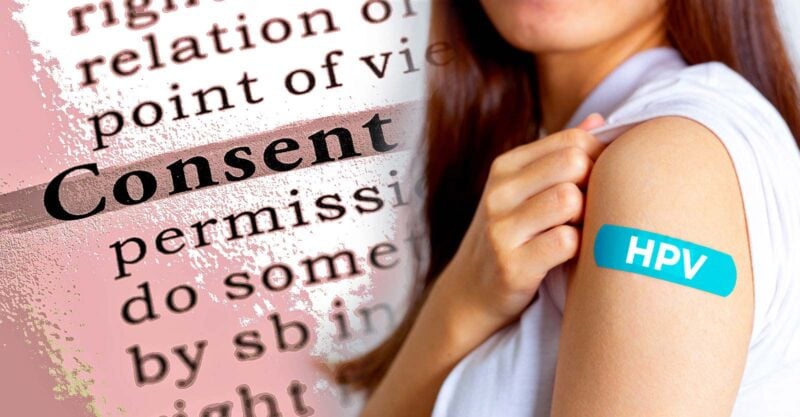


The Iowa House of Representatives on Tuesday passed a bill requiring parental consent for minors to receive vaccines tied to sexually transmitted diseases (STDs), the Iowa Capital Dispatch reported.
State Rep. Jeff Shipley said the change restores a basic standard already applied to other childhood immunizations.
“There is never a justification to vaccinate a minor child against the wishes of the child’s parents, and pretending otherwise is a disgrace to the medical profession,” Shipley told The Defender.
The measure, approved on a 63-29 vote, now moves to Gov. Kim Reynolds.
Under current Iowa law, most vaccines already require a parent’s approval. However, there is an exception that allows minors to consent on their own to the human papillomavirus (HPV) and hepatitis B (Hep B) vaccines because they are associated with STDs.
Senate File 304 would remove that carve-out, meaning those vaccines would follow the same parental-consent rules as all others.
The HPV vaccine is approved for children as young as 9. The Hep B vaccine is approved for children from birth.
Minors would still be able to seek diagnosis and treatment for STDs without a parent’s permission under existing law. The bill applies only to vaccination.
‘Removing parents from the process does not protect children’
Shipley emphasized that the proposal does not block access to the vaccines.
“Nothing in this bill is restricting access to these particular medical products,” he said during a House debate. “What it’s saying is that, if a minor wants this, they just need parents’ permission.”
Supporters framed the measure as a parental rights issue.
“Removing parents from the process does not protect children,” State Rep. Samantha Fett told The Defender. “Parental consent is a safeguard, not a barrier, and this bill brings parents back into the conversation, making it a clear win for families.”
‘Are we pro-polio because we require parental consent?’
Democrats strongly opposed the bill, warning it could reduce vaccination rates.
State Rep. Austin Baeth, an internal medicine physician who administers vaccines in his adult-based practice, called it a “pro-cancer bill, period.”
At subcommittee meetings on the bill, healthcare provider advocates said HPV is linked to multiple forms of genital cancer.
During the House debate, Baeth said the HPV vaccine helps prevent those cancers.
He also said that states that allow minors to consent to their own vaccines see 10% higher vaccination uptake. Pediatricians receive financial incentives based on the percentage of patients they vaccinate.
“We should not take away the tools that have been developed through science, through decades of medical science, that actually save lives,” Baeth said.
Republicans rejected the “pro-cancer” characterization. According to the Iowa Capital Dispatch, Rep. Austin Harris said the bill simply aligns HPV and Hep B shots with the same parental-consent requirements used for other vaccines.
“Are we pro-polio because we require parental consent?” Harris asked. “Pro-measles, pro-mumps, everything else? And I take it personally … to be accused of saying, ‘I’m pro-cancer.’”


This article was funded by critical thinkers like you.
The Defender is 100% reader-supported. No corporate sponsors. No paywalls. Our writers and editors rely on you to fund stories like this that mainstream media won’t write.
HPV vaccine faces hundreds of lawsuits over allegedly hidden dangers
Gardasil 9, the HPV vaccine at the center of the debate, is manufactured by Merck and is the only HPV vaccine distributed in the U.S.
Merck markets the shot as “safe and effective,” but the company faces hundreds of lawsuits in federal court alleging injuries tied to the vaccine.
The complaints allege that Merck fast-tracked the vaccine through the U.S. Food and Drug Administration’s approval process and misrepresented its safety and effectiveness in clinical trials.
Some of the signature side effects observed following HPV vaccination include:
- Fibromyalgia
- Postural orthostatic tachycardia syndrome (POTS)
- Premature ovarian failure
- Menstrual irregularities
- Premature menopause
- Neuropathic injuries
- Myalgic encephalomyelitis/chronic fatigue syndrome
There have also been thousands of adverse events reported worldwide, and published studies from multiple countries describing associations between HPV vaccination and autoimmune conditions.
Federal guidance on both the HPV and Hep B vaccines has changed. As of January, the Centers for Disease Control and Prevention (CDC) recommends a single dose of the HPV vaccine at age 11, replacing the previous multi-dose schedule for younger adolescents.
In December 2025, the CDC ended a decades-long recommendation that all infants born in the U.S. receive the Hep B vaccine within 12-24 hours of birth.
However, both of those changes are paused following the March 16 ruling by a federal judge in a lawsuit filed against the U.S. Department of Health and Human Services by the American Academy of Pediatrics and several other medical groups.
The Iowa bill now awaits the governor’s decision.
Related articles in The Defender
- ‘Stunning Admission’: Widely Used HPV Vaccine Linked to 4 Autoimmune Disorders
- Merck Used Highly Potent Aluminum in Gardasil HPV Vaccine Trials Without Informing Participants
- ‘Indefensible’: Merck Designed Gardasil Trials to Mask HPV Vaccine Harms
- After Years of Pushing HPV Vaccine as ‘Safe and Effective,’ CDC Now Taking a Closer Look
- Hep B Vaccination Rates for Newborns Plummet — as Debate Heats Up
- CDC Vaccine Panel Votes to End Universal Hep B Vaccine for Newborns
