Login


Highlights:
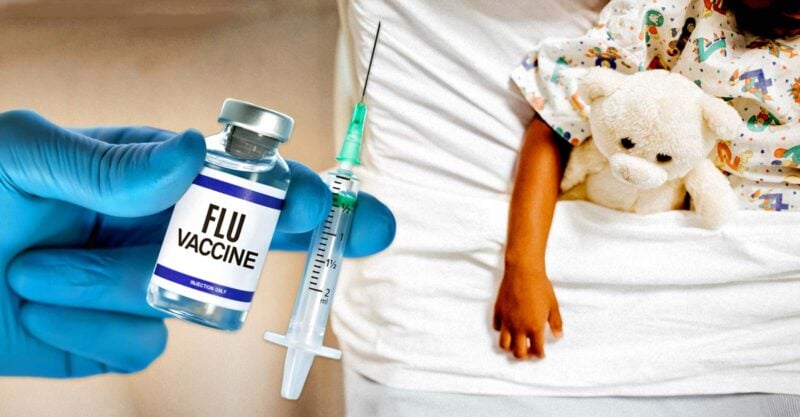
- Children’s Hospital of Philadelphia runs a program, “Close Your Eyes, We’ll Immunize,” that offers parental-consent flu vaccinations (and plans to add COVID-19 and RSV shots) to children while they are under sedation or anesthesia.
- Critics said that vaccinating sedated children is irresponsible because side effects (such as fevers or rashes) could be confused with severe reactions to anesthetic drugs, compounding surgical stress and inflammation.
- Pediatricians and health advocates criticized the program’s branding and questioned the depth of informed consent, given that stressed parents face time constraints during preoperative discussions.
- Program leaders reported delivering thousands of doses and generating over $60,000 during the 2024-2025 season, while similar initiatives are being adopted or tested by other children’s hospitals across the U.S.
A Children’s Hospital of Philadelphia (CHOP) program that encourages parents to consent to vaccinating their child against the flu while the child is sedated or under anesthesia for a medical procedure drew sharp criticism from anesthesiologists and pediatricians who spoke with The Defender.
Dubbed “Close Your Eyes, We’ll Immunize,” the initiative has helped boost flu vaccination rates amid declining vaccine acceptance, its leaders said in a May newsletter article spotlighting the program.
In the 2025-2026 flu season, the team delivered 2,054 flu vaccine doses to children undergoing sedation or anesthesia. Roughly a third of those wouldn’t have otherwise received the flu vaccine due to needle phobia, limited healthcare access or vaccine hesitancy, the leaders said.
After launching the program in 2023, its leaders are seeking to expand the program by including COVID-19, RSV and other catch-up shots for kids whose vaccinations aren’t up to date with federal vaccine recommendations.
Families are informed in writing about the program as part of preoperative communications from the hospital staff. On the day of the child’s surgery, staff speak with the parents about the program, assess the parents’ interest and ensure the child is eligible.
Children are excluded if they have a severe allergy to the flu vaccine or a history of Guillain-Barré syndrome. Also, some procedures — including bone marrow transplants — are excluded from the program.
If the parents consent, staff administer the flu vaccine to the child while the child is sedated.
Dr. Madhava Setty, a board-certified anesthesiologist with 24 years of clinical experience, called CHOP’s program “stunningly irresponsible.”
There is “absolutely no justification” for giving a child a vaccine “which carries a risk of harm and contributes nothing to the success of the operation,” Setty said. After The Defender interviewed Setty for this story, he posted this on X:
I’m a Board Certified anesthesiologist and have been in practice for 24 years. I just learned that the Children’s Hospital of Philadelphia where I trained has launched a program to increase flu vaccine uptake among children by vaccinating them while under anesthesia.
The program is called “Close your Eyes. We’ll Immunize”
This is stunningly irresponsible. Here’s why:
Anesthetists are extremely risk avoidant and endeavor to minimize patient exposure to anything which carries potential side effects. This is particularly true of pediatric patients who very often have never been exposed to anesthetic medications. We simply cannot know how an individual child will respond to these drugs for the first time.
Every single medication we administer during an operation can potentially trigger untoward or allergic responses. When this occurs our primary responsibility is to stabilize the patient. Our secondary responsibility is to identify the offending agent. There is absolutely no justification of introducing another agent, in this case a flu vaccine, which carries a risk of harm and contributes nothing to the success of the operation.
Some of the more common side effects of flu vaccines are fever (11-16%) and less commonly, a rash (1%). There is also an non-zero risk of severe allergic reactions and high-grade fevers which can develop over the course of minutes.
What if a child under anesthesia receives a vaccine and develops a rash and/or fever? Is it from the antibiotic that the surgeon requested? Is it from the narcotic? The anxiolytic? The barbiturate?
Anesthetic gases can also (rarely) trigger a life threatening response called Malignant Hyperthermia which commonly presents as a high fever. Without subsequent testing we cannot know which agent was responsible. Most commonly the testing is never done and the child’s record will forever reflect the possibility that some or all of the drugs which were used are responsible for their reaction. This makes future anesthetic care significantly more challenging and will require the use of alternatives which may not be necessary.
Advocating for a flu vaccine while a child is anesthetized reflects the pervasive yet inaccurate attitude among the medical establishment that vaccines are perfectly safe. I simply cannot believe that my mentors would have ever supported this initiative when I was a resident there. Close your eyes indeed.
— Madhava Setty (@Madhava_Setty) October 21, 2026
Anesthesia and whatever other medications are required for an operation carry enough risk as it is, because the drugs used in the operating room are especially potent, Setty said. That’s especially true for children. “We simply cannot know how an individual child will respond to these drugs for the first time.”
Dr. Larry Palevsky, a pediatrician, called it a “very bad idea” to administer a flu vaccine to a child under anesthesia. “Anesthesia and surgery increase stress levels and inflammation in children’s bodies — so do vaccines.”
Vaccinating children while under anesthesia and surgery will only increase the potential for significant adverse events, since it will be harder for children to detoxify from vaccination while under anesthesia, he said. “This is a perfect storm to use a setting like the stress of anesthesia and a surgical procedure to further injure children.”
Palevsky also questioned the thoroughness of the program’s informed consent process. He asked:
“How well will parents understand the pros and cons of vaccinating their children while they are already stressed and panicked about their children having to undergo anesthesia and a surgical procedure? How well will the hospital staff explain the pros and cons of vaccination to parents?”
In the May newsletter article, the CHOP program leaders acknowledged that “time constraints in the perioperative setting can limit the opportunity for detailed discussions.”
But they made no mention of how discussions should cover outlining the risks of vaccination. Instead, they wrote that the time crunch didn’t allow staff enough of an opportunity to provide “vaccine counseling.” They lamented that “some eligible families continue to decline this opportunity.”


Pediatrician: Parents need to ‘keep your eyes open, ask questions’
Setty said he was “particularly aggrieved” by CHOP’s initiative because he completed his pediatric anesthesia rotations at CHOP 25 years ago.
“I feel I received excellent training there,” he said. “I simply cannot believe that my mentors would have ever supported this initiative when I was a resident.”
Leaders of the initiative include Dr. Logan Grimes, Dr. Elizabeth O’Brien, Dr. Ari Weintraub, Dr. Carol Pasquarillo and Beth Hansell, according to a 2026 CHOP presentation.
Dr. Paul Offit, who directs CHOP’s Vaccine Education Center and is an attending physician in the hospital’s infectious diseases division, did not immediately respond when asked about his involvement in the program.
Dr. Michelle Perro, a pediatrician, called CHOP’s program name — “Close Your Eyes, We’ll Immunize” — “deeply troubling.” She said:
“I understand that it was probably intended to be clever, but medicine is facing an enormous crisis of trust. A slogan celebrating the vaccination of an unconscious child is precisely the wrong message. Parents should rightly question what else could happen under anesthesia.”
Perro advised parents, “Keep your eyes open, ask questions, understand exactly what is being given to your child and why, and then make your own informed decision.”
Heather Hudson, a mother of a vaccine-injured son, said, “For families who have experienced severe vaccine-induced injuries, a phrase like ‘Close Your Eyes, We’ll Immunize’ represents a failure of transparency.”
Hudson’s son Cody has suffered six strokes due to an autoimmune blood-clotting disorder he developed after receiving two doses of Pfizer’s COVID-19 vaccine in 2021. “Vaccines are not one-size-fits-all therapies, and they should not be administered as such,” said Hudson.
CHOP financially profits from the program
CHOP’s program is a collaboration between the hospital’s perioperative clinical teams, nurses, pharmacists, operations team and revenue integrity service team.
In a 2026 presentation, program leaders pointed out how the initiative generated over $60,000 for the hospital during the 2024-2025 flu season.
Leslie Manookian, president and founder of the Health Freedom Defense Fund, said, “Administering flu vaccines — which most Americans do not want for their children — seems like a convenient way for hospitals to ring the cash register.”
Setty said that $60,000 is just “a tiny drop in the bucket” when it comes to CHOP’s revenue, so the money probably isn’t the main motivation behind the program.
Instead, it’s that “these experts are hypnotized with their cultish beliefs” about vaccine safety and efficacy, Setty said. “Advocating for a flu vaccine while a child is anesthetized reflects the pervasive yet inaccurate attitude among the medical establishment that vaccines are perfectly safe.”
Palevsky agreed. “The people behind this initiative already believe vaccines are completely safe. It doesn’t occur to them that vaccines could contain toxic ingredients and injure children.”


This article was funded by critical thinkers like you.
The Defender is 100% reader-supported. No corporate sponsors. No paywalls. Our writers and editors rely on you to fund stories like this that mainstream media won’t write.
Large hospitals in other states are trying it out, too
CHOP isn’t the only hospital piloting a program to increase flu vaccine uptake by vaccinating children under anesthesia.
Over the 2024-2025 flu season, doctors at the University of North Carolina at Chapel Hill Children’s Hospital boosted vaccination rates by vaccinating kids under general anesthesia. The initiative is scalable, the doctors wrote in an OpenQI article.
Staff at Seattle Children’s Hospital piloted a similar initiative in the 2023-2024 flu season, according to a poster presentation about their effort.
Akron Children’s Hospital in Ohio has also been running a flu vaccination program for children under anesthesia, according to a 2024 article published in the European Society of Medicine.
The Centers for Disease Control and Prevention (CDC) cautions against administering vaccines when a patient is sedated or under anesthesia, but doesn’t go so far as to say the practice is contraindicated. Instead, the agency says that not enough studies have been done to understand how anesthesia impacts vaccination.
For instance, a 2006 review in Pediatric Anesthesia that examined 277 papers found none that directly examined the effect of anesthesia and surgery on vaccine responses.
However, Perro noted that the authors of a 2017 review reported that surgery and anesthesia may decrease vaccine efficacy or lead to vaccine-related complications.
The authors advised that elective surgeries be delayed by at least a week for a patient who receives an inactive vaccine and at least three weeks for a patient who receives a live vaccine.
Vaccination should also be delayed until after surgery to avoid confusing vaccine side effects with surgery side effects, they said.
The American Society of Anesthesiologists‘ statement on ethical principles does not address whether it’s appropriate to give minors a medical intervention, such as a flu vaccine, that isn’t required for the operation.
However, the group emphasizes that anesthetized patients — especially minors — are “particularly vulnerable” and must be protected.
CHOP’s public relations team did not respond to our comment request by the deadline.
Related articles in The Defender
- Can You Trust CDC’s Flu Vaccine Effectiveness Estimates? Epidemiologist Says No
- New mRNA Flu Vaccine Produced Much Higher Rates of Adverse Reactions Than Standard Shot
- HHS Tells CDC to Yank ‘Wild to Mild’ Flu Vaccine Ad Campaign, Shift Focus to ‘Informed Consent’
- A Flu Vaccine in Your Dental Floss? Researchers Tout Benefits, Critics Question Safety
- Paul Offit Kicked Off Key FDA Vaccine Panel