Login
Login
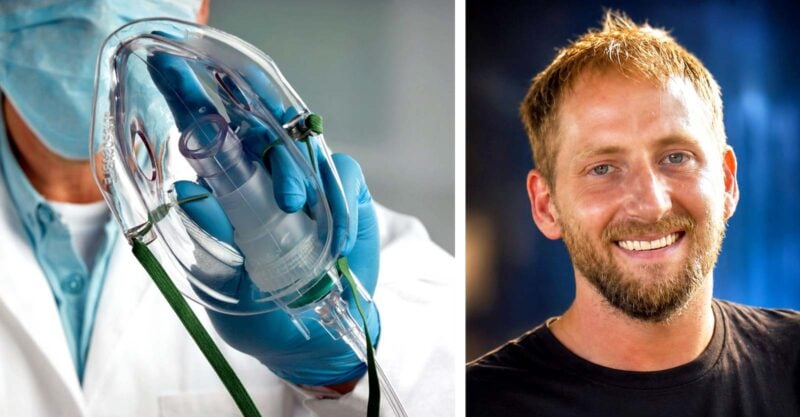


In 2020, Andy Hodge was leading a happy life. The 38-year-old licensed plumber, a single father of three, lived in Kentucky with his sister, Ellie Hodge Hayse, and her family — a life Ellie described as “perfection.”
That changed in August 2020, when Andy broke his left leg in a work-related accident. The accident, subsequent surgeries and hospitalizations, and a positive COVID-19 PCR test set off a cascade of events that led to his death on March 2, 2021.
In an interview with The Defender, Ellie detailed Andy’s hospital treatment, including COVID-19 hospital protocols, which she believes caused his death. She shared extensive documentation with The Defender to corroborate her story.
Ellie discussed the aftermath of Andy’s death, including finding inconsistencies in hospital documents that raise questions about the treatment he received.
After lawyers refused to take her case, she co-launched Dead Serious…Kinda Not, an advocacy group for families of COVID-19 hospital protocol victims.
“We can’t have a chapter where I can set it down and say, ‘This is what happened to my brother,’” Ellie said. “We don’t get that. We get nothing, and it makes me sad.”
Admitted for leg injury complications — but treated for respiratory issues
According to Ellie, Andy’s orthopedist, Dr. David Seligson, described Andy’s injury, which included a “crushed” ankle, as “one of the worst cases” he’d ever seen, and suggested the surgery to repair it would be complicated and high-risk.
Doctors at University of Louisville (UofL) hospital placed screws in Andy’s leg and prescribed a follow-up course of blood thinners and antibiotics.
Two months later, Andy began experiencing a “different” kind of leg pain. It turned out the screws were protruding from his ankle.
After running into delays — which UofL hospital attributed to being “short-staffed due to COVID” — Andy was scheduled for a second surgery.
The second surgery was also unsuccessful, and Andy continued to experience “horrible” pain. Yet, on Jan. 18, 2021, a nurse practitioner at UoL Orthopedics cleared him to return to work.
Still in pain, Andy visited the emergency room at Twin Lakes Regional Medical Center in Leitchfield, Kentucky, on Feb. 10, 2021.
But there, the staff didn’t focus on Andy’s leg. In a text message, Andy told Ellie that a nurse at Twin Lakes said, “We’re not worried about your leg right now. We’re worried about saving your life.”
Andy was admitted, placed on oxygen and prescribed a new round of antibiotics. Four days in, he said he was “feeling better,” but staff were ignoring complaints about his leg, which was still sore.
Andy told Ellie that if the hospital put him on a ventilator, to “please don’t let them shut it off.”
The next day, Twin Lakes doctors transferred Andy to Owensboro Health Regional Hospital (part of the same hospital system) for a bronchoscopy. Andy and Ellie asked that instead, he be transferred to Norton Hospital in Louisville. But Andy changed his mind because, as he told Ellie, his doctors told him he would die if he did not accept the transfer to Owensboro.


Little food or water — but five doses of remdesivir under the COVID protocol
Andy was admitted to Owensboro on Feb. 17, 2021, in stable condition. Though doctors initially told them Andy was being transferred for a bronchoscopy, hospital records listed it as an “emergency transfer” for respiratory issues.
“What I can say isn’t in the notes anywhere is his leg. They didn’t check it. They didn’t even acknowledge it,” Ellie said.
Ellie later learned that Andy was tested twice for COVID-19 on Feb. 17, 2021. While his nasal swab test was negative, PCR testing by physician and Owensboro board member Dr. Jason Mills was positive — so the hospital initiated its COVID-19 protocol.
The next day, Owensboro gave Andy the first of five remdesivir doses. According to Ellie, hospital staff also didn’t offer Andy much food or drink and didn’t administer “maintenance medications that he needed every day” for his leg.
Hospital staff told Ellie that the COVID-19 protocol didn’t allow other treatments to be administered, as doctors would be unable to “scientifically say” whether it was the protocol medications or other medications that succeeded in treating him.
They also told Ellie that Andy couldn’t receive visitors due to a 14-day “isolation protocol.” She later learned that she had the right to visit Andy twice a day, despite the protocols.
Placed on a ventilator after a stroke was left unaddressed for hours
On Feb. 20, 2021, Andy told Ellie he was “doing better” and was being relocated to a room on the COVID-19 floor.
However, while Andy appeared in good spirits during a video call, he complained of a headache and said hospital staff kept telling him that “everything is COVID.”
By the next morning, Ellie awoke to the news that Andy had had a stroke — and to a message Andy sent the previous evening, shortly after the call ended, that included a photo that showed his lip sagging.
Andy insisted he hadn’t had a stroke, but Ellie learned that he was diagnosed with a stroke at 1:20 a.m., nearly two hours after Andy’s text message, and wasn’t treated until 4:38 a.m., outside the three-hour window for administering a tissue plasminogen activator, a time-sensitive treatment for ischemic strokes.
According to hospital documents, physicians wrote that the decision not to provide a tissue plasminogen activator was “also complicated by the fact that patient just received prophylactic Lovenox,” a blood thinner, shortly before his stroke.
Ellie and other relatives remained on a video call with Andy throughout that day — not knowing that it would be the last time they would speak with him.
Late that evening, without his family’s knowledge or approval, Owensboro staff placed Andy on a ventilator. The news caught Ellie by surprise — and was accompanied by evidence that Andy had resisted being ventilated.
“I wake up, and he’s vented. They didn’t ask permission. He was restrained to the bed. They said he was fighting the vent … I can imagine that maybe he was trying to tell them he didn’t want the vent, and they forced it,” Ellie said.
Ellie said she implored the nurse, and several other doctors in the days that followed, to examine Andy’s leg, but to no avail.
Instead, doctors and hospital staff repeatedly told her that Andy “wouldn’t make it” and that she was being “inhumane” for keeping him on a ventilator.
On Feb. 23, 2021, Andy received his final dose of remdesivir.
It wasn’t until Feb. 24, 2021, that a physician at the hospital told Ellie that a blood clot had been found in Andy’s right leg. However, Ellie later learned physicians had previously observed a clot. The same physician claimed he tried calling her — but he had been calling Andy’s phone instead.
Rather than address Andy’s leg troubles, doctors instead tracked Andy’s condition through what Ellie later found out were “window visits” — visually observing Andy through the window of his hospital room, “due to COVID.”
Hospital claimed Andy was brain-dead, but family saw signs of consciousness
By Feb. 26, 2021, doctors at Owensboro declared Andy brain-dead, based on a test performed a day earlier. Ellie said the test was questionable.
“If you look at the records, it says, ‘This test cannot be used to deem brain death due to patient is on a paralytic.’” Ellie learned that a medical student had given Andy a paralytic, typically used only during surgery to block muscle movement, on the same day as the test that was used to determine his brain death.
On Feb. 27, 2021, Ellie made a video call to Andy’s phone with a nurse present in his room. Elli and other family members decided to “talk to him and stimulate his brain and tell him we’re there, we love him, to keep fighting.”
“Every time I would speak to him, his blood pressure would go up, way up. You could see life,” Ellie said.
The nurse in the room with Andy, “Angela,” agreed with Ellie — or seemed to. Later that day, with the video call still in progress, another nurse, “Rachel,” entered Andy’s room to siphon fluids out of his mouth, causing him to gag — another sign he wasn’t brain-dead.
But instead of pursuing this, the nurse disconnected Andy’s phone when the call ended. The next day, Ellie learned that the nurse had shut Andy’s phone because she felt it was a “liability” to be recorded on the job.
Ellie and her husband finally visited Andy on Feb. 28, 2021. Once more, Andy showed signs of life when he heard Ellie’s voice.
“When I start talking, his blood pressure starts going up. Those doctors saw that. They were right behind me,” Ellie said. By the next day, Ellie said hospital staff were giving her “all kinds of promises” and were claiming they were “sorry for the misunderstanding.” Yet, “they still weren’t acknowledging his leg.”
It was at this time that Seligson, who had originally treated Andy’s leg, contacted Ellie. She said he sounded “traumatized, terrified” at the news of Andy’s condition and his treatment at Owensboro. He told her he would visit Andy the next day and to tell the hospital to simply “keep him on the ventilator.”
But when Ellie informed the hospital about Seligson’s planned visit, the hospital ethics committee said it had already met that afternoon, without her knowledge, and had changed Andy’s status to “DNR.”
The committee also decided to place a sign at the door to Andy’s room, prohibiting anyone from treating him.
Ellie said that when she and other family members questioned hospital staff about changing Andy’s status and threatened legal action, they were told — in a message they recorded — that the decision of the ethics committee “trumps” any court order.
Did the hospital intend to harvest Andy’s organs?
On March 2, 2021, Andy was declared dead. Ellie’s mother learned of Andy’s death in a rushed phone call from Dr. Brad Brasher, one of the physicians treating Andy.
“He told my mom that Andy passed away, his heart stopped, that he hopes that this gives some closure, and he’s very sorry,” Ellie said.
The aftermath of Andy’s death led to a series of eye-opening revelations for Ellie, through her examination of the documents, interactions with entities involved in Andy’s care and his funeral, and discussions with outside physicians and experts.
Ellie learned that the Kentucky Organ Donor Affiliates — later known as Network for Hope — was at Andy’s bedside on at least three and as many as six occasions while he was on a ventilator. During this period, Ellie recalled that an Owensboro physician asked if Andy was an organ donor.
Earlier this year, the U.S. Department of Health and Human Services (HHS) shut down Network for Hope after a whistleblower reported incidents of the organization attempting to harvest organs from living patients.
Ellie said she can’t be certain whether Andy’s organs were left intact or if any were harvested. “I can’t say that they did, but I can’t say that they didn’t. I’m going to leave it at that. But they better hope they didn’t.”
Owensboro did not perform an autopsy on Andy after his death. The funeral home, which collected Andy’s body directly from the hospital, subsequently embalmed him.
Ellie’s review of Andy’s hospital documents after his death revealed further inconsistencies or details that she was previously unaware of. These included:
- The use of “multiple” lethal cocktails of sedatives and paralytics, including morphine, fentanyl, ketamine and Precedex. Ellie suggested this was done to put Andy “in a coma with medication” to support the claim he was brain-dead.
- Andy’s ventilator failed three times in one day and stopped providing Andy with nitric oxide. Ellie learned that the U.S. Food and Drug Administration recalled the model used in the hospital later that year due to malfunctions.
- Andy’s charts showed that he lost 41 pounds in 21 days at Owensboro. Ellie said this is a sign he was not fed properly.
- Andy’s records showed no evidence at any time that he had developed COVID-19 antibodies, casting doubt on the accuracy of the positive PCR test.
- An independent physician who analyzed Andy’s records on behalf of his family determined that Andy’s bronchoscopy was performed to “pull a positive” PCR test result. He also determined, through analysis of Andy’s hospital photos, that Andy’s injured leg lacked blood flow and was discolored.
- Despite COVID-19 being listed as Andy’s cause of death, the “died of communicable disease” check box on his post-death toe tag was unchecked.
- Andy’s records also include the names of personnel “that don’t even exist,” including a registered nurse purportedly by the name of “Paula Brasher.”
The Defender is 100% reader-supported. No corporate sponsors. No paywalls. Our writers and editors rely on you to fund stories like this that mainstream media won’t write. 

This article was funded by critical thinkers like you.
In the aftermath of Andy’s death, possible conflicts of interest came to light
Despite what Ellie believes is compelling evidence of hospital wrongdoing, she said she has faced difficulty pursuing legal action.
“I have called probably every lawyer in this state. I have probably called every lawyer that has a license to practice law outside of their states. Every single time, I get the same exact answer: ‘Oh, you’ve got a case, but unfortunately, we’re not going to be able to handle it,’” Ellie said.
Ellie said the Public Readiness and Emergency Preparedness Act of 2005 (PREP Act) poses a significant barrier. The law provides the manufacturers of emergency countermeasures used during public health emergencies, including the COVID-19 pandemic, and those who administer the products, with a legal liability shield.
Ellie filed a work-related workers’ compensation claim, partly to bypass the PREP Act. The claim was successful. She later learned the company that paid the claim was Sedgwick, which also served as Owensboro’s third-party administrator — a potential conflict of interest.
Ellie also learned that in January 2021, weeks before Twin Lakes insisted that Andy transfer to Owensboro Health Regional Hospital, Owensboro had acquired Twin Lakes.
“If you dig deeper, you’ll see that Owensboro also had already planned to take Twin Lakes COVID medical patients, and the very day Andy was transferred is the day that Owensboro became the big COVID spot in Kentucky,” Ellie said.
‘We can get accountability. We can protect our kids’
Ellie said she has taken matters into her own hands by launching Dead Serious…Kinda Not, an informal group that “welcomes anybody who has lost a hospital protocol patient.” The group is active in about 30 states.
“We can use our voices and our stories,” Ellie said. “We connect dots and get the medical records,” using a tool her group developed that analyzes medical records, puts them in chronological order and “can point the red flags out.”
Dead Serious…Kinda Not co-organized a remembrance event in Washington, D.C., for COVID-19 hospital protocol victims on Sept. 27-28, with family members as speakers.
“We’re going to get names read … and they’re going to be remembered. We’re going to do slideshows and we’re going to do photos,” Ellie said before the event.
“Will we ever get justice? No. It’s never there to be had. But we can get accountability. We can protect our kids, children that are going to have these same issues if we don’t change them now.”
Related articles in The Defender
- ‘Remdesivir Papers’ Allege Controversial Drug Used to Treat Service Members Led to 601 Deaths
- ‘Before They Scrub This History’: Group Documents Stories of COVID Protocol Victims
- Gilead Falsely Advertised Remdesivir as Safe and Effective, Lawsuit Alleges
- ‘Stunning’: Only 1 in 7 Germans With Positive PCR Test Had COVID Infection
- Zuckerberg: White House Would ‘Scream’ and ‘Curse’ at Facebook Staff to Remove COVID Content
- Workers’ Compensation: A Pathway to Immediate Relief for COVID Vaccine Injury Victims?