Login
Login
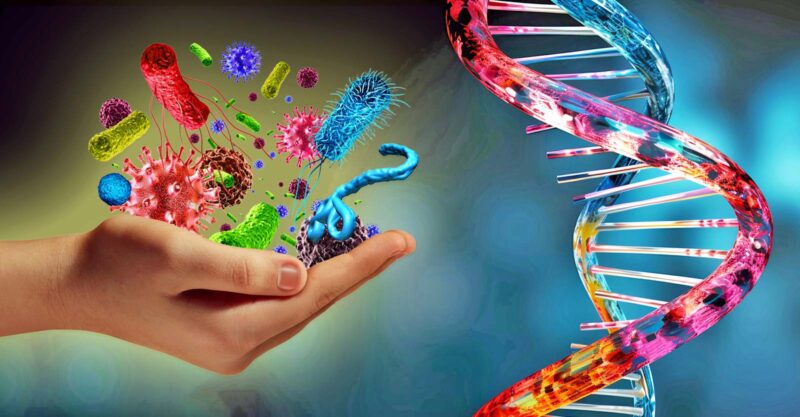


Governments urgently need to regulate genetically modified microorganisms (GMMs), according to a group of doctors and activists who published a peer-reviewed report in Microorganisms.
Thanks to low-cost gene-editing equipment, high school students and home hobbyists can easily create and release GMMs into the environment. For example, Amazon sells a DIY Bacterial Genome Engineering CRISPR Kit for $129.
Additionally, there’s “a new wave of companies seeking to create solutions with GMMs,” the authors wrote in their report, published Feb. 13.
But regulation around GMMs hasn’t kept up, according to Jeffrey M. Smith, founder and executive director of the Institute for Responsible Technology and one of the report’s authors. “Currently, GMM regulations are either too lax or nonexistent,” he told The Defender.
In their report, the authors cite over 200 scientific publications and argue that GMMs can harm human health and the environment.
Although microbes are microscopic, they play a big role in health, according to the National Institutes of Health (NIH) National Institute of Environmental Health Sciences. “They protect us against pathogens, help our immune system develop, and enable us to digest food to produce energy.”
NIH defines the microbiome as “the collection of all microbes, such as bacteria, fungi, viruses, and their genes, that naturally live on our bodies and inside us.”
Microbes that have been genetically altered can “promote disease, damage or collapse ecosystems and irreversibly change the nature of nature,” Smith said.
Some can swap DNA, meaning that altered DNA could spread out of the GMM into nearby microbes that weren’t originally genetically modified.

U.S. spends $100 million on non-chemical pesticides that could use GMMs
The report comes as the U.S. Department of Health and Human Services (HHS) on Feb. 27 announced plans to pour $100 million into identifying “new and innovative and cost-effective technologies that reduce reliance on chemical crop protection tools.”
“This includes engineered microbes intended to replace or reduce chemical inputs,” wrote pediatrician Michelle Perro in a blog post about the report. Perro is co-founder of GMOScience and co-author of “What’s Making Our Children Sick?” and one of the report’s authors.
She wrote:
“Our paper’s message is that bio-based does not automatically mean biologically safe. If policy makers frame the future as a binary, either chemical herbicides or biotech ‘microbe fixes,’ the public loses.
“We need a third lane: true upstream prevention (soil health, regenerative organic systems, diversified agroecology) and rigorous, independent safety frameworks for both chemical and biological interventions.”
Bayer-Monsanto, Syngenta and BASF are among the major agrochemical companies developing genetically engineered soil microbes, including bacteria and fungi, to act as pesticides and fertilizers, according to a 2023 report by Friends of the Earth.
‘Once released, they cannot be withdrawn’
The report is meant to be a resource for scientists, regulators and the public, Smith said. Rather than telling regulators what to do, the authors lay out criteria to keep in mind when developing GMM legislation.
They also note that countries may need to create international treaties to address GMMs, as GMMs may travel across country boundaries once released.
Not all GMMs are bad, they wrote. For instance, biosynthesized insulin has helped scores of people.
Regulators should balance possible benefits with possible risks and “adopt the precautionary principle to better protect human health and the environment from the potential negative outcomes of GMMs,” the authors wrote.
André Leu, author of “The Myths of Safe Pesticides” and one of the report’s authors, told The Defender that science on the long-term consequences of releasing GMMs into the environment is “in its infancy, with many unknown areas.”
He called for caution. “Once released, they cannot be withdrawn.”
The Defender is 100% reader-supported. No corporate sponsors. No paywalls. Our writers and editors rely on you to fund stories like this that mainstream media won’t write. 

This article was funded by critical thinkers like you.
Uncontrolled GMMs could cause another pandemic
In the 16-minute film “Don’t Let the Gene Out of the Bottle,” Smith discussed two GMMs that were close to being released into the environment when researchers discovered they would have harmed the environment.
One was a genetically modified bacterium intended to prevent frost from damaging strawberries and potatoes. Researchers chose not to release it after realizing it colonized frost-hardy weeds and interfered with natural cloud formations.
Biosafety expert Richard H. Ebright, Ph.D., a professor of chemistry and chemical biology and lab director at the Waksman Institute of Microbiology at Rutgers University, told The Defender he agrees there should be more oversight of GMMs released into the environment.
However, he said he is most concerned about genetically modified pathogens, rather than GMMs in general.
Over the last two decades, former National Institute of Allergy and Infectious Diseases Director Anthony Fauci and former NIH Director Francis Collins “sparked and stoked an international arms race” in creating genetically enhanced potential pathogens and other genetically enhanced bioweapons agents, Ebright said.
He added:
“The genetically enhanced potential pandemic pathogens and other genetically enhanced bioweapons agents produced in this international arms race already have caused one pandemic — COVID-19, which killed 20 million and cost $25 trillion — and are poised to cause future pandemics.”
Ebright is on the leadership team of Biosafety Now, a nongovernmental organization (NGO) that “advocates for reducing the number of high-level biocontainment laboratories and for strengthening biosafety, biosecurity, and biorisk management for research on pathogens.”
He has testified at U.S. House of Representatives and Senate hearings on biosafety, biosecurity and biorisk management, according to Rutgers University.
Related articles in The Defender
- Trump Directs USDA to Make More Glyphosate, Signals Liability Protection for Pesticide Makers
- Genetically Modified Soil Microbes May Have ‘Irreversible Consequences’ — New Report
- Bayer Lawsuit Claims Pfizer, Moderna Used Monsanto’s GMO Technology to Build COVID Vaccines
- GMO Agriculture Linked to Soaring Use of Toxic Pesticides
- Add Water and Stir? EPA Could Approve GMO Mosquitoes for Consumers’ Backyards