Login
Login
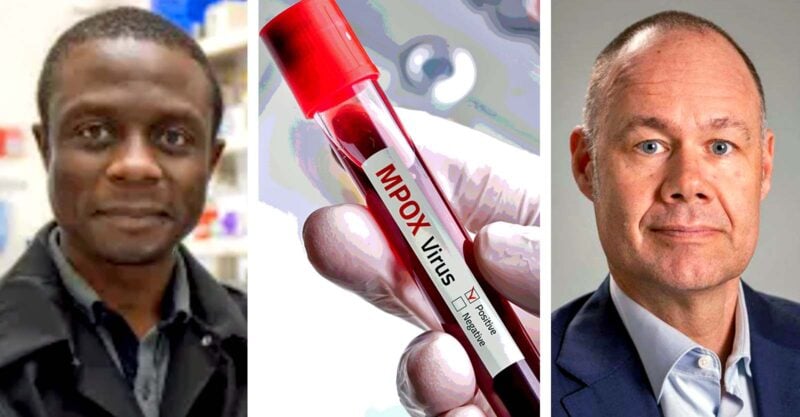


Two National Institutes of Health (NIH) researchers are charged with conspiring to smuggle biological materials, including deactivated monkeypox virus samples, into the U.S. from Africa. The researchers also allegedly lied to federal authorities about what they were carrying, according to a criminal complaint unsealed Tuesday in federal court in Detroit.
Vincent Munster, Ph.D., a Dutch citizen and chief of the Virus Ecology Section at NIH’s Rocky Mountain Laboratories in Hamilton, Montana, and Claude Kwe Yinda, Ph.D., a Cameroonian research fellow, are charged with conspiracy to smuggle goods into the U.S. and making false statements to federal investigators.
Both men work at a Biosafety Level 4 laboratory, the highest level of containment used for research involving dangerous pathogens.
According to federal prosecutors, the researchers arrived at Detroit Metropolitan Airport on Jan. 25 after traveling from the Democratic Republic of Congo, where a monkeypox outbreak was ongoing.
Customs and Border Protection (CBP) officers questioned the pair about a large black case they were carrying. Prosecutors allege the men told officers the case contained diagnostic and testing equipment, but investigators later determined it held 113 vials stored in Styrofoam coolers.
Testing of a portion of the samples found deactivated monkeypox virus in 17 vials, chickenpox virus in one vial and human DNA in two others.
“These NIH experts apparently broke our laws by smuggling viral pathogens on a packed commercial airplane from an outbreak in the Republic of Congo,” U.S. Attorney Jerome F. Gorgon Jr. said in announcing the charges. “Let that sink in.”
Federal authorities stressed that the case centers on alleged violations of importation and disclosure requirements. Prosecutors did not accuse the defendants of intentionally releasing pathogens or harming the public.
FBI Detroit Special Agent in Charge Jennifer Runyan said the allegations demonstrate that scientific credentials do not exempt researchers from federal statutes.
“No researchers should believe their positions, credentials, or professional status place them above the law,” Runyan said.
Marcus L. Sykes, special agent in charge of the U.S. Department of Health and Human Services Office of Inspector General, called the alleged conduct “a breach of the public’s trust” and said unauthorized transport of biological materials “could have placed the public at risk.”
The complaint alleges Munster “adamantly denied” carrying biological samples and at one point told investigators that any necessary documentation was on his laptop. “I do this all the time,” he said, according to an FBI affidavit. Authorities said Munster did not produce the documentation he claimed to have.
Neither defendant responded to emails requesting comment.


Congressional inquiry into past research ties
Munster has previously been mentioned in congressional oversight inquiries involving COVID-19 research.
A 2024 letter from Sen. Rand Paul (R-Ky.), then ranking member of the Senate Homeland Security and Government Affairs Committee, to then-NIH Director Monica Bertagnolli said committee investigators had reviewed documents they believed showed collaboration among researchers affiliated with NIH, EcoHealth Alliance, the University of North Carolina and the Wuhan Institute of Virology on SARS-related coronavirus studies.
The letter cited Munster as a participant in the work alongside EcoHealth Alliance’s Peter Daszak, Ph.D., University of North Carolina virologist Ralph Baric, Ph.D., and Wuhan Institute of Virology scientist Zhengli Shi, Ph.D.
The correspondence did not make a finding of wrongdoing but said the materials “indicate” involvement in coronavirus research projects under congressional review.
Richard Ebright, Ph.D., a molecular biologist at Rutgers University in New Brunswick, New Jersey, said the letter raises additional questions about Munster’s past medical ties.
“If the letter is correct, Munster’s record likely includes the unlawful importation and false claims incidents for which he was arrested, but also a share in culpability for causing COVID,” Ebright said.
The Defender is 100% reader-supported. No corporate sponsors. No paywalls. Our writers and editors rely on you to fund stories like this that mainstream media won’t write. 

This article was funded by critical thinkers like you.
‘Experimental laboratory approaches’
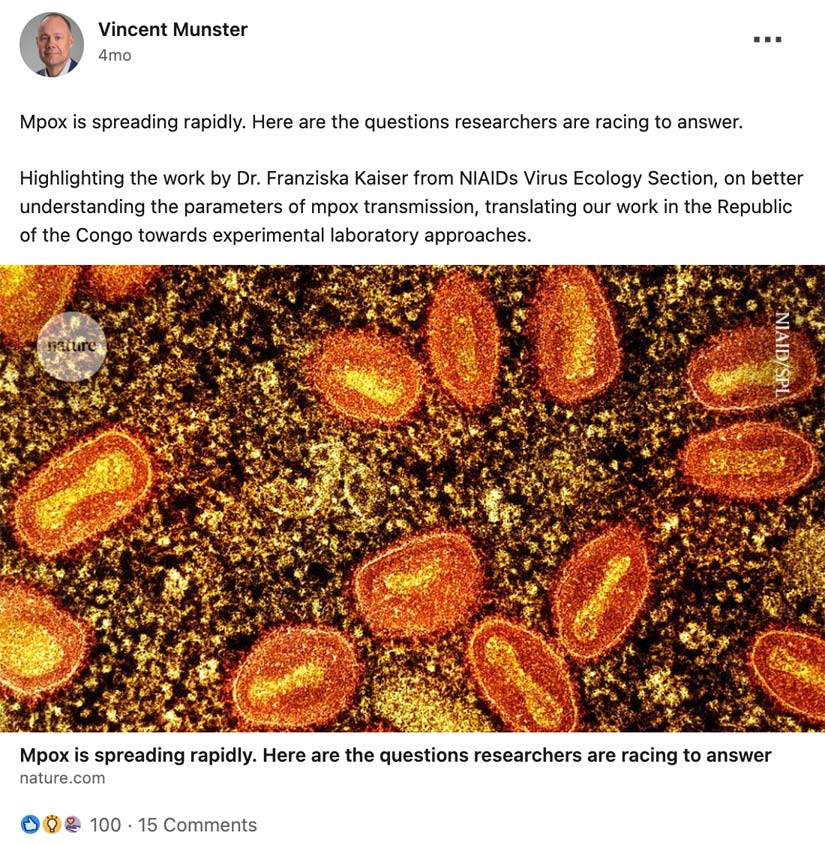
In a LinkedIn post earlier this year, Munster referenced an article about transmission of the monkeypox (also referred to as mpox) virus “translating our work in the Republic of the Congo towards experimental laboratory approaches.”
Munster and Yinda also co-authored a paper published earlier this year in The Lancet warning that the spread of monkeypox was becoming a “global threat.”
They said cases detected in multiple regions suggested ongoing international spread and called for expanded surveillance, stronger contact tracing and further research into how efficiently the virus transmits and whether sustained community spread is possible outside Africa.
NIH ‘cooperating fully with law enforcement’
The NIH has not commented on the charges, but the agency said it would assist legal authorities in the case.
“This matter is currently under investigation, and NIH is cooperating fully with law enforcement and appropriate authorities,” the agency said in a statement.
The charges emerge amid reports of an employee at Rocky Mountain Laboratories potentially being exposed to Crimean-Congo hemorrhagic fever (CCHF) in late 2025.
Federal officials said the leak was contained and posed no risk to public health, while some legal experts told The Defender these instances were “surprisingly common.”
Munster and Yinda are scheduled to appear in federal court in Montana. If convicted, they face up to five years in prison.
Related articles in The Defender
- Dangerous Pathogens and Lab Leaks: What Are the Odds?
- Virologist Linked to Fauci Under FBI Investigation for Smuggling Dangerous Pathogens Into U.S.
- CIA Whistleblower: Fauci Led Multi-Agency Cover-Up of COVID Lab Leak Evidence
- Escaped Monkeys Stoke Fears of Disease Spread, Lax Security at Research Labs
- The COVID Lab Leak Hypothesis: Did the Media Fall Victim to a Misinformation Campaign?