

 Login
Login
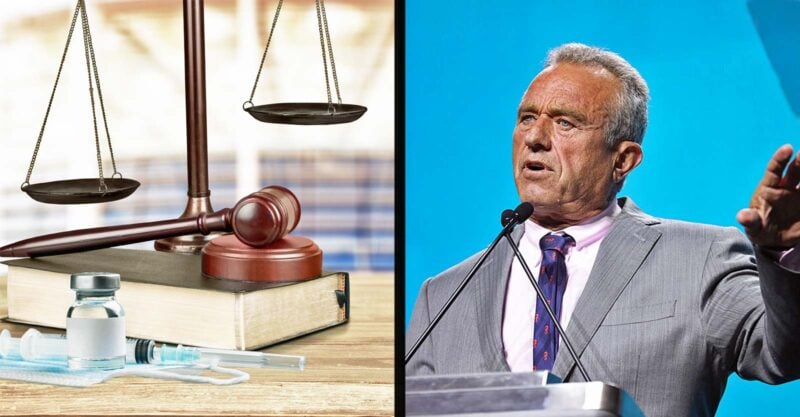


A federal judge today ruled that a coalition of major medical organizations can move forward with a lawsuit challenging vaccine policy changes under U.S. Health Secretary Robert F. Kennedy Jr.
Judge Brian Murphy of the U.S. District Court for the District of Massachusetts rejected the government’s bid to dismiss the case. Murphy ruled that the plaintiffs — which include the American Academy of Pediatrics (AAP) — have legal standing to sue.
Murphy dismissed the government’s argument that the groups could not show that the new policies would cause them direct harm. The decision opens the door to legal scrutiny of recent actions taken by federal vaccine officials under Kennedy’s leadership.
At the center of the lawsuit is the Advisory Committee on Immunization Practices (ACIP), a key federal panel that shapes national vaccine recommendations.
The medical organizations want the court to invalidate all ACIP votes cast since June, when Kennedy dismissed 17 sitting members and replaced them with new appointees that he handpicked.
“Plaintiffs allege that these appointments skewed the composition of ACIP in favor of COVID-vaccine and/or mRNA-vaccine deniers in order to comport with Secretary Kennedy’s personal views,” Murphy wrote.
The groups said they believe Kennedy’s overhaul of ACIP violated the Federal Advisory Committee Act, which requires advisory panels to be “fairly balanced” and operate in an “open, independent” manner.
Murphy ruled that the plaintiffs have plausibly alleged that ACIP’s current makeup violates the requirements of the act, and that their claims are strong enough to survive the government’s motion to dismiss.
Ruling ‘reflects misperceptions about vaccines and children’s health’
Kim Mack Rosenberg, general counsel for Children’s Health Defense (CHD), said the court’s standing analysis rested on flawed assumptions about pediatric care and the role of major medical organizations.
“While I am somewhat surprised that the court found that plaintiffs have standing to sue here,” the ruling “reflects misperceptions about vaccines and children’s health generally,” Mack Rosenberg said.
She said Murphy’s decision fails to account for what she described as the professional and financial interests of the medical groups. The decision “does not reflect the reality that the American Academy of Pediatrics and other organizations are in many respects trade organizations for their professions — primarily protecting the interests of their members, not children.”
She cited language in Murphy’s order about alleged economic harms to pediatricians, calling it revealing.
“It is telling that one of the alleged financial injuries to doctors discussed in the judge’s order is that pediatricians will have to spend more time discussing vaccines with families and thus will not be able to see as many patients each day,” Mack Rosenberg said.
“In other words, doctors may have to have discussions with patients so that families can have informed consent.”
Mack Rosenberg said the court’s reasoning “tacitly admits that, in many pediatric practices, currently those discussions are not taking place in a meaningful way and families are not having their concerns addressed.”

Policy shifts will result in ‘deaths among pregnant women, unborn children, and all children,’ groups allege
Kennedy, who founded CHD before he was appointed secretary of the U.S. Department of Health and Human Services (HHS), has long questioned vaccine safety and criticized what he describes as regulatory capture within federal health agencies.
Since taking office, he has moved to overhaul vaccine decision-making structures, drawing fierce opposition from entrenched medical organizations.
In May 2025, Kennedy directed the Centers for Disease Control and Prevention (CDC) to remove its recommendation for COVID-19 shots for all children ages 6 months and older from the agency’s immunization schedules, and instead use “shared clinical decision-making” between parents and providers.
The following month, Kennedy fired the entire ACIP panel and later appointed new members whom critics describe as more skeptical of mass vaccination policies.
In September 2025, the reconstituted committee voted to recommend COVID-19 vaccines for all ages only through “individual decision-making” between patients and healthcare providers, rather than broad population-wide guidance.
The CDC adopted that recommendation in October 2025 for both pediatric and adult patients, effectively ending its previous blanket endorsement of COVID-19 vaccination.
The AAP and several other organizations first sued Kennedy in July 2025, claiming the committee revised the COVID-19 vaccine recommendations for children based on insufficient evidence.
The groups also criticized COVID-19 vaccine changes for pregnant women in their lawsuit, though no changes had been made to the immunization schedule for pregnant women.
The groups’ 42-page complaint describes the changes as “baseless and uninformed” and alleges they place pregnant women and children at “grave and immediate risk.”
The lawsuit also claims the policy shifts will result in “decreased rates of vaccination, increased rates of transmission, long-lasting illness, and ultimately deaths among pregnant women, unborn children, and all children.”


This article was funded by critical thinkers like you.
The Defender is 100% reader-supported. No corporate sponsors. No paywalls. Our writers and editors rely on you to fund stories like this that mainstream media won’t write.
Kennedy has sparked ‘fear’ in families, AAP president said
In November 2025, the groups filed an expanded complaint seeking to disband ACIP entirely and overturn all recommendations made since June, including a December 2025 vote to remove the long-standing guideline that all newborns receive a hepatitis B vaccine.
They are also seeking to rebuild the committee under court supervision — a step with no clear precedent in federal law.
“Pediatricians have seen firsthand the harm created by the disruptive and politicized decisions to overturn decades of evidence-based federal guidance on immunizations,” AAP President Susan J. Kressly said in a November statement. “These changes have caused fear, decreased vaccine confidence, and barriers for families to access vaccines.”
Kressly argued that the consequences are already unfolding, saying children are suffering “avoidable illnesses and hospitalizations” as federal vaccine processes are disrupted.
Plaintiffs’ lawyer has strong ties to Big Pharma
Richard H. Hughes IV, lead counsel for the plaintiffs, told MedPage Today in November 2025 that ACIP “shouldn’t be making policy” in its current form and said the groups want the panel dissolved and rebuilt.
Hughes served as Moderna’s vice president of public policy from 2020 to 2022, during the rollout of the company’s COVID-19 vaccine, Spikevax. Before that, he worked for Merck.
Critics cite those ties as evidence that the lawsuit is aimed at preserving a pharmaceutical-friendly status quo.
Plaintiffs in the case include the AAP, the American College of Physicians, the American Public Health Association, the Infectious Diseases Society of America, the Massachusetts Public Health Association, the Society for Maternal-Fetal Medicine and a pregnant physician identified as “Jane Doe,” who claims she faces “barriers to access to the vaccine.”
Other defendants named in the lawsuit include HHS, the CDC and its acting director Matthew Buzzelli, National Institutes of Health Director Jay Bhattacharya and U.S. Food and Drug Administration Commissioner Marty Makary.
Update: This article has been updated to correct U.S. District Judge Brian Murphy’s name.
Related articles in The Defender
- AAP Ratchets Up Complaints Against RFK Jr.’s CDC Vaccine Panel in Updated Lawsuit
- Lawyer Leading Lawsuit Against RFK Jr. Over COVID Vaccines Used to Work for Moderna
- RFK Jr. Hit With Lawsuit Over Changes to COVID Vaccine Policies for Kids, Pregnant Women
- RFK Jr. Cancels Millions in Grants to AAP, as Battle Heats Up Between Health Officials and Pediatric Group
