Login
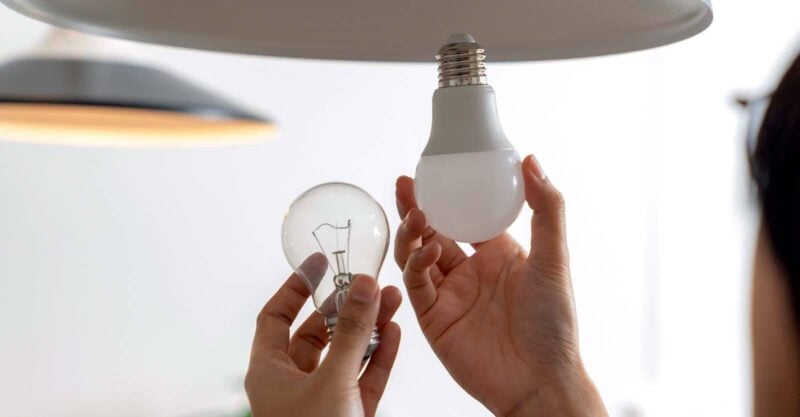


The U.S. Food and Drug Administration (FDA) late last month denied a citizen petition urging it to study the health impacts of LED lights and report its findings to Congress.
The nonprofit Soft Lights Foundation, which filed the petition on Dec. 30, 2025, argued that several provisions in the Federal Food, Drug, and Cosmetic Act required the FDA to conduct the study and report its findings to Congress.
But the FDA disagreed, saying it interpreted the law differently.
“We believe FDA has appropriately examined the scientific and technical issues and determined that such a study and report are not warranted at this time,” wrote Ellen J. Flannery, policy director for the FDA Center for Devices and Radiological Health, in the agency’s Oct. 23 denial letter.
W. Scott McCollough, chief litigator for Children’s Health Defense (CHD)’s Electromagnetic Radiation (EMR) & Wireless cases, told The Defender that the federal statutes that Soft Lights Foundation referenced in its petition have really “complicated” wording.
Federal law directs the secretary of the U.S. Department of Health and Human Services (HHS) — not necessarily the FDA — to study health hazards from electronic products, McCollough said. “Most of the statutes speak to the ‘Secretary’ not FDA, although some later statutes do refer to FDA administration.”
The FDA can commission studies, as it did in 1999 when it asked the National Toxicology Program to study cellphone radiation.
But the HHS secretary is legally charged with creating a report for Congress, McCollough said. “So the petition basically asked the wrong ‘body’ for the report.”
LEDs, or light-emitting diodes, are semiconductor devices that emit light when electricity flows through them.
The U.S. Department of Energy projects that LEDs, which are more energy-efficient than traditional incandescent light bulbs, will account for the majority of U.S. lighting installations by 2035.
Most electronic screens, including computers, cellphones and electronic advertisements, also contain LEDs. And increasingly, car headlights, bike lights and streetlights use them.
‘The public deserves better from the FDA’
In its petition to the FDA, the Soft Lights Foundation cited studies linking the blue light emitted by LEDs to hormonal disruption, increased risk of breast cancer and other health risks.
Blue light is a high-frequency segment of the visible light spectrum nearly as powerful as ultraviolet (UV) light, according to the Cleveland Clinic. The sun naturally emits some blue light, particularly in the morning, but the proliferation of LED technology means people are now bombarded with blue light at all hours.
“Pulsed LED lights interfere with vision and cognitive functioning, and the adverse impacts of LED flashing lights are already the subject of multiple lawsuits,” the petition stated.
Mark Baker, founder and president of the Soft Lights Foundation, told The Defender that the FDA’s denial of what he called the agency’s “mandated Congressional requirement” to investigate these harms was “typical for the FDA.”
Baker said he hopes HHS Secretary Robert F. Kennedy Jr. will direct the FDA to study the health impacts of LED products and share those findings with Congress.
The Soft Lights Foundation has received hundreds of reports of injury from exposure to LED lights and thousands of reports of harm from exposure to LED headlights, he said. “The public deserves better from the FDA.”


This article was funded by critical thinkers like you.
The Defender is 100% reader-supported. No corporate sponsors. No paywalls. Our writers and editors rely on you to fund stories like this that mainstream media won’t write.
Lawmakers advance bill to let incandescent lightbulbs back on market
The FDA’s refusal to study the health impacts of LED lights comes as Congress considers a bill that would make it easier for Americans to buy non-LED bulbs to light their homes.
Since 2023, federal energy-efficiency regulations have effectively prohibited the manufacture and sale of most incandescent bulbs for general household lighting, according to the U.S. Department of Energy.
On Sept. 30, the U.S. Senate Committee on Energy and Natural Resources advanced the Liberating Incandescent Technology (LIT) Act of 2025.
If passed, the bill would “repeal Biden-era lightbulb regulations that effectively banned incandescent light bulbs nationwide,” according to a press release.
The bill, introduced on May 5, 2025, by Sen. Mike Lee (R-Utah), who chairs the Committee on Energy and Natural Resources, has yet to go up for a Senate floor vote. A companion bill in the U.S. House of Representatives has yet to advance out of committee.
The LED industry pushed back on the bill, saying it was unlikely that manufacturers would want to rebuild incandescent light product lines.
Some health advocates say incandescent bulbs may be better for human health because they emit a fuller spectrum of light than LEDs. LEDs mostly emit blue light, which is known to interfere with people’s circadian rhythms.
A January 2026 study in Scientific Reports found that LED bulbs have a substantially greater potential to suppress melatonin than traditional incandescent bulbs.
Incandescent lights emit a great deal of infrared light, which is invisible to the human eye but is needed for mitochondrial function, according to a board-certified physician who writes “The Forgotten Side of Medicine” on Substack under the pseudonym “A Midwestern Doctor.”
Related articles in The Defender
- LED Lights Harm Vision, Cognitive Function — Kids Are Especially at Risk
- ‘Addictive Use’ of Screens Linked to Higher Risk of Suicide in Kids, Study Finds
- Screen Time Increases Kids’ Risk of High Blood Pressure, Insulin Resistance
- Children’s Eyesight Worsened Twice as Fast During COVID Lockdowns