Login
Login
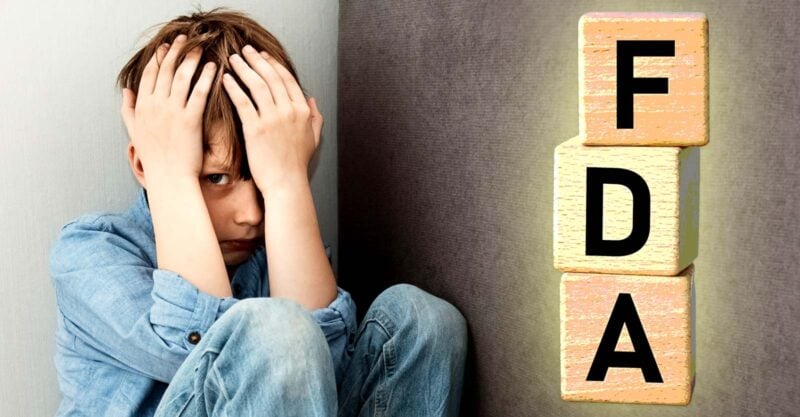


The U.S. Food and Drug Administration (FDA) missed its own deadline to ban the use of electric shock devices to treat self-harm or aggressive behaviors, including in children with autism or Down syndrome, STAT reported.
Electrical stimulation devices are used for a specific type of aversive shock therapy that delivers an “often-painful electric shock” to people exhibiting self-injurious or aggressive behavior.
The therapy — which administers the shocks as punishment when such behaviors occur — often targets the highly vulnerable, including disabled children.
The FDA was scheduled to issue a decision at the end of May on a rule, proposed in 2024, that would make it illegal to market or use electric shock devices to treat such behaviors. The proposed ban would apply to both new and existing devices.
The FDA did not respond to a request for comment on why it had not issued a decision or if it plans to do so.
A United Nations report has condemned the practice of shocking disabled youth exhibiting aggressive behaviors as torture.
When the FDA proposed the rule change in 2024, nearly all public commenters supported the ban.
The field of psychiatry in the U.S. has abandoned the extreme form of behavior modification. Only a single institution — the Massachusetts-based Judge Rotenberg Educational Center (JRC) — still uses the devices to control disabled youth.
JRC operates about 50 residences throughout Massachusetts. It has 347 residents — 54 of them receive some shock treatments, according to STAT.
The rule would not prohibit all types of shock therapy. Other forms of electroconvulsive therapy, sometimes used to treat conditions such as major depressive disorder, bipolar disorder, schizophrenia and catatonia, would still be allowed.
Psychiatrists prescribe electroconvulsive therapy for approximately 100,000 people in the U.S., though its safety and effectiveness are contested.

One school, decades of controversy
Advocates for children with autism and other disabilities have been trying to get the use of electric shock devices banned for decades. A 2012 lawsuit against JRC brought new public attention to the school’s use of the devices, according to New York Magazine.
Some children at the school are fitted with backpacks containing the devices, with wires running under their clothing to electrodes strapped to their arms and legs.
Staff members carry remote control devices. When they observe a student exhibiting “targeted behaviors” — such as aggression, or even trying to remove the electrodes — the staffer presses a button that delivers a two-second shock.
The family of a student with an intellectual disability who was shocked 31 times in a single day sued the school.
Supporters of the practice say it effectively reduces targeted behaviors, but the FDA has said there is no strong evidence to support that claim.
Founder Matthew Israel, a student of behavioral psychologist B. F. Skinner, first opened the JRC in Rhode Island in 1971, under the name the Behavior Research Institute. He later opened a second school in California.
The Boston Review reported that problems with the schools in the 1990s forced their closure in those two states. JRC has since operated only in Massachusetts.
The school originally focused on autism. However, in recent years, the school has admitted increasing numbers of children exhibiting aggressive behaviors who are referred from the juvenile justice system and foster care.
Israel based the school’s approach to treat children exhibiting aggressive and self-destructive behaviors that were difficult to treat based on Skinner’s reward and punishment philosophy.
In the 1970s, punishment was a key feature of Applied Behavior Analysis (ABA), a model still widely used in autism treatment. Today ABA relies less on punishment than on reward, and forms of punishment are less extreme.
Before introducing electric shock devices, the school experimented with other “aversive treatments,” including pinching children’s feet, withholding food, dumping water on their heads, and spraying them with ammonia when they exhibited undesirable behavior.
The school began using electric shocks in the 1990s, using a device Israel designed.
The Defender is 100% reader-supported. No corporate sponsors. No paywalls. Our writers and editors rely on you to fund stories like this that mainstream media won’t write. 

This article was funded by critical thinkers like you.
FDA: Devices cause ‘unreasonable and substantial risk of illness or injury’
Some parents support the therapy, reporting that it is the only treatment that has altered their children’s behavior. But disability advocates, psychologists and regulators have been trying to stop the practice for years.
The FDA first banned involuntary shock treatment for self-injurious or aggressive behavior in 2020, saying it posed an “unreasonable and substantial risk of illness or injury” and that there was no evidence to support its use.
According to the FDA, the devices pose significant physical and psychological risks. They’re known to cause pain, burns, tissue damage, anxiety, depression, and post-traumatic stress disorder.
The agency concluded that these risks can’t be mitigated through labeling or changes in how the devices are used, prompting the proposed rule change.
JRC sued the FDA, and a federal court in July 2021 overturned the ban. At the time, the law did not allow the FDA to ban a device for specific uses — such as for treating self-injurious or aggressive behavior — without banning the device altogether.
In 2022, Congress passed a new Food and Drug Omnibus Reform Act, in part to expressly grant the FDA the authority to ban a device for specific uses.
In September 2023, the Massachusetts Supreme Judicial Court ruled that JRC could continue shocking children.
The FDA previously proposed a similar ban under the Biden administration, but the effort was halted under the Trump administration.
It remains unclear how the agency will decide on the current proposal.
Related articles in The Defender
- School With 50 Locations Uses Electric Shock Devices on Autistic Children — the FDA Wants to Ban the Devices
- ‘Profound Autism’: Will New Definition Lead to Better Care, Research?
- California Supreme Court Hands ‘Landmark’ Victory to Brain-Injured Patient
- Big Money for Pharma, Big Risk for Kids: When Doctors Prescribe Antipsychotics and SSRIs for Children With Autism