Login
Login
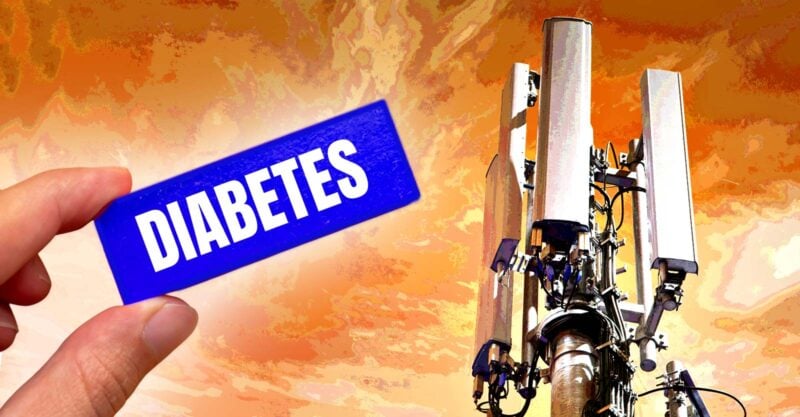


Electromagnetic radiation (EMR) is likely a driver of the global increase in diabetes, according to a new report by Paul Héroux, Ph.D.
The report — which includes over 280 citations — is a deep dive into the evidence suggesting that EMR exposure from electrical power grids and wireless radiation can dysregulate and raise blood sugar levels.
“Current EMR safety standards are inadequate for protecting long-term metabolic health,” Héroux told The Defender.
The Federal Communications Commission (FCC), which sets the U.S. safety limits for wireless radiation exposure, based its limits on the assumption that wireless radiation can only cause harm at levels high enough to heat human tissue.
But the studies Héroux compiled show that very low levels of EMR can impact how cells function, including how they handle glucose.
Diabetes occurs when a person’s blood sugar levels are too high, according to the Cleveland Clinic. As of 2023, 364,000 U.S. kids and teens were diabetic, according to the Centers for Disease Control and Prevention (CDC).
Although more recent figures aren’t available, the CDC in 2024 reported that the number of young people with Type 1 and/or Type 2 diabetes is on the rise.
In 2023, the American Academy of Pediatrics (AAP) issued new clinical guidelines that endorsed weight-loss drugs and weight-loss surgeries as “safe and effective” treatments for childhood obesity.
The same year, the U.S. Food and Drug Administration approved two drugs to treat Type 2 diabetes for children ages 10 and up.
Meanwhile, AAP hasn’t updated its parental guidance on cellphone radiation in nearly a decade, despite numerous studies in recent years highlighting the dangers of exposure in children. A link on the group’s parenting advice webpage lists telecommunications company AT&T as one of its corporate sponsors.
“It’s almost unfathomable what the link between EMR and diabetes could mean for kids’ health if we don’t change course,” said Miriam Eckenfels, director of Children’s Health Defense’s (CHD) EMR & Wireless Program.
“It’s not like there is a simple fix, like changing your diet,” she said. “Our children are being radiated 24/7, at home, in schools, on their phones and from nearby cell towers. We should really be paying attention to this.”


Doctor: Héroux’s ‘argument is difficult to ignore’
Héroux’s report appears as a chapter in the book, “The Impact of Anthropogenic Activities on the Natural Environment and Societies during the Contemporary Period,” currently available for preorder.
Héroux is an associate professor of medicine at McGill University in Montreal, Canada, and a medical scientist in McGill University Health Center’s surgery department.
He is also vice chair of the International Commission on the Biological Effects of Electromagnetic Fields, a “consortium of scientists, doctors and researchers” who study wireless radiation and make recommendations for wireless radiation exposure “based on the best peer-reviewed research publications.”
Although the report is academic, it has “down-to-earth consequences” — especially for children, who are more susceptible to the negative health impacts of wireless radiation.
The report traces research showing that EMR can suppress mitochondrial energy production in cells, increase oxidative stress and lower pH in some body fluids.
“These changes impair insulin secretion, reduce insulin binding, elevate blood glucose and promote insulin resistance,” Héroux said.
He also tracks how diabetes rates have climbed alongside the proliferation of technologies that emit EMR.
Yet the general public and “average medical audience” don’t realize EMR’s impact on metabolism, including a person’s diabetes risk, said Dr. Sharon Goldberg, an integrative and functional medicine doctor who has years of experience treating patients sickened by EMR exposure.
“His argument is difficult to ignore for anyone who takes the time to actually read what he has written,” she said.
EMR also linked to weight gain, hypertension
Beatrice Alexandra Golomb, M.D, Ph.D., a professor of medicine at the University of California, San Diego, School of Medicine, said she has “long recognized” that EMR can play a role in “not only in diabetes but in all of the metabolic syndrome factors, including weight gain and hypertension.”
However, medical training generally overlooks the impact of environmental toxins like EMR. Golomb explained:
“Much of medical education revolves around organ-based physiology and conditions for which drugs and procedures are often a prioritized approach. There is not much attention to the impact of environmental toxins or, more generally, to conditions tied to exposure-induced mitochondrial or cell energy impairment.”
Golomb leads a research group that studies conditions related to oxidative stress and cell energy impairments, including electrosensitivity — renamed EMR Syndrome in 2025.
In 2011, she posted a research paper in Nature Proceedings. The paper documented “extensive evidence” that some factors that cause oxidative stress and cell energy impairment — including EMR exposure — are driving the diabetic and metabolic syndrome epidemics.
She has since spoken with people who told her they experience serious weight gain linked to EMR exposure.
One person who had been overweight told Golomb that 80 pounds “melted away” when the person was able to relocate to a low-EMR environment, Golomb said.
News outlets are unlikely to report on such stories because the wireless industry is a big source of their advertising revenue, according to EMR researcher Camilla Rees.
Just because researchers like Héroux and Golomb publish reports doesn’t mean doctors will take the time to read them. Many doctors don’t read all the published science on EMR, Rees said.
“There is also the corporate influence on universities — and on medical associations — so the truth about environmental factors impacting people’s health can often be little known and long suppressed,” she said.


This article was funded by critical thinkers like you.
The Defender is 100% reader-supported. No corporate sponsors. No paywalls. Our writers and editors rely on you to fund stories like this that mainstream media won’t write.
Higher EMR frequencies like 5G can still disrupt glucose levels
Some may doubt that 5G could increase a person’s diabetes risk. That’s because the pancreas — which produces insulin — is deep in the body, and 5G doesn’t penetrate beyond the skin, according to Dr. Robert Brown.
Brown is a diagnostic radiologist and the vice president of Scientific Research and Clinical Affairs for the Environmental Health Trust.
Héroux said 5G could still disturb a person’s glucose metabolism, because all body tissues — including those at the skin level — use insulin.
Also, lower frequencies of wireless radiation can directly affect the pancreas, he added.
Related articles in The Defender- RFK Jr. Tells USA Today: Wireless Radiation Is ‘Major Health Concern’
- Kids’ Sleeping Problems Linked to Wireless Radiation, Screens
- Kids Who Get Cellphones Before Age 12 at Higher Risk of Obesity, Depression, Poor Sleep
- Screen Time Increases Kids’ Risk of High Blood Pressure, Insulin Resistance
- Cellphone Radiation Causes Abnormal Blood Clumping in Just 5 Minutes, Study Finds