Login
Login
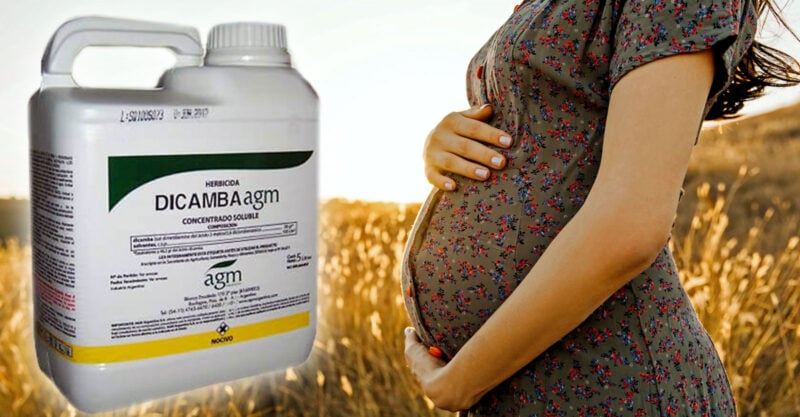


The average level of dicamba herbicide in the urine of pregnant women has increased more than threefold since 2017, the year widespread planting of dicamba-tolerant GMO crops began, Heartland Health Research Alliance (HHRA) reported last week.
Dicamba levels in urine have risen dramatically compared to levels of 2,4-D.
In 2010-2014, the average level of 2,4-D in urine (0.4 ug/L) was twice the average level of dicamba (0.2 ug/L). But by 2020-2022, the average level of dicamba (0.68 ug/L) exceeded the 2,4-D average (0.575 ug/L) by 18%, despite a 45% increase in the average level of 2,4-D in urine in 2020-2022 since 2010-2014.
Both herbicides are classified as “possible” carcinogens and are known to increase the risk of reproductive problems and adverse birth outcomes.
The percent of urine samples with detectable levels of dicamba rose 50% from 2010-2014 to 2020-2022 as a result of the widespread planting of dicamba-tolerant crops.
Of the 16 pesticide analytes that HHRA testing is able to detect, five were found in 99-100% of the samples, including 2,4-D. Since 2010, most people in the Midwest have been exposed to seven or more of these 16 pesticide analytes on a near-daily basis.
The above new evidence of rising herbicide exposures was presented on Nov. 8 at the annual meeting of the American Public Health Association in Boston.
The “Assessing Herbicide Impacts on Reproduction, Birth Outcomes & Children’s Development” session highlighted evidence pointing to the rising risk of herbicide-driven adverse birth outcomes.
HHRA now has glyphosate and glufosinate results from the analytical lab they are working with, the Centre de toxicologie du Québec (CTQ) in Canada for around 700 samples spanning 2010 through mid-2022. HHRA also has data from CTQ for another 13 pesticide analytes from about 150 samples collected from 2010 through spring 2022.
These results include the levels of 2,4-D and dicamba in the urine of pregnant women.
HHRA’s new biomonitoring data point to four preliminary findings:
- The average level of dicamba in the urine of pregnant women has increased 3.4-fold just since widespread planting of dicamba-tolerant seeds began in 2017.
- Recent increases in farmer reliance on glufosinate (Liberty-brand herbicide) are now leading to possibly significant exposures to glufosinate and its primary metabolite 3-MPPA (3-MethylPhosphonicoPropionic Acid).
- Some good news — the levels of eight out of 10 synthetic pyrethroid and organophosphate insecticide analytes have fallen over the last decade or so, including about a 50% decline in the primary metabolite of the organophosphate insecticide chlorpyrifos.
- Based on HHRA’s data spanning 17 pesticide analytes, the average person in the Midwest over the last two decades has been exposed on most days to at least seven pesticide analytes.
HHRA is highlighting the new data on dicamba and glufosinate because, these are the first, significant datasets collected worldwide on levels of these herbicides in human urine.
Such data are essential for regulators, farmers and the pesticide industry to accurately quantify pesticide risks and when determining whether steps are warranted to reduce exposures.
Originally published by Sustainable Pulse.