

 Login
Login
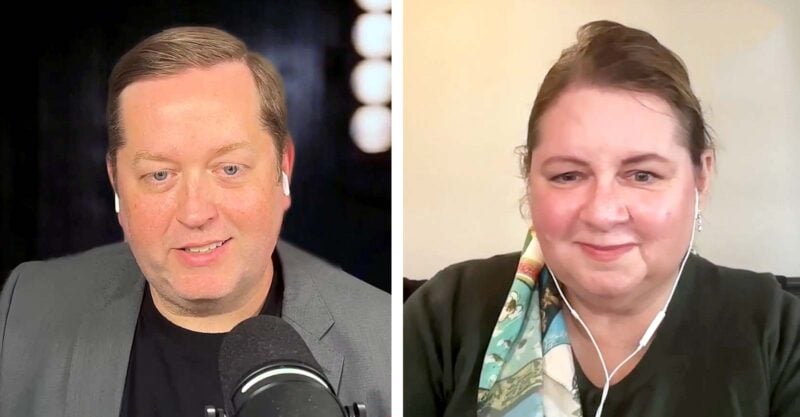


Two courtroom battles tied to Children’s Health Defense (CHD) could shape whether parents have meaningful access to information — and a real voice — in decisions about their children’s health, CHD General Counsel Kim Mack Rosenberg said in a recent interview on “BrokenTruth.tv.”
“Informed consent is so critical and … a hallmark of modern medicine, and it’s absolutely been trampled,” Mack Rosenberg said. “And it’s not just informed consent. It’s also informed refusal. … You should have the right to refuse an intervention.”
But that right exists only if people can access full information and think for themselves, she said.
The interview focused on two high-profile legal fights.
In one case, CHD joined five other plaintiffs in a lawsuit filed in Washington, D.C., against the American Academy of Pediatrics (AAP). The suit alleges the organization shapes vaccine policy and messaging in ways that benefit pharmaceutical companies rather than children.
In the other, the AAP and other medical organizations sued U.S. Health Secretary Robert F. Kennedy Jr. and several other public health officials and agencies in federal court in Massachusetts. The groups challenged changes to the Centers for Disease Control and Prevention’s (CDC) vaccine schedule and to the Advisory Committee on Immunization Practices (ACIP), which advises the CDC on vaccine recommendations.
The cases revolve around whether powerful institutions will be forced to answer tough questions about safety, financial incentives and public trust.

AAP helping Big Pharma create ‘customers-for-life’ model
The AAP sits at the center of both legal battles.
The RICO lawsuit, filed this year, alleges that the AAP violated the Racketeer Influenced and Corrupt Organizations Act by promoting vaccine policy while maintaining financial ties to the pharmaceutical industry.
Mack Rosenberg said the AAP receives “a lot” of its funding from drug companies. That relationship creates what she called a “customers-for-life” model.
“The pharmaceutical industry, which is manufacturing all these vaccines, is also either developing or buying smaller biotech companies that develop medications to treat all these chronic health conditions that we’re seeing,” she said.
She compared the case to earlier litigation against the tobacco industry, with one key difference.
“The model … is really very similar to the RICO case against Big Tobacco,” she said. But unlike pharmaceutical companies, “the tobacco players … didn’t go around opening oncology clinics to treat the lung cancer that smoking caused.”
‘It all boiled down to the money’
The AAP also plays a central role in the Massachusetts case, filed in 2025, which challenges changes to how federal vaccine recommendations are made.
According to Mack Rosenberg, court filings revealed that some physicians worried the changes would affect their bottom line by requiring longer patient conversations. She said:
“Doctors were saying, ‘Well, this new vaccination schedule is terrible because … it’s going to require us to … have a conversation with our patients about vaccination and vaccines and potential side effects. And … each visit is going to take longer. And then we’re going to be able to see fewer patients a day and, therefore, will make less money. … It all boiled down to the money.”
She said the AAP, which represents 67,000 pediatricians, offers online tool kits designed to help pediatricians promote vaccination and maximize income.
“That’s what they are fundamentally about,” she said.
These concerns suggest that meaningful informed-consent discussions “generally don’t happen,” Mack Rosenberg added.
U.S. District Judge Brian E. Murphy issued a preliminary injunction that paused key ACIP reforms, made since Kennedy was named U.S. secretary of health in February 2025.
“One judge in one district court has essentially brought to a halt a lot of healthcare decision-making in the federal government,” Mack Rosenberg said.
She also criticized Murphy’s ruling in light of his questions regarding the scientific credentials and expertise of ACIP members.
“When you really dig in and boil it down, they’re ‘not qualified’ because … they believe that it was OK to challenge the status quo and determine whether it’s right or wrong,” Mack Rosenberg said.
‘There are real-life impacts of all these decisions’
CHD sought to intervene in the Massachusetts case to represent families whose children died or were injured following vaccination. The court denied that request.
Mack Rosenberg said including those families is critical to understanding what is at stake.
“We thought it was really important … because there are real-life impacts of all these decisions that are being discussed in that case,” Mack Rosenberg said. “It really gets down to families who have lost children or had children seriously injured.”
She said those families often feel dismissed.
“What these families … hear all the time is, ‘We don’t know what caused this sudden unexpected death, but we’ll tell you it’s not the vaccines,’” she said. “How you just automatically rule out the vaccines is one of the great mysteries of life.”
CHD has appealed both the preliminary injunction and the denial of its request to intervene. The combined appeals are moving forward in the 1st U.S. Circuit Court of Appeals.
‘Our voices are getting louder,’ which ‘makes the AAP very uncomfortable’
Regardless of how the courts rule, Mack Rosenberg said public pressure is growing.
“Our voices are getting louder, and I think there are more people who are starting to question vaccine safety and efficacy,” she said. “And that clearly … makes the AAP very uncomfortable.”
She also raised broader concerns about how information is controlled, citing COVID-19 interventions and childhood vaccines as examples.
“The First Amendment is supposed to help protect the citizens’ right to free speech, and you do that by limiting government interference,” she said.
When people see only one side of an issue, they lose the ability to evaluate risks and benefits for themselves, she added.
The Defender is 100% reader-supported. No corporate sponsors. No paywalls. Our writers and editors rely on you to fund stories like this that mainstream media won’t write. 

This article was funded by critical thinkers like you.
System is setting people up ‘to be punished if they’re not compliant’
Mack Rosenberg said the legal system is still grappling with decisions made during the COVID-19 pandemic, when many people — including judges — were operating “from a place of fear.”
“We got many decisions that were just legally, I think, poor decisions that did not comport with what the law actually said because judges were afraid,” she said.
She said recent court rulings suggest the legal system is still working through the aftermath of the pandemic.
“We’re seeing better decisions happening now, but they’re not all good,” she said. She called the Massachusetts ruling “flat-out wrong.”
Ultimately, the stakes go beyond any single case, she argued.
“The whole system is really, in many respects, in a frightening, frightening way, setting itself up for people to be compliant and to be punished if they’re not compliant,” she said.
Watch Mack Rosenberg’s discussion on ‘BrokenTruth.tv’ here:
Related articles in The Defender
- Pro-Vaccine Panelists: ‘We’re Losing the PR and Communications Battle’
- Police: Investigation Still ‘Active’ 8 Months After Idaho Twins Died Following Vaccinations
- More Parents Seek Out ‘Vaccine-Friendly’ Pediatricians Who Will ‘Simply Answer Their Questions’
- AAP Received Tens of Millions in Federal Funding to Push Vaccines and Combat ‘Misinformation’
- How a Gaggle of Vaccine Trade Groups Got a Federal Judge to Help Upsell Vaccines No State Thinks Are Necessary
