

 Login
Login
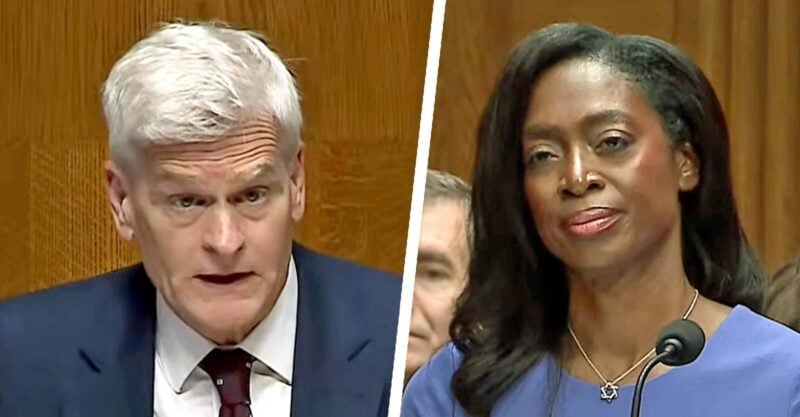


On July 15, Dr. Erica Schwartz appeared before the U.S. Senate HELP Committee to make her case for leading the U.S. Centers for Disease Control and Prevention (CDC).
But before the nominee had answered a single question, the terms of her confirmation had already been laid down. HELP Committee chairman Bill Cassidy wasted no time.
“A lot of this conversation for me is going to revolve around vaccines,” he announced. “Vaccines should be settled.”
He blamed “a flurry of misinformation” around immunization, saying some people cast doubt on mRNA vaccines “for no other reason than people don’t understand them.”
Mothers and fathers, he said, had become “confused as to whether vaccines are safe to give their children.”
The result was thousands of measles infections, with children hospitalised or dying from vaccine-preventable diseases.
Then came the ultimatum.
“Vaccines are overwhelmingly safe and effective,” Cassidy declared. “Study after study shows they do not cause autism.”
“Any equivocation on these facts,” he warned Schwartz, “and I shall not be able to support your nomination.”
Only then did the questioning begin. Confirmation hearings are meant to test a nominee’s judgment, independence and fitness to lead. Instead, Cassidy announced the conclusions he expected Schwartz to affirm before she had given a single substantive answer. From the outset, it was clear there was no room for dissent.
Cassidy’s concern was whether Schwartz would publicly defend what he regarded as settled science on vaccines. He pointed to her predecessor, Susan Monarez, Ph.D., saying she had been dismissed after refusing to carry out instructions she believed would harm public health.
Would Schwartz show the same resolve and stand up to political pressure? Schwartz responded as most nominees do. She spoke of integrity, the Hippocratic oath and her commitment to public health.
“I will never compromise on that,” she said.
Cassidy pressed her again on whether she would have the authority to reassign or remove CDC staff who were pursuing an agenda he believed was harmful to public health. Schwartz tried to explain that the health secretary had nominated her to lead the CDC and that she expected to carry out that role. Cassidy cut her off several times.
An oath to orthodoxy
“We need a CDC director that will actually stand up to crazy, stupid things being said that undermine faith in immunization,” Cassidy said. “Are you the person?” Schwartz answered cautiously.
“You have my assurances that I will continue to lead by my integrity. I will never compromise on the science.” Cassidy noted that she had already been through a “murder board.”
That is Washington shorthand for the gruelling mock confirmation hearings in which nominees rehearse difficult questions with advisers before appearing before senators.
He pressed once more, asking whether she would say no to “junk science” and stand up for what was “right and true.”
Schwartz replied, “I have always stood up for what is right and what is true,” adding, “I will never betray the science.”
Cassidy left little doubt that his support was contingent on Schwartz affirming conclusions he regarded as settled.

The autism exchange
Senator Bernie Sanders opened by declaring that Schwartz was appearing before the committee because former CDC director Susan Monarez had been fired for refusing to become “a rubber stamp” for Robert F. Kennedy Jr.’s anti-vaccine agenda.
That is certainly one interpretation of Monarez’s dismissal.
Sanders presented it not as an opinion or allegation, but as established fact, despite Kennedy having publicly offered a different account of why she was removed.
Sanders then turned to autism. After noting that numerous studies had found no association between childhood vaccination and autism, he made a striking claim.
“Today,” he said, “the CDC has published false information on its website suggesting that childhood vaccines cause autism.”
The website does not actually state that childhood vaccines cause autism. It says the categorical claim that “vaccines do not cause autism” is not evidence-based because studies have not ruled out the possibility that infant vaccines contribute to autism. That is different from saying the CDC is telling the public that childhood vaccines cause autism.
Schwartz answered, “We do not know what causes autism. One in 33 children have a diagnosis of autism spectrum disorder, and we owe it to the American people to figure out why.”
Sanders interrupted (again).
“The evidence is overwhelming that vaccines do not cause autism. Do you accept that evidence?” There was no interest in exploring uncertainty. There was only one acceptable answer, and Schwartz gave it.
“I do accept that evidence,” she replied.
The exchange captured the hearing’s underlying theme. Open scientific questions were reduced to binary political tests, and uncertainty was unwelcome.
A debate?
Democratic senator Angela Alsobrooks raised comments by vaccine attorney Aaron Siri, who had previously described Schwartz as the “queen of mandating vaccines” and questioned whether Schwartz would engage with him.
Rather than criticising Siri or dismissing him, Schwartz said she wanted to be “the CDC director for all Americans,” including “Aaron Siri and people that have concerns about vaccines.”
“I would love to have a conversation with Aaron Siri. I would love to understand his concerns about vaccines. I would love to have an open and transparent debate,” Schwartz added.
Siri later posted on X that he accepted the invitation, but whether Schwartz actually follows through is another matter.
Overall, Schwartz navigated the hearing exactly as a nominee seeking confirmation would be expected to. She said she believed “mRNA technology is safe and effective.”
She accepted that the evidence shows vaccines do not cause autism. When senators from both parties pressed her on politically charged questions, her answers gave them little reason to doubt that she understood where the boundaries lay.
In her opening statement, Schwartz promised to restore public trust through “radical transparency” and “unwavering scientific integrity.”
But by the end of the hearing, the public had learned far more about the answers senators expected than about how that trust would actually be restored. In fairness, few nominees in her position would have done otherwise. And that is precisely the problem.
The hearing resembled Kabuki theatre. Cassidy set the limits of acceptable opinion, Sanders defended the orthodoxy and Schwartz performed her role. The loyalty test was complete.
The only thing largely absent was the one quality congressional oversight is supposed to achieve — genuine inquiry.
Originally published on Maryanne Demasi’s MD Reports Substack page.
