Login
Login
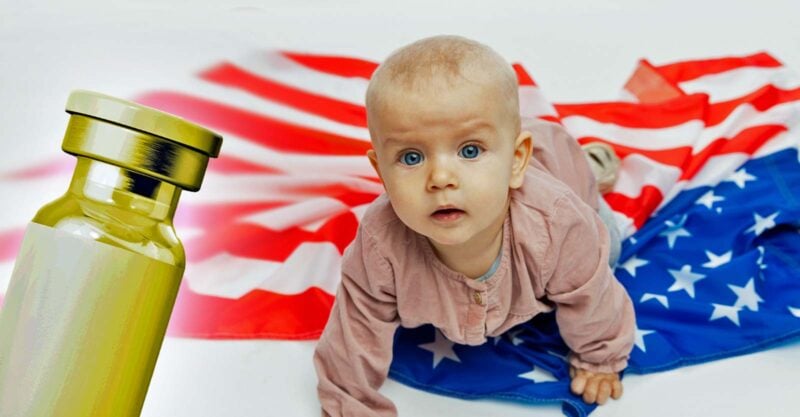


In a move that sparked pushback from mainstream health advocates, the Centers for Disease Control and Prevention (CDC) on Monday dropped the number of diseases it recommends that all children be vaccinated against from 17 to 11.
Under the previous schedule, the CDC recommended all children receive between 84-88 vaccine doses before age 18. Under the new schedule, the number of recommended vaccine doses falls to about 30.
The changes bring the U.S. childhood immunization schedule in line with those of other similar countries, according to federal health officials. They said the changes would improve public trust and increase uptake of the routine recommended vaccines.
What changed?
Under the updated schedule, health officials will continue to recommend vaccines that protect against what the U.S. Department of Health and Human Services (HHS) called the “most serious” childhood diseases. States will likely continue to mandate those vaccines for school attendance.
Recommendations won’t change for vaccines intended to prevent measles-mumps-rubella (MMR), polio, pertussis, tetanus, diphtheria, Haemophilus influenzae type B (Hib), pneumococcal disease and varicella (chickenpox). The CDC also will continue to recommend the human papillomavirus (HPV) vaccine, but the recommendation will be for one, not two doses.
However, as of Monday, the CDC no longer recommends that all children be immunized against rotavirus, influenza, meningococcal disease and hepatitis A. The decision to take those shots should now be made by parents and providers through shared clinical decision-making.
The CDC previously shifted to this model for the hepatitis B, COVID-19, and meningococcal B vaccines.
The CDC will continue to recommend those vaccines for “high-risk” children.
HHS emphasized that all vaccines will continue to be covered by insurance for any family that wants their child to get them.
How did health policy experts respond?
Researcher and vaccine policy expert James-Lyons Weiler, Ph.D., told The Defender the changes were “long overdue.”
Lyons-Weiler said that, contrary to allegations by medical associations, often-cited health experts and Sen. Bill Cassidy (R-La.) that the changes were arbitrary and unscientific, health officials based the changes on substantive research.
“The CDC’s January 2026 childhood vaccine schedule realignment is not a retreat from science — it is it’s restoration,” he said.
Dr. Monique Yohanan, senior fellow for health policy at Independent Women, said that having a more focused and risk-proportionate schedule is “a positive thing.”
She said the changes would cut the amount of aluminum that most children are exposed to by 25%-30%.
Yohanan said that many parents had opted out of the schedule because it “was simply too big and too overwhelming,” and because they were concerned about aluminum exposure.
The updated schedule will likely lead to “more parents having more trust in the schedule.”
Yohanan said the decision was bound to be controversial, but “sometimes you just need to pull off the bandaid.” This move by the CDC “did it in a way that aligns with immunology, it aligns with the best evidence, it aligns with what is really a way to protect communities and minimize the exposure of children to vaccines that they just don’t need.”


What happens to school mandates?
The CDC doesn’t mandate vaccines for schoolchildren — that decision is made at the state level.
States may or may not tie their mandate laws to CDC or ACIP recommendations. For states that don’t, the new recommendations won’t affect vaccine mandates for school attendance.
However, the new recommendations leave open the question of whether states that tie their mandates to CDC recommendations will be able to mandate vaccines that the CDC no longer routinely recommends without rewriting state laws.
In recent months, many states have begun looking to do an end run around CDC vaccine recommendations in response to recent changes to the agency’s recommended schedule. California passed a law giving the state the authority to issue its own vaccine guidance, independent of the CDC.
Lyons-Weiler said that given how politicized vaccine recommendations have become, there may be a sort of “natural experiment,” where red states follow CDC mandates and blue states don’t, and instead pass laws similar to California’s.
Yohanan said mandates for vaccines the CDC doesn’t routinely recommend are going to be harder to justify, especially because there is no argument to be made that they contribute to herd immunity.
She also said that there has been a national shift toward prioritizing parents’ rights to determine which vaccines their children get. That shift was evident in recent U.S. Supreme Court decisions favoring parents’ rights to direct their children’s religious upbringing.
“I cannot separate vaccines and vaccine policy from a growing sense about parents’ rights that is in this country and that there’s at least a hint of this at the highest level in the courts,” Yohanan said.
She noted that because of the COVID-19 vaccine mandates, so many people pulled their children out of school that school vaccine mandates are no longer necessarily effective for herd immunity goals.
“It’s literally a math problem,” she said. For the goal of 95% of children to be vaccinated for measles, using school mandates as the tool for reaching that goal, 97% of children need to be in public school.
That’s not happening, she said.
The Defender is 100% reader-supported. No corporate sponsors. No paywalls. Our writers and editors rely on you to fund stories like this that mainstream media won’t write. 

This article was funded by critical thinkers like you.
What is shared clinical decision-making?
Vaccines that fall into the shared clinical decision-making category are not recommended for everyone in a particular age or identifiable risk group. Instead, the decision to make that vaccine is individually based and should be informed by a process between the healthcare provider and patient or guardian, according to the CDC.
Board-certified pediatrician Dr. Gator said in a Substack post that this change was still frustrating, because the problem remains — as HHS noted in its press release — that clinical trial and long-term risk data are lacking.
He wrote:
“Shared decision-making only works if you’re given actual risk information.
“Every child is technically ‘at risk’ for hepatitis A, hepatitis B, flu, rotavirus. So where is the line between high risk and low risk? That line is subjective unless we have real data.”
Attorney Rick Jaffe pointed out that the shared decision-making model applies to most vaccines in most parts of the world. Those countries that have a routine vaccination schedule typically mandate very few of them for school attendance. They leave the decision up to parents and providers.
“The U.S. is unique in the world and very much an outlier in linking vaccines to the ability to attend public school,” Yohanan said.
“There is a lot of dismissing of parents,” she said. “But a lot of parents are tired of the public health leadership basically using their kids in ways that were not only disrespectful, but they weren’t even about children. They were about using children as instruments of broader social policy.”
Related articles in The Defender
- Breaking: HHS Makes Sweeping Changes to Childhood Vaccine Schedule
- Eight Northeast States Eye End Run Around CDC Vaccine Recommendations
- California Passes Law Giving State Authority to Set Its Own Vaccine Guidance
- Breaking: Children’s Health Defense Sues New York in Bid to Restore Religious Exemptions
- Doctors Will No Longer Receive Financial Rewards for Vaccinating Kids