Login
Login
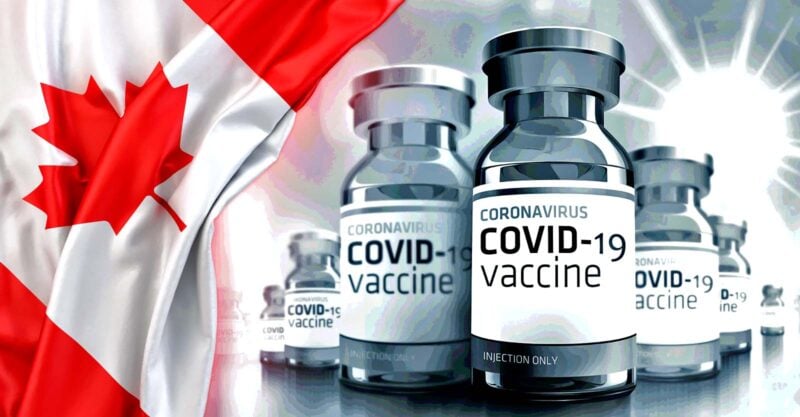


Canada has launched an inquiry into COVID-19 vaccine injuries and is calling on the public to share their stories.
Dean Allison, a conservative member of the Canadian parliament, announced the inquiry last week. The inquiry aims to gather testimony from patients, clinicians, researchers and policy experts, TrialSite News reported.
Writing on X, Allison invited the public to submit stories of COVID-19 vaccine injuries, either their own or those of family members. He said the parliament will hear the stories between September 8 and 11. “People will be heard,” Allison wrote.
Radio silence from the legacy media on the Allison Inquiry
I wonder why … ?
Just imagine … they’re terrified to hear from folks who are struggling with COVID-19 vaccine injuries
They’re terrified of the powerful stories which will be shared on September 8, 9, 10, 11…
— Dean Allison (@DeanAllisonMP) June 8, 2026
Allison told The Defender that many of his constituents contacted his office asking that their stories be heard. He said these calls prompted him to launch the inquiry.
“Many told me they felt unheard, struggled to navigate support systems, or simply wanted someone to listen to their story,” Allison said. “I believe it is important to ensure that Canadians have an opportunity to be heard, especially when they feel their concerns have not received sufficient attention.”
Canadian outlet Global News reported Monday that “thousands” of vaccine-injured Canadians have called for such an inquiry and a chance to speak.
Allison has a history of questioning official COVID-19 policies. In 2021, he took a position in favor of natural immunity. The following year, he stated that “mandates can not be our new normal.”
“As testimony unfolds, the Allison Inquiry may become an important test case in how democratic societies balance public health policy, vaccine confidence, patient safety, and accountability in the aftermath of the pandemic,” TrialSite News reported.
‘Many Canadians felt their experiences were overlooked’
The Allison inquiry isn’t the first investigation into Canada’s COVID-19 policies. In 2023, Canada’s National Citizens Inquiry examined the country’s COVID-19 response and issued a report.
The inquiry found that the country’s vaccine mandates violated international human rights law and resulted in numerous injuries and deaths.
The report also acknowledged vaccine injuries, albeit briefly, stating:
“The reality is that the safety of the COVID-19 vaccines was not known at the time that they began to be administered to Canadians, and many Canadians were severely injured and killed as a result. …
“ … Patients who had experienced vaccine injury, as confirmed by a physician, were contacted by public health authorities who recommended that they take another COVID-19 vaccine.”
The report also found that “precious few” vaccine-injured Canadians found recourse through the country’s vaccine injury compensation program, and proposed that the program be made “more accessible to those who have suffered harm due to vaccinations.”
Canadian researcher Denis Rancourt, Ph.D., noted that Canada’s citizens’ inquiry was not an official government investigation, but “a separate non-governmental project, funded by donations.” He said the inquiry was “broad and well run” and likely inspired Allison’s initiative.
Allison said the citizens’ inquiry performed “valuable work” in documenting the experiences of ordinary Canadians — however, it lacked broader participation from legislators, governments, public health officials and other institutions.
“Having those voices at the table could have allowed for a more comprehensive examination of vaccine injuries and helped build greater public confidence in the findings,” Allison said.
Allison said that many Canadians felt their experiences were overlooked, that many of his constituents reported “difficulty having their injuries recognized or acknowledged,” expressed frustration with the Vaccine Impact Assistance Program.
He added:
“Vaccines, like all medical interventions, can have risks, and those who believe they have been harmed deserve to be listened to, treated with dignity, and supported. Good public policy depends on transparency, evidence and a willingness to hear people’s experiences.
“My hope is that this inquiry provides Canadians with an opportunity to tell their stories and ensures that those experiences are documented, heard and preserved. For many people, simply being listened to is an important first step.”
COVID inquiries ‘set up to ask the wrong questions’
Allison’s announcement “comes amid growing international discussion surrounding vaccine safety surveillance, compensation programs, and the long-term health outcomes reported by some individuals following COVID-19 vaccination,” TrialSite News reported.
Those discussions have included questions on the extent to which other countries’ COVID-19 inquiries have investigated vaccine injuries.
Dr. Clare Craig, a U.K.-based diagnostic pathologist and co-chair of the Health Advisory & Recovery Team, said the UK Covid-19 Inquiry — and similar inquiries in several other countries — “are set up to ask the wrong questions.”
“They assume that regulators, public health officials and governments were working in the correct framework,” Craig said. “Questions about decisions they made within that framework are permitted, but questioning the framework itself is out of bounds.”
Earlier this year, the U.K. inquiry published a report and recommendations. According to the report, the COVID-19 vaccines were effective for “the vast majority” of people, “saved lives,” and “played an important role in reducing the spread of the virus.”
UK inquiry ‘excluded questions of vaccine safety and efficacy’
The U.K. report acknowledged some COVID-19 vaccine injuries, but claimed there were “effective systems in place to assess the safety and efficacy” of the vaccines.
“Any vaccine carries with it a risk for a small minority of people and the Inquiry acknowledges the suffering of those for whom vaccines led to serious injury or death,” the report stated.
The report acknowledged that the system for compensating people injured by the vaccines “requires reform,” and recommended the U.K.’s Vaccine Damage Payment Scheme undergo reform.
Craig said the inquiry “excluded questions of vaccine safety and efficacy” while presenting vaccine benefits as “established fact.”
Caroline Pover, chair of trustees of UKCVFamily, a U.K.-based registered charity providing support and advocacy for the COVID-19 vaccine-injured and their families, agreed. She said the inquiry didn’t investigate COVID-19 injuries; it only acknowledged that deaths and injuries occurred.
Pover said she didn’t believe the outcome of the U.K.’s inquiry was preordained, but that the focus “was very clearly about how can this country develop more vaccines, how can they get more British people to sign up to participate in clinical trials” and “roll up their sleeves and accept more vaccines.”
“The purpose of the inquiry wasn’t to look at safety or, or examine in any detail what happened to the people for whom it went wrong,” Pover said.
Dr. Angus Dalgleish, professor emeritus of oncology at City St. George’s, University of London, called the U.K. inquiry “the most expensive waste of money on a predetermined cover-up … designed to let the guilty off.”
Dalgleish said the inquiry sidestepped evidence showing that the U.K.’s drug regulator, the Medicines and Healthcare products Regulatory Agency, “sat on” 48,000 warnings of COVID-19 vaccine injuries.
Craig and Pover said the inquiry ignored evidence chronicling COVID-19 vaccine injuries, while witness statements on the topic were dismissed. According to Craig:
“Witnesses were frequently allowed to discuss support for the vaccine-injured and shortcomings in compensation schemes. But when they attempted to raise questions about clinical trial data, manufacturing differences, regulatory failures, adverse event signals or evidence challenging official narratives, they were often interrupted or told that the inquiry did not have the time, remit or ‘wherewithal’ to examine such matters in detail.”
Pover said the inquiry rejected 238 case studies she and UKCV submitted. She included them in her recently published book, “Fallout from the Rollout: Case Studies the UK Covid Inquiry Wouldn’t Publish.”
“The inquiry published our original witness statement … but they didn’t publish our supplementary witness statement” or “any of the case studies,” Pover said.
She said the rejection inspired her to publish a book, which she completed in five days. The injuries she sustained after receiving a single dose of the AstraZeneca COVID-19 vaccine led her to become an advocate for the vaccine-injured.
“I wasn’t given any kind of pathways. I wasn’t given any support. There was just nothing available … I couldn’t find anything online,” Pover said. By sharing her experience online, she “gradually connected” with other vaccine-injured people, leading them to question what happened and why.
One of the vaccine-injured people Pover connected with was Brianne Dressen, who was injured in AstraZeneca’s U.S. clinical trial for its COVID-19 shot and who later co-founded React19, a group advocating on behalf of the vaccine-injured.
Pover chronicled Dressen’s experience in her book, “Worth a Shot?: Secrets of the Clinical Trial Participant Who Inspired a Global Movement — Brianne Dressen’s Story,” released by Skyhorse Publishing in 2024. Pover said the book “brings together all of the different elements of being vaccine injured, which is a very complicated and complex experience.”
Pover said she hopes the vaccine-injured will receive better recognition and that physicians will overcome their reluctance to formally issue vaccine injury diagnoses.
“All pharmaceutical products carry risk, and we want the medical professionals to be able to speak openly about that risk,” Pover said.
UKCVFamily calls for reform of the U.K.’s Vaccine Damage Payment Scheme, noting that it has a significantly high rejection rate, while applicants face numerous hurdles in the process.


This article was funded by critical thinkers like you.
The Defender is 100% reader-supported. No corporate sponsors. No paywalls. Our writers and editors rely on you to fund stories like this that mainstream media won’t write.
U.S. adopting different approach to investigating the COVID response
Wayne Rohde, an expert in vaccine injury compensation and author of “The Vaccine Court: The Dark Truth of America’s Vaccine Injury Compensation Program” and “The Vaccine Court 2.0,” said that instead of launching an official inquiry, the U.S. has adopted a different approach to investigating the COVID-19 response.
“As far as the U.S., the official inquiries are mainly conducted by Congress and not by an independent group such as in the U.K. However, there might not be any true independent review, since Big Pharma has so much control over Congress — and, quite possibly, the U.K.,” Rohde said.
As part of Congress’ look at the official COVID-19 response, Sen. Ron Johnson (R-Wis.) last week held a hearing on how scientific findings on COVID-19 mRNA vaccines and cancer have been suppressed and how scientists’ reputations were maligned when they spoke out about what they saw and what they know.
Dalgleish testified at last week’s U.S. Senate hearing. He told The Defender the hearing was “truly refreshing” and helped reveal “the complete lack of knowledge and facts by those making the decisions.”
According to TrialSite News, Johnson’s ongoing Senate investigation may have inspired Allison’s push for a Canadian inquiry.
“Only the U.S. seems to have called for actual accountability,” Craig said, noting, though, that even this call “seems limited.”
Related articles in The Defender
- Sen. Ron Johnson: There Used to Be ‘Serious Journalism’ on Vaccine Injuries — But COVID Vaccine Cancer Risks Still Being Suppressed
- COVID Vaccines and Cancer: Doctors, Scientists to Testify at Upcoming Senate Hearing
- UK Health Officials Covered Up Reports of Heart Damage Linked to AstraZeneca Vaccine
- Health Canada Slow-Walks Release of Vaccine Injury Reports
- ‘Historic’: Federal Court Says AstraZeneca Not Immune From Liability in Case Involving Woman Injured by COVID Vaccine During Clinical Trial
- More Than 80 Lawsuits in UK Allege AstraZeneca COVID Vaccine Caused Deaths, Severe Injuries