
 Login
Login
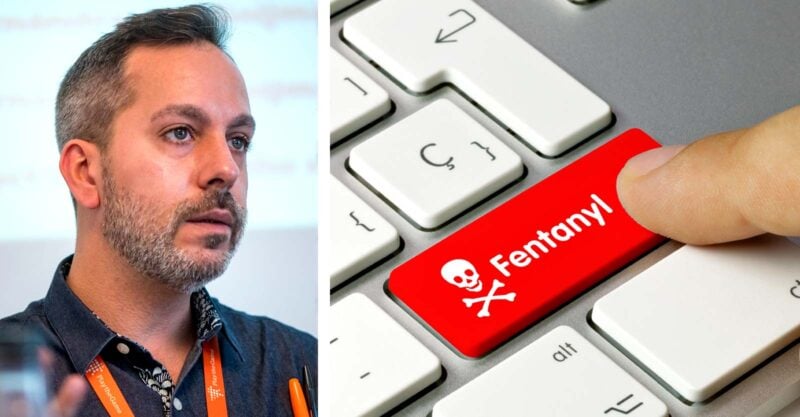


A top Argentinian public health official who oversaw Pfizer’s COVID-19 vaccine clinical trial is being sued for failing to prevent a deadly batch of fentanyl from reaching the public.
In an exclusive interview with The Defender, prominent Argentinian journalist Federico Dario Teijeiro revealed highlights from his seven-month investigation into the 2025 deaths of more than 100 people from contaminated fentanyl.
The deaths were traced to fentanyl produced at an Argentinian lab that was inspected by Argentina’s version of the U.S. Food and Drug Administration (FDA) — la Administración Nacional de Medicamentos, Alimentos y Tecnología Médica, or ANMAT.
Although ANMAT inspectors found nearly 30 critical safety issues at the lab, the agency allowed the contaminated drug to be shipped out to hospitals and clinics throughout Argentina.
Now the Argentinian government is suing ANMAT’s former director, Nélida Agustina Bisio, and Gabriela Mantecón Fumado, who led ANMAT’s medicine branch, for the agency’s failure to prevent the tainted fentanyl from killing patients.
This is the second federal lawsuit against Bisio, who oversaw inspections during Argentina’s Pfizer COVID-19 vaccine trials.
The first lawsuit alleges that Bisio helped Pfizer cover up at least one death and one heart injury sustained by clinical trial participants. According to records compiled by Teijeiro, Pfizer covered up the information.
“And the FDA approved the Pfizer vaccine largely based on the trials that Pfizer did in Argentina,” Teijeiro said.
🚨 🚨 Breaking 🚨 🚨
Trial Documents Released:
Pfizer Covid vaccine clinical trial documents from a major trial site used for vaccine US FDA approval.Just released by ANMAT (the Argentine equivalent of the US-FDA),
ANMAT itself listed twenty findings and applied an “Official Action Indication” both to the principal investigator and to Pfizer.English translation can be found here:
https://t.co/XhzZyOKeUV— React19 – Official (@React19org) October 10, 2026
Cluster of 15 deaths in one hospital sparks public awareness of tainted fentanyl
In May 2025, 15 people at one hospital died on the same day. Hospital staff were puzzled by the sudden cluster of deaths — the people were in the hospital for different reasons and being treated on different floors, Teijeiro said.
Hospital officials began pouring over the individuals’ medical records. “They found that all these 15 people had one thing in common. All of them were administered fentanyl from one particular laboratory” — Laboratorios Ramallo.
Soon, other hospitals in Argentina began reporting deaths of patients who had received fentanyl from the same lab.
Teijeiro estimated that at least 120 people died. However, the true number is likely higher, as some deaths may not have been tracked or reported, he added.


ANMAT knew the fentanyl lab had safety issues but looked the other way
Teijeiro is an investigative journalist with over 15 years of experience, trained in open-source intelligence, a form of journalism that analyzes public information.
His investigation into the fentanyl deaths revealed that ANMAT had conducted inspections at Laboratorios Ramallo and uncovered 28 serious problems — including bacterial contamination in the containers of fentanyl.
According to the lawsuit, lots 31,202 and 31,244 were contaminated with Klebsiella pneumoniae and/or Ralstonia mannitolilytica. These lots reached the Argentinian public, causing at least 90 deaths and injuring more than 40 people.
In November and December 2024, two ANMAT inspectors discovered numerous “critical” issues at the lab. Among the litany of problems was this: The lab couldn’t account for 25% of the powdered pseudofentanyl it used to produce fentanyl.
According to lab records, 25% — or 3 kilograms — was lost in the production process.
No credible business has that large a production margin loss, Teijeiro said. “It’s like Toyota saying, ‘Okay, I produced 100 cars a day, but 25 cars I lost because of problems with a machine.’”
The lab couldn’t explain what happened to the missing pseudofentanyl, Teijeiro said. “So you have a couple of options. The lab sold it in the black market, an employee sold it in the black market, or it was used for consumption by the employees.”
Despite these problems, ANMAT took no action to keep the lab’s fentanyl from reaching the public, Teijeiro said.
Less than a week after the inspectors completed their review of Laboratorios Ramallo, the lab distributed the fentanyl for use in hospitals and clinics. ANMAT didn’t even recall the tainted drug until a federal judge ordered the recall, after numerous people had died, Teijeiro added.
In January 2025, Fumado began drafting a letter to the lab informing it of the inspection’s findings and letting the lab know that ANMAT would conduct another inspection in a few months.
“You have to understand, a letter is the softest measure the ANMAT can do,” Teijeiro said.
ANMAT waited to send the letter until February 2025. Meanwhile, the agency took no action to halt the distribution of the fentanyl produced by the lab or to warn providers that it might be dangerous.
ANMAT has a history of looking the other way when it comes to taking action on problems in labs, Teijeiro said. The agency does things “for show” but fails to take meaningful action, he said.
As he deepened his investigation, Teijeiro discovered that ANMAT leaders had received bribes from laboratories, companies and food producers to look away from problems rather than demand the problems be addressed.
Teijeiro shared a trove of documents with The Defender that corroborated his investigation’s findings.
U.S. allegedly cancels drug agreement with Argentina after fentanyl deaths
Teijeiro said that if it weren’t for his investigation, he believes Argentina’s tainted fentanyl might have reached U.S. markets.
Teijeiro went public with his investigation’s findings by speaking repeatedly on Argentinian radio, which is livestreamed like YouTube.
Before the public learned about his investigation and the fentanyl-related deaths, the FDA had an agreement with ANMAT that allowed drugs manufactured in Argentina to be sold in the U.S., he said.
The agreement was cancelled soon after news of the fentanyl-related deaths was made public, according to Teijeiro.
The FDA and ANMAT did not respond when asked when and why they cancelled the agreement.


This article was funded by critical thinkers like you.
The Defender is 100% reader-supported. No corporate sponsors. No paywalls. Our writers and editors rely on you to fund stories like this that mainstream media won’t write.
Lawsuit over fentanyl deaths still ongoing
The federal lawsuit against Bisio and Fumado alleges the two ANMAT leaders allowed HLB Pharma and Laboratorios Ramallo, the companies tied to the manufacture of the tainted fentanyl, to keep operating despite concerns about the drug’s safety.
In early August, Argentinian Federal Judge Ernesto Kreplak ordered that Bisio and Fumado be placed on house arrest to prevent them from interfering with an ongoing court investigation into the deaths.
Two days later, Bisio and Fumado regained their freedom after each paid 150 million Argentinian pesos (nearly $100,000).
In her Aug. 24 testimony, Bisio claimed that Fumado — and not herself — was largely responsible for drug manufacturing oversight.
In a Sept. 1 ruling, Kreplak charged Bisio and Fumado with adulterating medicinal substances and ordered that Biso and Fumado’s assets of 500 billion pesos each (about $330 million) be frozen.
He also ordered Bisio and Fumado to remain in the country while the case continues.
As of press time, the case is still underway.
Related articles in The Defender
- Pfizer Document Dump Shows Doctor With Ties to Gates Foundation Deleted Trial Participant’s Vaccine Injury
- Florida AG Sues Pfizer, Bourla Over Deceptive Marketing of COVID Vaccines
- Texas Appeals Ruling in Lawsuit Against Pfizer, Challenges PREP Act Immunity Shield
- Kansas Sues Pfizer Over Misleading COVID Vaccine Safety and Efficacy Claims
- Pfizer CEO: Vaccine Makers Need Liability Shield to Protect Against People Who Claim ‘Accident in a Car Happened Because of a Vaccine’