Login
Login
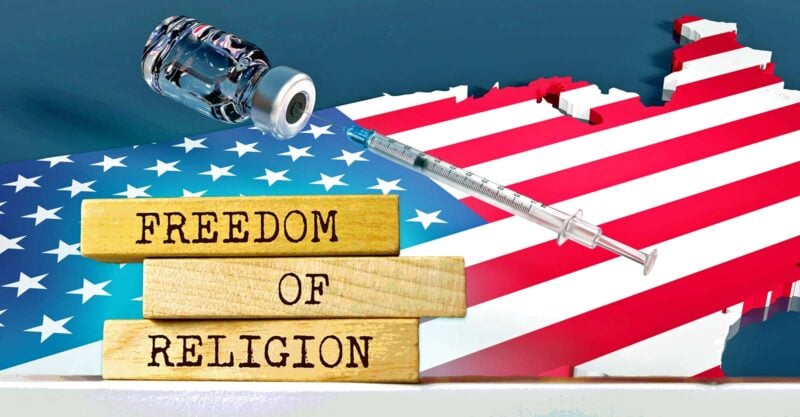


A federal court last week ruled against a group of Amish parents who sought religious exemptions from school vaccination requirements for their children — a ruling that legal experts suggest may lead to a U.S. Supreme Court showdown that could determine the future of religious exemptions nationwide.
In its ruling in Miller v. McDonald, the 2nd U.S. Circuit Court of Appeals said New York State’s law eliminating religious exemptions from school vaccination requirements is “neutral and generally applicable,” doesn’t discriminate against specific religious practices and furthers the state’s interest in protecting the public from disease.
The plaintiffs, a group of parents and representatives of Amish schools in New York, sued New York’s Department of Health and Department of Education in 2023, alleging the state’s law barring religious exemptions violates the U.S. Constitution’s Free Exercise Clause under the First and 14th Amendments.
The parents face $118,000 in fines for noncompliance with the state’s vaccination requirements.
Last week’s decision was the second time the 2nd Circuit ruled against the plaintiffs. The same court previously dismissed the suit in 2024, upholding a decision by another federal court earlier that year.
In December 2025, the Supreme Court sent the case back to the 2nd Circuit, asking it to review constitutional questions arising out of a separate ruling, Mahmoud v. Taylor, in 2024. In that case, the Supreme Court found that parents have the right to request an exemption for their children from LGBTQ curriculum on religious grounds.
According to The Washington Post, last week’s ruling in Miller v. McDonald may “set the stage for a potential Supreme Court battle over vaccine mandates,” citing legal experts who suggested the court is likely to accept the case for review on constitutional grounds and in light of the Mahmoud v. Taylor decision.
Lawrence Gostin, a Georgetown University professor of health law and an outspoken vaccine proponent, told the Post he expects the Supreme Court to “reverse the appellate court’s decision” if it chooses to review the case.
A review could result in a ruling that would “allow religious vaccine exemptions nationwide,” the Post reported.
The Post reported last month that the Supreme Court has signaled that it “may be open to a constitutional claim based on the lack of a religious exemption for vaccine mandates in New York.”
A Supreme Court ruling in favor of the Amish plaintiffs would be “the anti-vaccine movement’s biggest win,” the Post wrote.
“We look forward to vindicating the rights of the Amish at the Supreme Court so that they can live in peace and without religious persecution,” Aaron Siri, an attorney for the Informed Consent Action Network (ICAN) and one of the lawyers representing the plaintiffs, told the Post last week.
Legal experts: 2nd Circuit ‘erred’ in its ruling
When New York repealed religious exemptions in 2019, state health officials cited a measles outbreak in 2018-2019 among students in an Orthodox Jewish community in Rockland County as a key reason for eliminating exemptions.
Today, New York is one of four U.S. states — the others being California, Connecticut and Maine — that do not recognize religious vaccine exemptions. In West Virginia, the issue is the subject of ongoing litigation and political debate.
Other states, including Massachusetts, are considering legislation to end religious vaccination exemptions.
Last year, the American Academy of Pediatrics (AAP), the largest pediatric trade group in the U.S., called for an end to religious exemptions.
In upholding New York’s law, the 2nd Circuit said that religious exemptions are “meaningfully different” from medical exemptions, which state law still recognizes.
The court said medical exemptions are granted only with “sufficient” documentation about the child’s medical condition and are limited to specific vaccines. Religious exemptions apply to all vaccinations that schoolchildren are otherwise required to receive.
Greg Glaser, general counsel for Physicians for Informed Consent, a medical group that filed an amicus brief with the Supreme Court in support of the plaintiffs in Miller v. McDonald, said the 2nd Circuit “erred” in its ruling.
“The State of New York actively favors secular exemptions (medical) while concurrently prohibiting religious exemptions. This unequal treatment directly violates the Equal Protection Clause,” Glaser said.
Michael Kane, director of advocacy for Children’s Health Defense (CHD), said the Supreme Court called on the 2nd Circuit to review its previous ruling in Miller v. McDonald in the context of the Mahmoud v. Taylor decision — yet the 2nd Circuit largely sidestepped that ruling in its decision last week.
“I find it very unlikely that the Supreme Court is going to allow that to be the final word,” Kane said.
‘A win for the Amish is likely to be a win for all’
The Post reported last month that Miller v. McDonald and other cases challenging efforts to ban religious exemptions in California and West Virginia could result in a “national legal win” for opponents of vaccine mandates.
“If the court does rule in favor of religious exemptions to vaccines, unless there is some caveat to the ruling, a Supreme Court ruling would be binding nationwide and thereby eliminate state action to remove religious exemptions,” said Leslie Manookian, president and founder of the Health Freedom Defense Fund.
One caveat, according to Kane, would be whether the Supreme Court issues a ruling that is applicable only to specific groups, like the Amish, instead of having broader applicability.
“You can’t rule in favor of one religious group to have the right to an exemption but then declare another religious group does not share that same right,” Kane said. “There is a chance the court could rule narrowly on the specifics of this case, but that will be hard in my view. A win for the Amish is likely to be a win for all.”
Another caveat, according to Manookian, is the Supreme Court’s willingness to take on a case involving vaccination.
“I would hope that case ends up at the Supreme Court, but find it difficult to predict what the court will do as it seems committed to avoiding the vaccine issue,” Manookian said.
The cases come at a time when religious exemptions have become a contentious issue in several states and have resulted in conflicting court rulings — a situation Glaser said is confusing for many parents.
“The Miller case highlights a chaotic legal landscape where lawyers and families face direct legislative confusion,” Glaser said. “Lower courts will continue splitting over the Equal Protection Clause until the Supreme Court provides the explicit clarity required.”


This article was funded by critical thinkers like you.
The Defender is 100% reader-supported. No corporate sponsors. No paywalls. Our writers and editors rely on you to fund stories like this that mainstream media won’t write.
Public support for religious exemptions growing
Last month, the Post cited efforts by CHD and ICAN, who have filed several legal challenges opposing efforts to curtail religious exemptions.
Siri represents plaintiffs challenging West Virginia’s efforts to maintain a ban on religious exemptions in an ongoing case pitting the state’s education authorities against state Gov. Patrick Morrisey, who last year issued an executive order recognizing religious and philosophical exemptions.
That case, now pending before the Supreme Court of West Virginia, “could be a contender for Supreme Court review,” the Post reported.
In May, CHD filed an amicus brief, urging West Virginia’s Supreme Court to scrutinize submissions from groups including the AAP and the Infectious Diseases Society of America, which filed briefs backing West Virginia’s vaccine mandate policies.
Siri told the Post in a statement last month that the goal of these cases is to bring the “five outlier states in alignment with the other forty-five in respecting religious liberty.”
Members of Congress have also entered the debate. Earlier this year, federal lawmakers urged the U.S. Department of Justice to investigate New York, California, Maine and Connecticut over their refusal to allow religious exemptions for school vaccine mandates.
The right to informed consent is at stake, Glaser said.
“Informed consent and informed refusal are the bedrock of medical ethics,” Glaser said. “Banning religious exemptions effectively legalizes medical bullying by proxy, forcing families to forfeit their children’s education if they choose to exercise informed refusal.”
A 2025 survey showed that public support for religious exemptions in the U.S. nearly doubled compared to 2019.
Related articles in The Defender
- ‘Checkmate’: U.S. Supreme Court Delivers Huge Win for Religious Exemptions
- Children’s Health Defense Weighs in on West Virginia Religious Exemption Case
- West Virginia Supreme Court to Review Religious Exemptions Case
- Breaking: Congress Members Urge DOJ to Investigate 4 States That Prohibit Religious Exemptions
- American Academy of Pediatrics Wants to Shut Down Religious Vaccine Exemptions
- Public Support for Religious Exemptions Nearly Doubled Over Past 6 Years