Login
Login
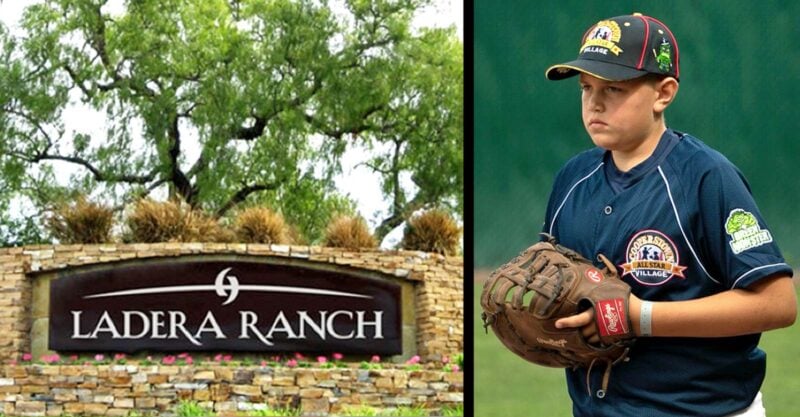


At age 15, Brody Matteson had a bright future ahead of him. A resident of Ladera Ranch, California, Brody was a star high school athlete. But two weeks before his 16th birthday, Brody was diagnosed with Ewing sarcoma, a rare cancer that ultimately took his life in March. He was 17.
Brody was one of at least six Ladera Ranch children diagnosed with Ewing sarcoma since 2023. A rare and aggressive form of cancer that develops in the bones or soft tissue, Ewing sarcoma primarily affects children and teenagers.
Brody’s father, Dustin Matteson, shared Brody’s story in an interview with The Defender. He said Brody was a healthy and active child who played a cumulative total of 32 seasons’ worth of sports while in high school. Dustin said Brody’s death has contributed to questions Ladera Ranch residents have about what may be causing the cancers.
Only about 200 U.S. children and teens are diagnosed with Ewing sarcoma each year, according to the National Cancer Institute.
The disproportionately high incidence of Ewing sarcoma cases in Ladera Ranch, population 26,000, has alarmed residents. Some suspect that “rampant” pesticide use in the community is to blame.
Although pesticide use has not been definitively linked to Brody’s death or to the other five cases, residents have called for an investigation.
“These events have prompted many residents to question whether there may be shared environmental exposures contributing to disease risk,” Carolyn McCuan, co-founder of local advocacy group Toxic-Free OC, told The Defender.
McCuan said one possible exposure is the “routine application of herbicides and pesticides throughout common areas of the community.”
Records obtained by Toxic-Free OC indicate these products “have been applied regularly over a period of several years, in many cases on a scheduled basis almost daily, rather than solely in response to documented pest outbreaks.”
Brody’s father, Dustin Matteson, told The Defender that doctors were careful not to speculate what may have prompted the onset of cancer in his son and that it remains uncertain whether pesticides or herbicides were a factor. He said:
“I have not had anybody speculate to me in terms of what caused the cancer. It’s a genetic mutation, but they don’t believe it is hereditary. There appears to be some trigger at some point. But I have not had a doctor speculate to me what they think causes it.
“Unfortunately, with our cancer, there’s not a lot of evidence in terms of what actually causes it. It may well be pesticides. We just don’t know that for sure at this point.”
Bruce Blumberg, Ph.D., professor of developmental and cell biology at the University of California, Irvine, said he believes the Ewing sarcoma cases warrant further investigation. He told The Defender those cases are “a strong indication that something unusual is happening” in Ladera Ranch.


‘Residents are seeking answers’
One of the herbicides commonly used in Ladera Ranch is Lifeline, which includes glufosinate and has been banned in the U.K. and the European Union.
According to the New York Post, although researchers have not identified a definitive link between pesticide or herbicide use and Ewing sarcoma, “the volume of chemicals being sprayed throughout the community has become impossible to ignore” for local residents.
While there is no definitive connection between Lifeline or other pesticides and herbicides and the six Ewing sarcoma cases in the community, Ladera Ranch residents have been urging local and state authorities to investigate further.
NBC Los Angeles reported last week that residents attended a neighborhood meeting earlier this month to encourage their homeowners association, the Ladera Ranch Maintenance Corporation (LARMAC) to seek safer alternatives. Residents also launched a website and community petition as part of their campaign.
According to the Ladera Health Map, four additional cases of Ewing sarcoma were recorded in Ladera Ranch in 2013. Other types of cancer, including osteosarcoma, which also affects the bones, and aggressive cancers including adrenocortical carcinoma, acute lymphoblastic leukemia and lymphoma and glioblastoma, have been diagnosed in Ladera Ranch since 2016.
Dustin Matteson said these cases have left many in the community “feeling bewildered.” He said a 2023 investigation concluded that the Ewing sarcoma cases in Ladera Ranch didn’t constitute a cancer cluster, but that some residents remain unconvinced.
McCuan said Orange County, where Ladera Ranch is located, has some of the “highest cancer rates in the state.” A 2024 report by City of Hope Orange County found that Orange County has the highest cancer incidence among people under 50 in Southern California.
These concerns prompted a new investigation, according to a spokesperson for the Orange County Health Care Agency, who told The Defender:
“Several representatives from the California Cancer Registry, the UCI cancer center and the Orange County Agricultural Commissioner’s Office met after the county health officer initiated outreach in response to ongoing community concerns earlier this year.
“The group agreed to conduct an updated review of cancer data. Findings from this analysis will be shared in upcoming weeks with the county health officer as soon as they are available.”
In a statement provided to The Defender, a spokesperson for LARMAC expressed “heartfelt compassion” to the families of the affected children and said the association understands that “residents are seeking answers,” adding:
“We are aware that public health agencies are reviewing available information, and we will continue to cooperate with those efforts and follow guidance provided by the appropriate health and regulatory authorities.
“At this time, we are not aware of any determination by those agencies identifying a specific environmental cause or linking the association’s landscape management practices to these illnesses.”
McCuan said, “Given the rarity of Ewing sarcoma and the number of reported cases within one community, residents believe it is appropriate to investigate all plausible environmental exposures, including pesticide and herbicide use.” She said LARMAC “will not provide residents with past history of chemical usage.”
Could pesticide used by town be linked to health risks?
The Ladera Health Map noted that while “no cause has been identified” for the Ewing sarcoma cases in the community, the uncertainty surrounding these cases warrants a “rigorous review” — one that also takes into account other possible risk factors.
“Power lines and cell towers come up often,” the Ladera Health Map states, adding that “electromagnetic fields have been studied for decades” for a possible link to cancer, although no definitive link has been identified yet.
Dustin Matteson said local speculation about the possible cause of the cancer cases includes pesticides, but also “water and electromagnetic frequencies.”
He also noted the presence of a long-closed military bombing range at Camp Pendleton, within a few miles of the community, “that’s come up in our discussion in the past as well.”
According to the U.S. Environmental Protection Agency (EPA), “past disposal practices have contaminated the groundwater and soil” at Camp Pendleton.
But much of the focus has centered on the pesticides and herbicides LARMAC regularly uses.
In remarks cited by the New York Post, local attorney Jackie French said records show that 17 pesticides and herbicides, including several synthetic pesticides, were applied in the community last month, “with applications occurring almost daily.”
McCuan said her organization has reviewed local spray records dating back to 2022. The records indicate that “the same products appear repeatedly” and that many of the pesticides and herbicides used have known safety risks. She said:
“While these products differ substantially in their toxicological profiles and regulatory classifications, many have extensive safety data sheets and published toxicology studies describing potential health effects associated with occupational or repeated exposure.
“Some active ingredients have been evaluated for carcinogenicity or other chronic health effects by regulatory agencies and independent researchers.”
One such product is a herbicide known as Lifeline, whose active ingredient is glufosinate-ammonium. Studies have linked it to brain damage and memory impairment; reproductive, eye and organ damage; and toxicity to multiple systems, including the cardiovascular and neurological systems.
McCuan said she was previously adversely affected by exposure to glufosinate-ammonium. “I went from being a marathon runner to bedridden within months of heavy exposure,” she said.
A LARMAC notice posted this month indicates that Lifeline will be applied on several occasions throughout July.
Lifeline is legal in the U.S., but according to local advocacy website Non-Toxic Ladera Ranch, “legal does not mean risk free.”
“Registration means a product has been approved for use under specific conditions and according to its label. It does not mean that the product is completely risk free,” Non-Toxic Ladera Ranch states. “Around the world, regulatory agencies sometimes reach different conclusions about certain pesticides.”
‘There appears to be a link’
In recent years, Stephanie Seneff, Ph.D., a senior research scientist in computer science and artificial intelligence at MIT, has begun focusing on the toxicity of pesticides and herbicides.
Seneff said there is no definitive link in the scientific literature between glufosinate and Ewing sarcoma. However, glufosinate is chemically similar to glyphosate, the primary ingredient of the popular weedkiller Roundup, which has been linked to a risk of cancer, she said.
“Just as glyphosate is an amino acid analogue of glycine, glufosinate is an amino acid analogue of glutamate,” Seneff said.
According to EPA assessments, glufosinate is 166 times more toxic than glyphosate in terms of long-term exposure.
Seneff said glufosinate has also been linked to autism, adding that its impact on human cells might provide a pathway for the onset of Ewing sarcoma.
“Ewing sarcoma cells sharply upregulate glutamine synthetase when they are deprived of glutamine — the very enzyme that is blocked by glufosinate,” she said. This may mean that “the glufosinate could have induced the cancer, because glutamine is desperately needed by the organism as a whole, and the cancer can help provide it.”
A systematic review of 31 studies, published in 1997, didn’t specifically implicate glufosinate in Ewing sarcoma. However, the review did identify a link between pesticide exposure and Ewing sarcoma — as did a 2025 preprint systematic review.
“The short story is that there appears to be a link,” Blumberg said.
Blumberg said few studies have definitively identified a pesticide-cancer link because “it is extraordinarily difficult to prove causal links between any exposure and cancer.”
He cited limitations such as a lack of long-term studies tracking exposed individuals throughout their lifetimes and ethical considerations regarding exposing potential study participants to toxic agents.
Town design requires frequent pesticide spraying
“Our primary concern is the apparent frequency and excessive regularity of applications,” McCuan said. “We have not been provided with records documenting the total quantities applied, so we cannot independently evaluate whether application rates exceeded label requirements.”
According to Non-Toxic Ladera Ranch, the town was designed in a manner that requires significant pesticide and herbicide use in common areas, with “tree lined streets, lush parks, colorful landscaping, and well maintained greenbelts.”
This has led to significant landscaping needs — and an increased exposure risk for residents.
“When the community was planned more than two decades ago, landscape design understandably prioritized appearance and creating a welcoming environment. At the time, there was less emphasis on today’s understanding of climate appropriate landscaping, soil health, biodiversity, water conservation, and prevention first landscape management,” Non-Toxic Ladera Ranch states.
Dustin Matteson said residents have observed that at least some of the children who developed Ewing sarcoma in Ladera Ranch typically spent significant time outdoors. Brody was “an outdoor kid,” he said.
“One of the observations that we’ve made with more than one of the parents is, the kids that have gotten this tended to be more outdoor kids. They tend to play on the fields and tend to do those types of things,” he said.
Sara Grantham, science, regulatory and advocacy manager for Beyond Pesticides, said several studies have shown that children and teenagers are particularly susceptible to adverse effects from pesticide exposure.
“Children are … particularly susceptible to the hazards of pesticides with their small size and developing organ systems, disproportionately risking their health with exposure,” Grantham said.


This article was funded by critical thinkers like you.
The Defender is 100% reader-supported. No corporate sponsors. No paywalls. Our writers and editors rely on you to fund stories like this that mainstream media won’t write.
Community calls for use of organic pesticides
Several residents are calling on LARMAC to fully adopt the use of organic and non-toxic pesticides and herbicides. Dustin Matteson cited the example of another California city, Irvine, which in 2016 eliminated the use of toxic pesticides throughout the city.
“We believe LARMAC should voluntarily suspend routine pesticide and herbicide applications while questions regarding environmental exposures are being evaluated,” McCuan said.
She called on LARMAC to identify alternatives to chemical and synthetic pesticides and herbicides.
“Organic methods exist that work,” she said.
Blumberg agreed. “If I were a parent living in that area, I would be strongly advocating for elimination of pesticide use,” he said.
In its statement, LARMAC said it “remains committed to providing residents with clear information about our landscape management practices and to listening thoughtfully to community input” and has expanded its use of organic pesticides.
Related articles in The Defender
- Glyphosate Poses ‘Profound and Permanent’ Risks to Kids: Children’s Health Defense Urges U.S. Supreme Court to Rule Against Bayer
- ‘Feeding America Safely’: Pesticides, Regulatory Failures, and America’s Chronic Disease Crisis
- MAHA Report Falls Short on Pesticides, Experts Say
- Booker Launches Bill That Gives Citizens Right to Sue Pesticide Makers as House Pushes Measure to Protect Big Chemical
- 11 Pesticides EPA Should Ban or Restrict to Protect Infants and Children