Login
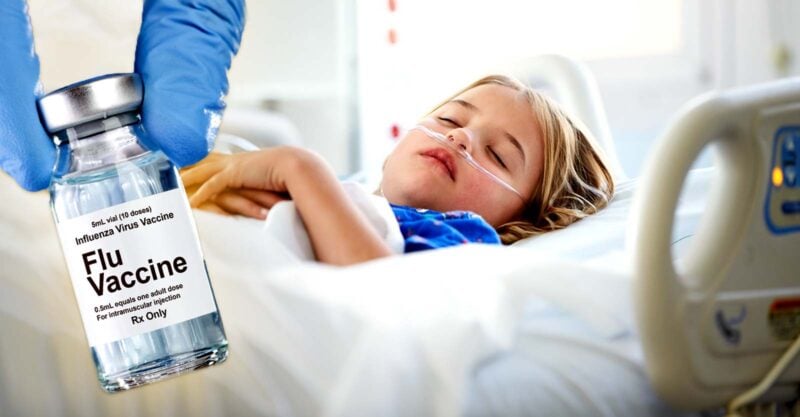


Over 18,000 children have been vaccinated while unconscious under surgical anesthesia at Children’s Hospital Colorado (CHCO), according to a March 9 article published by the American Academy of Pediatrics (AAP).
The AAP publication was a “how-to” article for doctors at other hospitals on how to launch similar programs.
The AAP receives major funding from vaccine manufacturers. For years, it has recommended healthcare providers use all medical visits — not just well-child visits — as a chance to vaccinate a child.
The AAP article celebrated CHCO for its “successful program” offering the flu vaccine to children under general anesthesia. Since 2020, “more than 18,000 patients” have been vaccinated, the AAP said.
The total number might be higher, because children are offered “additional vaccinations … at the request of the primary care clinician, particularly for children with neurocognitive conditions who are unable to tolerate vaccination without sedation.”

The AAP also praised Children’s Hospital of Pennsylvania (CHOP) for running a program to vaccinate kids under anesthesia. Nearly 2,000 children who underwent a medical procedure at CHOP were vaccinated against the flu between Sept. 1, 2024, and Jan. 31, 2025.
Drs. Caroline Pasquariello and Kim Strupp, anesthesiologists who work at CHOP and CHCO, respectively, authored the AAP article.
According to Pasquariello and Strupp, vaccinating kids who are under anesthesia or sedation for a medical procedure is a “novel way” to increase vaccination rates among children who visit the hospital for other reasons.
Several other large U.S. hospitals have already launched programs offering vaccines to children undergoing surgical anesthesia.
The University of North Carolina at Chapel Hill Children’s Hospital, Seattle Children’s Hospital and Akron Children’s Hospital in Ohio have publicly reported results from initiatives to boost flu vaccination rates by giving the shot to kids under anesthesia.
It’s unclear how widespread the practice is, as other hospitals may have undertaken initiatives without publicly reporting the results.
Criticism of vaccinating kids under anesthesia goes viral
Vaccinating children under anesthesia or sedation for a medical procedure recently drew fierce criticism following The Defender’s Oct. 21 report on CHOP’s “Close Your Eyes, We’ll Immunize” initiative.
Families of children scheduled to undergo a medical procedure requiring sedation or anesthesia at CHOP are informed in writing about the program as part of preoperative communications from the hospital staff.
On the day of the child’s surgery, staff speak with the parents about the program, assess the parents’ interest and ensure the child is eligible.
Children are excluded if they have a severe allergy to the flu vaccine or a history of Guillain-Barré syndrome. Also, some procedures — including bone marrow transplants — are excluded from the program.
If the parents consent, staff administer the flu vaccine to the sedated child.


This article was funded by critical thinkers like you.
The Defender is 100% reader-supported. No corporate sponsors. No paywalls. Our writers and editors rely on you to fund stories like this that mainstream media won’t write.
After The Defender alerted Dr. Madhava Setty, a board-certified anesthesiologist with 24 years of clinical experience, to CHOP’s program and interviewed him for The Defender’s report, Setty posted a statement on X that laid out why he believes vaccinating children under anesthesia is “stunningly irresponsible.”
Several anesthesiologists commented on X that they shared Setty’s opinion.
Views on the post have surpassed 400,000.
I’m a Board Certified anesthesiologist and have been in practice for 24 years. I just learned that the Children’s Hospital of Philadelphia where I trained has launched a program to increase flu vaccine uptake among children by vaccinating them while under anesthesia.
The program is called “Close your Eyes. We’ll Immunize”
This is stunningly irresponsible. Here’s why:
Anesthetists are extremely risk avoidant and endeavor to minimize patient exposure to anything which carries potential side effects. This is particularly true of pediatric patients who very often have never been exposed to anesthetic medications. We simply cannot know how an individual child will respond to these drugs for the first time.
Every single medication we administer during an operation can potentially trigger untoward or allergic responses. When this occurs our primary responsibility is to stabilize the patient. Our secondary responsibility is to identify the offending agent. There is absolutely no justification of introducing another agent, in this case a flu vaccine, which carries a risk of harm and contributes nothing to the success of the operation.
Some of the more common side effects of flu vaccines are fever (11-16%) and less commonly, a rash (1%). There is also an non-zero risk of severe allergic reactions and high-grade fevers which can develop over the course of minutes.
What if a child under anesthesia receives a vaccine and develops a rash and/or fever? Is it from the antibiotic that the surgeon requested? Is it from the narcotic? The anxiolytic? The barbiturate?
Anesthetic gases can also (rarely) trigger a life threatening response called Malignant Hyperthermia which commonly presents as a high fever. Without subsequent testing we cannot know which agent was responsible. Most commonly the testing is never done and the child’s record will forever reflect the possibility that some or all of the drugs which were used are responsible for their reaction. This makes future anesthetic care significantly more challenging and will require the use of alternatives which may not be necessary.
Advocating for a flu vaccine while a child is anesthetized reflects the pervasive yet inaccurate attitude among the medical establishment that vaccines are perfectly safe. I simply cannot believe that my mentors would have ever supported this initiative when I was a resident there. Close your eyes indeed.
— Madhava Setty (@Madhava_Setty) October 21, 2026
More scientific discourse needed on safety of vaccinating kids under anesthesia
For years, some doctors have promoted vaccinating children under anesthesia.
For instance, Strupp and several other anesthesiologists argued in a 2022 editorial in Anesthesiology that the operating room was an “ideal setting” to increase pediatric flu vaccination rates.
In 2024, Dr. Andrew J. Meyer, a pediatric anesthesiologist at Akron Children’s Hospital, argued in an editorial published by the European Society of Medicine that the practice was a successful way to “meet the global call to action” to increase flu vaccination rates.
Some X users who responded to Setty’s post said they thought such doctors had abandoned medical ethics. A Canadian woman wrote, “Anesthesia alone for a child carries risks; however, giving a child a flu vaccine on top of whatever surgery they are undergoing adds unnecessary risk and complications to that child’s outcome.”
But Setty said the doctors truly believe they are doing the right thing. “That’s what’s so scary,” he wrote in a response to the woman’s post. Doctors who believe they are doing the right thing “will fight tooth and nail” to keep doing what they believe is best, Setty said. “That’s why they’re so dangerous when they exist in echo chambers.”
Though an unpopular perspective among those who have been resisting and fighting back against pharma/vaccine agendas, I don’t believe these clinicians have abandoned their oaths. These people ACTUALLY BELIEVE they are doing the right thing. That’s what’s so scary. People with selfish intentions will eventually read the writing on the wall and cease and find other ways to scam us. These folks will fight tooth and nail to persist. That’s why they’re so dangerous when they exist in echo chambers.
— Madhava Setty (@Madhava_Setty) October 21, 2026
Karl Jablonowski, Ph.D., Children’s Health Defense (CHD) senior research scientist, said there needs to be more scientific discourse on the safety of vaccinating kids under anesthesia.
Clearly, not all doctors agree it’s a good idea, he said.
Jablonowski said he and CHD Chief Scientific Officer Brian Hooker hope to publish a review of studies on the topic to drive scientific discussion.
“A review article that characterizes our state of knowledge as it is — a lack of consensus — is needed to drive that conversation,” Jablonowski added.
Related articles in The Defender
- ‘Stunningly Irresponsible’: Hospitals Push Parents to Vaccinate Kids While They’re Knocked Out for Surgery
- Can You Trust CDC’s Flu Vaccine Effectiveness Estimates? Epidemiologist Says No
- New mRNA Flu Vaccine Produced Much Higher Rates of Adverse Reactions Than Standard Shot
- HHS Tells CDC to Yank ‘Wild to Mild’ Flu Vaccine Ad Campaign, Shift Focus to ‘Informed Consent’