
 Login
Login


Our Daughter Will Soon Leave the Nest — Will She Be Able to Manage Her Life-Threatening Health Condition on Her Own?
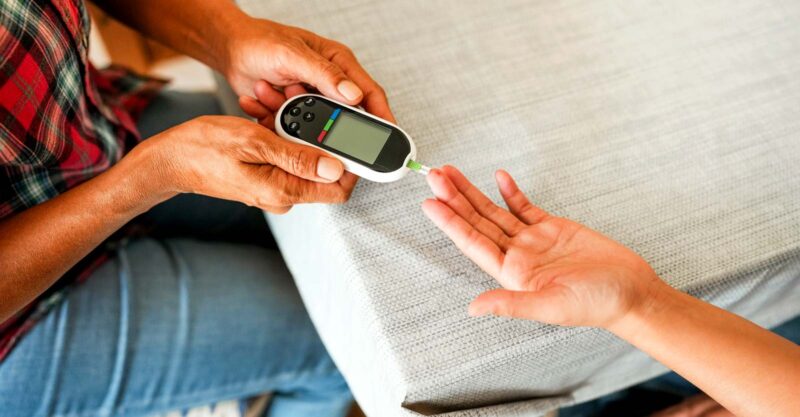
In our household, it is college application season. I know this year is going to fly by, and before we know it, our daughter will be out on her own. That thought gives me all the usual feels for a mom at this stage. But there’s also an extra pit in my stomach — can my daughter safely manage her Type 1 diabetes on her own?
It’s true what they say about the teen years. They’re racing toward adulthood while you’re quietly mourning the days of chubby cheeks, tiny fingers wrapped around yours, and the time when they relied on you for all their needs.
On the one hand, it’s a joy to watch their interests grow and their futures take shape. On the other, it’s hard to experience them spending less and less time with you. Independence and rebellion are front and center.
My husband jokes that we’ve done such a good job parenting that we don’t need to know anything anymore — because our daughter knows everything.
In our household, it is college application season. I know this year is going to fly by, and before we know it she’ll be out on her own. That thought gives me all the usual feels for a mom at this stage, but there’s also an extra pit in my stomach.
Like many parents in this day and age of exploding chronic disease in children, we have to worry whether she can handle her life-threatening condition independently.
For some, it might be a seizure disorder or severe food allergies. For others, it could be paralysis, chronic pain, mental health issues. The list goes on and on. For us, it’s Type 1 diabetes.
It’s not fair. You wish you could take it from them, that it was you instead. They just want regular teen lives without these big health issues that require attention and additional worries.
When they do rebel and try to forget about it, what are we as parents supposed to do?
I struggle with tough love. It doesn’t seem right to punish them over a disease they have. At the same time, there are big health consequences to poor diabetes management, and very soon that burden will mostly have to be all on her.
A severely low blood sugar can be life-threatening if not treated right away. Countless factors affect blood sugar — it isn’t always easy to keep under control. You could do the same exact thing from one day to the next and have completely different numbers.
This disease defies all logic. Today’s technology is extremely helpful, but not foolproof, especially for a deep sleeper. High blood sugars also have their acute and long-term consequences.


What does college look like for a Type 1 diabetic?
We are by no means the first family to experience this. I’m in the Facebook groups. I’ve seen both useful posts and horror stories. The biggest concern is when her blood sugar drops while sleeping and her alarms aren’t waking her.
The thing nobody tells you after a Type 1 diagnosis is that moms never really sleep peacefully again.
Recently, my daughter and I had a miscommunication. I thought she was going to a friend’s house and would be home by curfew. She thought she’d told me she planned to spend the night.
That night, we learned she can’t do that on a whim.
In the middle of the night, the blaring low-alarm siren from my phone woke me, as it has countless nights over the decade since her diagnosis. Only this time, she wasn’t home.
I couldn’t reach her or her friend. I had no choice but to get in the car and rush over — a 15-minute drive while I watched her blood sugar drop into the 70s … 60s … 50s …
Halfway there, I was already imagining what I’d do when I arrived. Pound on the door? Her friend’s parents will think I’m insane! Then, finally, she answered the phone.
Crisis averted. That time.
Needless to say, I didn’t sleep the rest of the night.
We’ve done a few trial runs, including sleepovers (they go better when planned), school trips, and such. All with several backup plans in place. But leaving home for college is so much bigger with fewer backup plans available to you.
It’s not right to put this on the shoulders of other teens — her future roommates or the RA of the dorm.
Due to technology, we can see what her blood sugar is doing. If we can’t reach her while her blood sugar is getting dangerously low, we probably have no choice but to have campus security or other emergency services bang on the door until she wakes.
I was that mom who went to every activity and every practice when she was younger. I would run to the school at the drop of a hat if the clinic couldn’t attend to her needs.
I didn’t want to put the responsibility of her diabetes care on a coach or a Girl Scout leader. Slowly over time, as she has gotten older, she’s taken that over. While still providing some support, we have to trust that overall she’s got it.
My brain knows this is coming — and coming fast — and is planning anything and everything that we can put in place. My heart is in denial and wants to keep her home and safe. But I know that’s not an option.
Those future waters may be rough, but we have no choice but to dive right in.
So I’ll take a deep breath, say a lot of prayers, and try to trust that the girl I’ve worked so hard to protect is ready to learn how to protect herself. Maybe letting go isn’t about being fearless — maybe it’s about loving her enough to let her fly.
Do you have a story you’d like to share with the CHD Community? Click here for details.