 Login
Login
What Are School-Based Health Centers (SBHCs)?
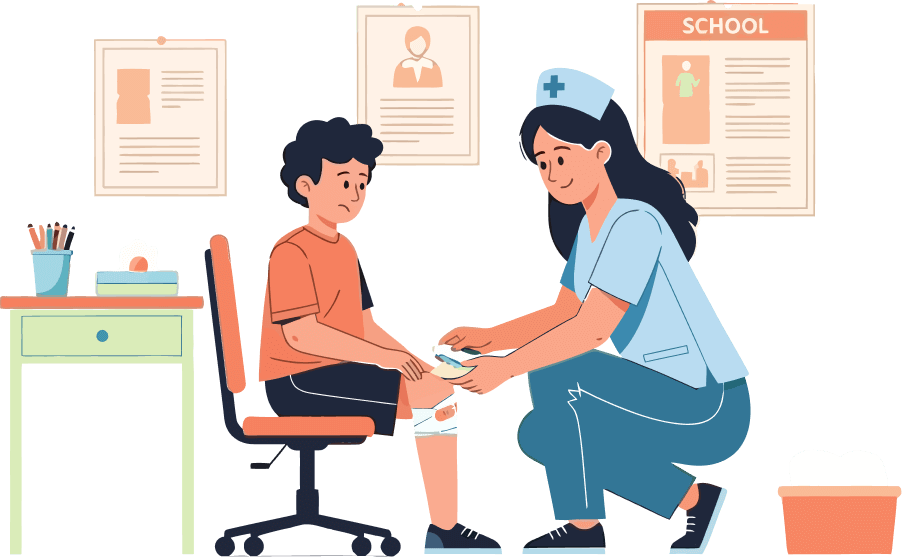
SBHCs are not the same as your school’s traditional nurse’s office. Instead, they function like full-service medical clinics inside schools, often described as a child’s “medical home.”
Services can include:
- Primary care (sick visits, chronic disease management)
- Screenings & risk assessments (e.g., Early & Periodic Screening, Diagnostic & Treatment [EPSDT])
- Sexual & reproductive health services
- Dental & vision care
- Mental, behavioral & social-emotional health counseling
“School-based health centers are partnerships between schools and community health organizations to offer care that includes but is not limited to primary care, mental health, oral health, and vision services.” — School-Based Health Alliance
Key facts:
- Providers are often third-party organizations, not school staff.
- Services are typically billed to insurance or Medicaid and funded by partnerships & grants.
- Students may be treated during school hours without parents present.
Where Did SBHCs Come From?
SBHCs have existed since the mid-2000s, but were given a significant boost in 2023 by $25 million in grant funding from HHS to expand SBHCs across the country.
Also in 2023, Bipartisan Safer Communities Act directed Medicaid to expand access to Medicaid services in schools, and to simplify school reimbursement rules to make the claims process easier.
Goals of SBHCs include:
- Increased convenience, equity, and access to care.
- Reduced absenteeism & improvement in academic performance.
- Overcoming parental barriers to vaccination.
Why Parents Are Concerned
Consent & Parental Rights
- Some schools use blanket consent-to-treat forms signed at the start of the year.
- In some states, minor consent laws allow certain treatments without parents being informed.
Unwanted Vaccinations
- Research shows SBHCs increase vaccination rates, especially HPV.
- Vaccines may be administered without parents present or even aware depending on local laws and forms signed.
Expansive Student “Screenings”
Schools monitor students for everything under the sun, identifying “issues” that drive students to the SBHC. Students may be screened for academic, behavioral, emotional, or social “needs.”
For example, Georgia’s Multi-Tiered Systems of Support (MTSS) program uses data-driven monitoring to flag students for medical or behavioral health services.
Oversight, Privacy & Quality Control
- Records may be shared between providers, schools, and other agencies.
- Parents may have limited visibility into what was discussed or administered.
Comparison: School Nurse vs. SBHC
| Traditional School Nurse | School-Based Health Center |
|---|---|
| Provides first aid & manages minor illnesses | Functions as a full-service clinic |
| Refers to outside doctors | Acts as a "medical home" |
| Parent contact is standard practice | Some treatments may occur without notification |
| Focus is health in school context | Expands to mental health, sexual health, vaccinations, screenings |
What You Can Do Right Now:
Your Action Checklist
✅ Ask if your school has an SBHC, mobile clinic, or school-linked health program.
✅ Request a list of all providers & services available this year.
✅ Demand written notice before any new provider/program is added.
✅ Do not sign blanket consent forms.
✅ If you already signed, request a copy and limit your consent.
✅ Submit a Non-Consent Form (allowing only emergency first aid if desired).
✅ Teach your child to say no to surveys, screenings, or treatment without your knowledge.
SBHCs are presented as a solution for access to care, but they can also bypass parents, expose kids to unwanted treatments, and collect sensitive data. Informed consent starts with YOU.
Stay alert, stay empowered, and protect your child’s rights.