

 Login
Login
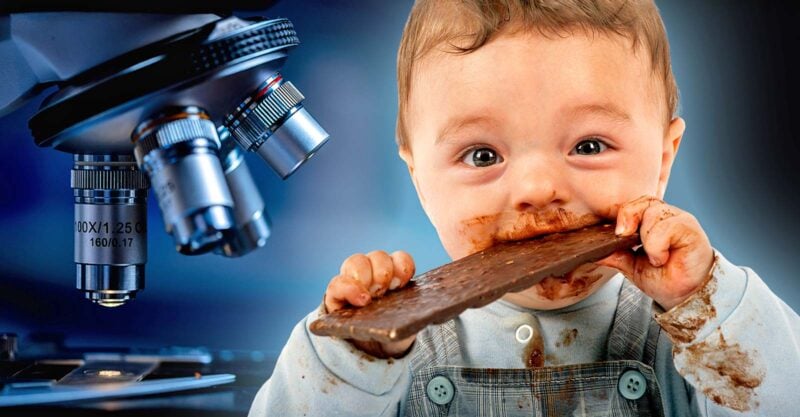


The company behind Oreo, Cadbury and Toblerone is testing chocolate made with cocoa ingredients produced in bioreactors rather than on cocoa farms.
Two startups — including one working with Mondelēz International — say they can grow cocoa ingredients from plant cells in tanks, potentially reducing dependence on traditional cocoa production as prices rise and supplies tighten.
But critics say lab-grown chocolate raises many of the same questions that have followed cultivated meat for years: safety, contamination, regulation, scalability and consumer demand.
“The first cell-cultured foods are coming onto the market without any government regulation or oversight,” said Alexis Baden-Mayer, research director at Organic Consumers Association.
As companies race to commercialize cocoa grown from plant cells, critics also dispute the industry’s claim that lab-grown cocoa is simply another form of cocoa.
“Lab-grown cocoa is not the same as real cocoa,” said biologist Heidi Wichmann, Ph.D., a member of Make Europe Healthy Again‘s advisory committee.
According to Wichmann, cocoa is the product of millions of years of evolution and complex relationships among plants, microorganisms and ecosystems. While lab-grown products may reproduce some compounds, they cannot replicate “the full biological complexity of the original plant or its evolutionary history.”
She also questioned the long-term safety of such products, noting they have “no long-term history of human consumption and no multi-generational safety data.”
“We should not confuse a technological imitation with the living original,” Wichmann said.
‘The devil will be in the details, and so far, we don’t have them’
Israeli startup Celleste Bio announced in April that it had produced chocolate bars using cocoa butter grown from cocoa cells.
Instead of harvesting cocoa beans from trees, the company grows cells, taken from a single cocoa bean, in tanks containing water, sugar and vitamins.
“We give them the media they need to feel like they’re on a tree,” Celleste CEO Michal Beressi Golomb told Food Navigator.
Golomb acknowledged that cultivated meat has struggled to gain public acceptance but argued that cocoa is different because “there’s no animal welfare issue” and “it’s not a substitute, it’s real cocoa.”
Celleste Bio says its cocoa butter is “bio-identical” to conventional cocoa butter and can be used in existing chocolate-making processes, CTech reported.
Wichmann disagreed.
“Real cocoa is not merely a recipe of chemicals but is a product of nature, evolution and ecological relationships,” she said. “Innovation should not come at the cost of forgetting the value of nature’s original design.”
Celleste Bio has already produced nearly a dozen chocolate bars with Mondelēz International and hopes to reach commercial-scale production within two years.
The company says a single cocoa bean could generate up to a ton of cocoa butter annually in a bioreactor, potentially replacing the output of roughly a hectare (approximately 2.47 acres) of cocoa trees, according to CTech.
Artificial intelligence could help tailor cocoa butter for different melting points and flavor profiles, the company said.
That vision raises questions for some critics.
“What cells will be used? What media will be used?” asked Dr. Meryl Nass. “The devil will be in the details, and so far, we don’t have them.”


‘Food and pharmaceutical’ business to create ‘chocolate-like products’
Meanwhile, California startup California Cultured is developing cocoa ingredients from cacao plant cells grown in bioreactors, using what it describes as “inexpensive nutrients like sugars, minerals, and vitamins,” Green Queen reported.
“We start with cocoa plant cells and grow them in controlled bioreactors, similar to fermentation, but with plant cells instead of microbes,” Steven Stearns, head of strategy at California Cultured, told Green Queen.
After each production run, the cells are dried and milled into cocoa powder. According to Chemistry World, the flavanols and flavor come directly from unmodified cacao cells, and the resulting biomass can be used as an ingredient or further processed — including by roasting — to deepen the chocolate flavor.
California Cultured suggested the cells it uses are not genetically modified organisms (GMOs). But Nass questioned that claim.
“How can the statement that no GMOs will be used be accurate, since some type of cell will have been genetically manipulated to produce flavanols or other molecules that will be found in the chocolates?” Nass asked.
Children’s Health Defense Senior Research Scientist Karl Jablonowski agreed that consumers are missing important details about how the products are made.
“In order to manipulate plant cells to grow as a single cell in a lab, a whole lot of biochemistry must go right,” Jablonowski said. “Lab-grown food is an inevitable step — or misstep — of modern agriculture.”
He also questioned the companies’ efforts to steer cells through development to optimize desired traits.
“Is it safe?” he asked. “The answer is a resounding shoulder shrug.”
California Cultured plans to market its ingredient as “cultured cocoa powder,” according to AgFunderNews. It expects to begin commercial production with Belgian ingredients supplier Puratos this year.
California Cultured also struck a deal with Japan’s largest chocolate company, Meiji, a “food and pharmaceutical” business. California Cultured and Meiji are “exploring a range of chocolate and chocolate-like products,” AgFunderNews reported.
Eliminating contamination an ‘impractical, if not impossible, dream’
Industry advocates argue that plant cells may be easier and cheaper to grow than animal cells.
Stearns told AgFunderNews that “cocoa and similar high demand plant compounds may turn out to be an even better fit for this type of production.”
California Cultured also says its process could help avoid some contamination issues associated with conventional cocoa farming, including heavy metals such as cadmium or lead that can accumulate in soil.
But critics say contamination remains one of the industry’s biggest unresolved challenges.
“Keeping lab-grown food clean of all contaminants is extremely difficult and very expensive,” Baden-Mayer said.
She pointed to the cultivated-meat industry, where contamination has repeatedly emerged as a challenge.
A 2023 Wired investigation into Upside Foods cited current and former employees who said contamination problems sometimes forced entire batches to be discarded.
Nass agreed that important questions remain unanswered.
“What kind of contaminants from the fermentation process will remain in the final product?” she asked. “These contaminants are, of course, never mentioned by the manufacturers, and you have to dig deep to find out about them.”
According to Corning Life Sciences, contamination is one of the most persistent challenges in cell culture.
The company states that “no cell culture problem is as universal as that of culture loss due to contamination.” It describes eliminating contamination as “an impractical, if not impossible, dream.”
Potential contaminants include bacteria, molds, yeasts, viruses, airborne particles and chemical residues.
Critics say GRAS loophole leaves consumers in the dark
California Cultured has self-affirmed that its ingredient is “generally recognized as safe,” or GRAS.
Baden-Mayer said that process itself raises concerns.
“The GRAS process, where companies self-affirm their ‘generally recognized as safe’ status, is a problem of the exception swallowing the rule,” she said.
GRAS was originally intended for ingredients widely recognized as safe before the 1958 Food Additives Amendment. Over time, the designation expanded to include genetically engineered foods and other novel products considered substantially equivalent to conventional foods, according to Baden-Mayer.
After U.S. Health Secretary Robert F. Kennedy Jr. called on the U.S. Food and Drug Administration (FDA) to eliminate the GRAS loophole in 2025, California Cultured voluntarily submitted a GRAS notice seeking a “no questions” letter from the agency.
But Baden-Mayer said consumers should understand what such a letter does — and does not — mean.
According to the FDA, the agency is only evaluating whether the notice “provides a sufficient basis” for the company’s safety claims.
“The FDA isn’t saying it has fact-checked the company’s submission or conducted its own research to determine whether the product is safe,” Baden-Mayer said.


This article was funded by critical thinkers like you.
The Defender is 100% reader-supported. No corporate sponsors. No paywalls. Our writers and editors rely on you to fund stories like this that mainstream media won’t write.
Polls find low demand for ‘frankenfood’
The push for lab-grown chocolate comes after years of investment in cultivated foods ranging from meat and seafood to human milk. Alongside questions about safety and regulation, critics have also challenged the industry’s environmental claims.
A study by researchers at the University of California, Davis, found that cultivated meat production could have a global warming impact several times higher than conventional beef production, depending on how it is manufactured.
Although regulators have approved several cultivated animal-cell products in recent years, public enthusiasm has lagged behind industry expectations. Polls have found many consumers remain wary of lab-grown meat, citing safety concerns or simply finding the concept unappealing.
At the World Economic Forum’s 2026 annual meeting, participants discussed ways to overcome public resistance to the products.
Among those pushing back was Jeffrey Tucker, founder and president of the Brownstone Institute.
“There is near-zero market demand for this ‘frankenfood’ born of the same intellectual class and lab technicians who have given us poison food and medicine,” Tucker told The Defender earlier this year.
Related articles in The Defender
- WEF Calls for ‘Cultural Revolution’ to Promote Lab-Grown Meat
- Lab-Grown Milk: The Corporate Quest to Replace Breast Milk — and Why It’s Dangerous
- USDA Approves First Lab-Grown Meat in U.S., But Scientists, Food Safety Experts Aren’t Sold on It
- FDA Approves First Lab-Grown Salmon Based Solely on Manufacturer’s Safety Claims
- Kennedy Takes Aim at FDA Loophole That Allows Unsafe Ingredients in Food
