

 Login
Login
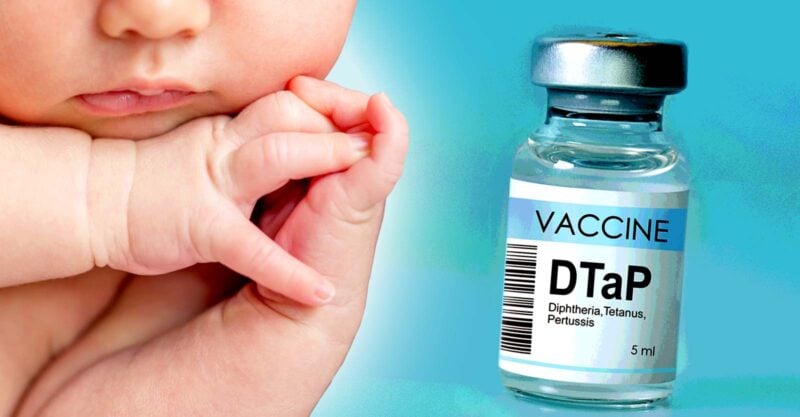


With whooping cough cases climbing again, the Centers for Disease Control and Prevention (CDC) is urging parents to vaccinate their infants — but vaccine safety advocates warn the rush to vaccinate is outpacing honest discussion about risks, limits and alternatives.
Federal data show more than 25,000 whooping cough, or pertussis, cases so far this year. The cases are part of a two-year surge that includes infant deaths in Louisiana, Washington state and Kentucky, ABC News reported.
Kentucky officials reported three fatalities — the state’s first since 2018. According to officials, all three deaths occurred among unvaccinated infants.
However, the term “unvaccinated” is sometimes used loosely — in some cases, it means that an infant or child is just not up to date on all the CDC-recommended vaccines, said CHD.TV Director Polly Tommey on a recent episode of “Good Morning CHD.”
Dr. Suzanne Humphries, author of “Dissolving Illusions: Disease, Vaccines, and The Forgotten History,” agreed. She said the focus on vaccination status overshadows crucial questions about underlying factors.
Humphries told Tommey that she wants to know “the age of the infants that … supposedly died of whooping cough,” whether they were old enough to receive vaccines, if there were complications at birth, and “how the hospital attempted to treat these infants … because as far as I’m concerned, there’s almost always a background story there.”
Whooping cough ‘can be terrifying’
According to the CDC, pertussis — historically referred to as the “100-day cough” — is highly contagious and particularly dangerous for young babies.
Pediatric infectious disease specialist Dr. Lorne Walker told PBS News that infants may require breathing support because “instead of having coughing spells, they often will just stop breathing.”
“Those kids will often come into the hospital or even need … a breathing tube to help them breathe,” Walker said.
Humphries agreed that the bacteria can cause severe symptoms. “The biggest problem is that babies can turn purple. They can have pooling of the mucus in the … bottom of the lungs … it’s an evil bacterium. I am never denying that,” she said.
But she questioned if the DTaP vaccine given to infants, intended to prevent diphtheria, tetanus and acellular pertussis, is the best, or only, means to prevent whooping cough.
“When I saw my first few cases of whooping cough, I understood why the doctors and the powers that be wanted to create a vaccine against it,” Humphries said. “It’s extremely unpleasant. I wish the vaccine worked. I wish that it was safe because that would have been the easy way out.”
However, Humphries said that with proper care — including clearing mucus, maintaining breastfeeding and using vitamin C — babies can recover from whooping cough without complications.
“It can be terrifying,” she said, noting that babies may hold their breath and “turn blue.” She said parents should never feel guilty if they choose hospital care, but that “every single time someone I know has taken a baby into the hospital, all they do is they lay the baby on the back, they put a monitor on them. The antibiotics have already been given … they stop the breast milk, they don’t get vitamin C.”
All of this impedes recovery, she said.
Highly invasive mutant strains ‘have evolved … because of the vaccines’
Federal officials, meanwhile, continue to promote vaccination as the primary defense against whooping cough. Infants cannot start the DTaP series until they’re 2 months old, but the CDC urges pregnant women and family members ages 7 and older to get the DTaP to create a “cocoon of protection” around newborns, according to the Immunization Action Coalition.
Health officials acknowledge that the current acellular pertussis vaccine does not always stop infection or transmission, but they argue that it reduces the severity of illness.
Humphries stressed that “the vaccine cannot prevent transmission,” and that vaccinated individuals “are more likely to transmit the bacteria … than the non-vaccinated that have had a natural infection.”
She said the longer an ineffective vaccine is used and the more doses that are administered, the more likely it is that highly invasive mutant strains will evolve.
“The mutants have evolved … because of the vaccines, not because of people that haven’t vaccinated,” Humphries said. “The people that haven’t vaccinated and [have] developed normal natural whooping cough are the ones that are protecting the herd the most.”


Maternal vaccination can hinder infant immune development, Humphries said
According to Humphries, maternal vaccination may also alter infant immune development. “The science … shows that if you vaccinate mothers, you’re actually limiting the ability of the infants’ B cells that make antibody to do their work,” she said.
The vaccine debate reflects a deeper disagreement about how infant immunity works.
Humphries described early immunity as intentionally restrained: “The immune system of a baby is intentionally clamped down by the divine creator. … Those clamps are released slowly, slowly, slowly, and then by about two years, that immune system is functioning more by itself.”
Breastfeeding, gradual exposure to environmental antigens and time are critical — early vaccination interferes with that process, she said.
Walker attributed falling vaccination rates to such “misinformation and myths,” saying skepticism dates back to the earliest days of inoculation. But vaccine critics say the skepticism has persisted for a reason.
Humphries said a companion book to “Dissolving Illusions” contains “over 200 quotes from doctors over the past 200 years who regretted ever giving the vaccine.” She said concerns about immunity, transmission and long-term effects were raised “as soon as vaccines were created.”
Watch the ‘Good Morning CHD’ episode here:
Related articles in The Defender
- Health Officials Push Whooping Cough Vaccine Amid Uptick in Cases, But Scientists Say Shots Don’t Prevent Transmission
- Mom of 4-Month-Old Who Died 2 Days After ‘Routine’ Vaccines Warns Other Parents: Don’t ‘Blindly’ Follow CDC Schedule
- Megan’s Story: ‘They Told Us Our Daughter Would Never Be Normal’
- Did CDC Ignore Solid Data on Convulsions and Death After DTP Vaccines?
