

 Login
Login
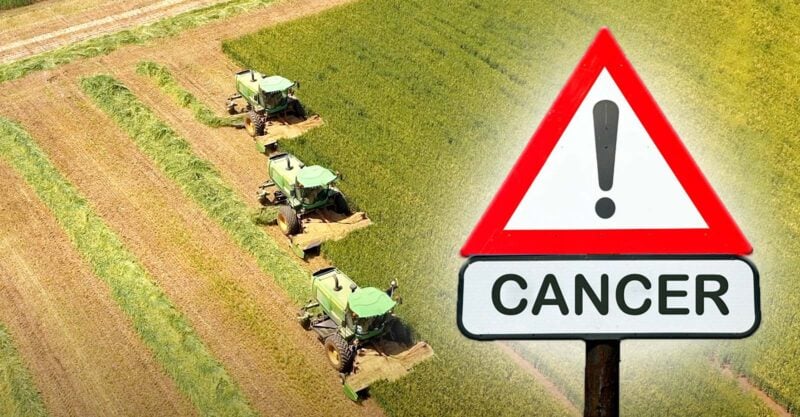


Iowa’s 87,000 farms produce everything from corn and soybeans to eggs and pork, feeding millions nationwide. However, abundance comes at a price: Behind the bumper harvests lies a growing public health and environmental crisis, according to “Beneath the surface of Iowa’s water crisis,” an investigative video by The New Lede.
Iowa has one of the highest rates of new cancer diagnoses in the country, according to a February 2025 report on Iowa Public Radio.
The cause is often blamed on the “usual suspects” — an aging population, earlier detection, cigarette smoking, obesity or a sedentary lifestyle. But these risk factors are no higher in Iowa than in other states, The Iowa Source reported.
“Everywhere we go, we’re getting reports from people who say that they did everything right,” Adam Shriver, director of Wellness and Nutrition Policy at The Harkin Institute, said in the video. “They never drank. They never smoked. They’ve jogged their whole life and yet whole clusters of people in their community who are not genetically related are getting cancer.”
According to the film, Iowa farmers routinely spray pesticides and fertilizers on their land. Those fertilizers — both synthetic and those derived from livestock manure — are rich in nitrogen and phosphorus, which leech into waterways.
Nitrogen, when combined with oxygen, creates nitrate. Studies show dangerously high levels of nitrate and pesticides are contaminating drinking water across the state. Levels are so worrisome that water from the Raccoon River in Des Moines is tested daily, according to The New Lede video.
The Environmental Protection Agency’s safe standard for nitrate is 10 milligrams per liter. Any more is considered a potential health risk. Nitrate levels reached roughly double that in water taken from the Raccoon River, the video reported.
Many fear this pollution is fueling Iowa’s rising cancer rates.
Nitrate has been linked to colorectal cancer, thyroid disease and severe birth defects of the brain and spinal cord.
The World Health Organization’s International Agency for Research on Cancer classifies nitrate in food and water as “probably carcinogenic to humans.” A March 2024 report showed that people who drank water contaminated with nitrates had a 73% higher risk of dying from cancer.
“Nobody wants to be held accountable for you being the No. 1 cause of cancer
in Iowa,” Brad, a resident of Palo Alto County, said in The New Lede video. In Palo Alto County, cancer rates are almost 50% higher than the national average.
Des Moines is home to one of the world’s largest water nitrate removal facilities, according to the video. Yet the facility “was struggling to keep up with the amount of nitrates in our water” during the summer of 2025, Shriver said in the video.
“Farm-related nitrate contamination over the summer was so dire that 600,000 Iowans faced water restrictions as their utility struggled to filter high levels of the harmful contaminants from drinking water supplies,” The New Lede Editor-in-Chief Carey Gillam wrote on Substack.
Yet state lawmakers say the system is not set up to help farmers.
The Defender is 100% reader-supported. No corporate sponsors. No paywalls. Our writers and editors rely on you to fund stories like this that mainstream media won’t write. 

This article was funded by critical thinkers like you.
“There are two lobbyists that sit outside these chamber doors who are employed by Iowa Farm Bureau,” Iowa state Rep. Austin Baeth said in the video. “So the power of corporate farming special interests is readily visible within the walls of this capital every single day the legislators come to session.”
“Time and time again, when I propose bills to improve Iowa’s water quality … These bills don’t see the light of day,” he added.
But “Iowans are fighting back,” according to Gillam, who wrote:
“Unwilling to wait for complacent regulators and lawmakers who have aligned with powerful agricultural industry organizations, residents, academics, researchers and others are doing their best to raise awareness and push for solutions.”
The issue spreads far beyond Iowa’s borders. Agricultural production across the state is a top contributor of nutrient pollution, both nitrogen and phosphorus, that fuels the dead zone in the Gulf of Mexico.
“The nitrate pollution problem is serious in Iowa, but this is an everywhere problem — from the Gulf of Mexico to the Great Lakes and Central Valley of California,” Scott Kovarovics, executive director at the Izaak Walton League of America, told Gillam.
“I think it’s reached a tipping point where Iowans really want to do something about it,” Shriver said.
Palo Alto County Supervisor Linus Solberg agreed. “You can have meetings until you’re blue in the face,” but we need someone “to step up to the plate,” he said in the video.
Watch “Beneath the surface of Iowa’s water crisis” here:
Related articles in The Defender
- Nitrates in Water, Even Far Below ‘Safe’ Levels, Increase Health Risks for Babies
- Nitrate in Drinking Water Linked to 73% Increased Risk of Cancer Mortality
- Exposure to Pesticides, Rodenticides in Pregnancy Tied to Sharp Rise in Childhood Leukemia Mortality
- ‘Grave Concern’: Chronic Diseases Are Killing Kids — and Exposure to Chemicals Is Driving the Epidemic
