Login
Login
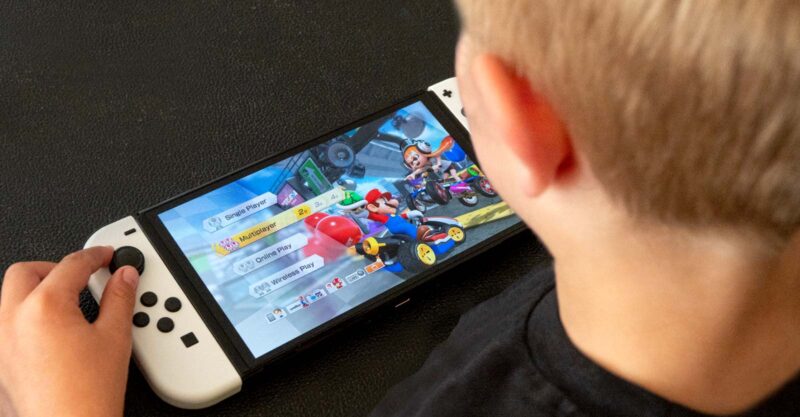


A video game designed to help children manage anxiety reduced symptoms in a clinical trial published this month, adding to growing evidence that games could become tools for treating children’s mental and behavioral health.
But another study published just three days later illustrates one of the central problems confronting the emerging field: Children can improve on computerized measures of attention without necessarily showing comparable improvements in the classroom.
The findings are part of a wave of new research examining an unusual frontier in pediatric healthcare — using the immersive and reward-driven qualities of video games to address conditions ranging from anxiety and depression to attention-deficit/hyperactivity disorder (ADHD).
What happens when the screen itself becomes part of the treatment?
‘It depends on how you want to wield it’
A series of recent studies paint a complicated picture of what gamification in pediatrics looks like.
“Any intervention can be helpful or harmful; it depends on how you want to wield it and use it,” said Megan Connell, Psy.D., in a recent examination of therapeutic video games published in the Journal of Medical Internet Research.
The warning comes amid a flood of new research into gaming as medicine.
In a randomized controlled trial published Sept. 12 in Child Psychiatry & Human Development, researchers tested a gamified digital mental health intervention in 118 children ages 6 to 11 with mild-to-moderate anxiety.
The children and their parents were randomly assigned to use “Anchors Away,” a gamified intervention, or be part of a waitlist control group, whose families initially received no treatment.
The nautical-themed Anchors Away app uses principles from cognitive behavioral therapy. Children complete activities, practice therapeutic skills, earn points and exchange them for rewards.
After six weeks, the game groups showed significant reductions in parent-reported child anxiety compared with the waitlist group. The trial also showed reduced rates of anxiety over the study’s 12-week period when compared to the waitlist group.
The researchers concluded that the trial “demonstrates the efficacy of this gamified DMHI [digital mental health interventions] for children with mild-to-moderate anxiety symptoms and offers insights into potential mechanisms of change underlying therapeutic improvement from digital interventions.”
The authors also said future trials should use independent clinicians to evaluate children’s anxiety rather than relying as heavily on parent and child reports.


Children improved at attention — but not necessarily academics
A study published three days later showed a video game-based training program improved attention in 8- and 9-year-olds but did not boost their reading or math skills, according to a randomized trial published in npj Digital Medicine.
Researchers assigned 158 children to complete 30 training sessions over 10 weeks.
Children who played the game did better on objective attention tests than children in an active control group. The gains showed up on performance-based attention tasks and in eye-tracking measures.
However, the game did not improve reading or math fluency compared with the control group.
The researchers said the findings support digital cognitive training for improving objective attention measures while emphasizing “cautious interpretation” of the academic findings.
‘Too early to conclude’ video games effective
Medical experts have weighed the pros and cons of video games in the pediatric space.
Dr. Mayank Gupta, chief medical officer at Family Psychological Associates, called it “too early to conclude” that video games in pediatric care are “transformative.”
Gupta pointed to long-term effects, risks, likely increased costs and other issues, including “hypergamification” — what occurs when people apply intense, data-driven game mechanics, such as real-time tracking, micro-rewards and hyper-personalization, to non-gaming environments.
Gupta referenced EndeavorRx, a prescriptive video game authorized by the U.S. Food and Drug Administration (FDA) to improve attention function in children with ADHD. Development of the game began in 2013. The FDA cleared the product in 2020.
“While the FDA-authorized video game EndeavorRx improves scores on computerized attention tests in clinical trials, critics note it has limited impact on real-world hyperactivity or behavioral changes,” Gupta said.
Other medical researchers believe video games can be utilized in different ways in pediatric care.
Zach Wigal, founder of Gamers Outreach, a nonprofit that provides video games, technology and recreation to hospitalized children to help them cope with long-term medical treatment, said children in facilities could benefit.
Wigal told The Defender hospitals often “struggle to provide patients with meaningful activity alongside medical treatment” and video games can help.
“This can contribute to loneliness, boredom, and an overall decline in a child’s quality of life during hospitalization,” he said. “Video games can offer a familiar activity, a sense of agency, and opportunities to remain connected with friends and family outside the hospital.”
Tom Baranowski, Ph.D., distinguished emeritus professor of pediatrics at Baylor College of Medicine in Houston, Texas, helped develop several video games for kids and believes they have potential.
One of those was Squire’s Quest!, an educational video game designed to help fourth- and fifth-graders eat more fruits and vegetables. In a clinical trial, the game showed “potential to substantially change dietary behavior.”
Baranowski said video games can be instructive when combined with other treatments.
“I believe the effects of games are promising, but primarily as assists to other kinds of behavior change programs,” he told The Defender. “I hope that the results show in the future that games provide the ‘fun’ experience that keeps kids coming back to engage with the educational activity.”
The paradox: Can gaming improve kids’ health if ‘gaming disorder’ is real?
The growth of therapeutic games comes as researchers continue examining the effects of digital media itself on children’s development.
A 2026 systematic review and meta-analysis published in JAMA Pediatrics analyzed 153 longitudinal studies examining digital media use and child health and development.
Video gaming was associated with greater aggression and externalizing behavior. Yet it also was associated with modestly higher attention and executive functioning.
The same qualities researchers aim to harness therapeutically may therefore exist alongside potential risks in children’s broader gaming experiences.
On Sept. 4, JAMA Network Open published a randomized clinical trial involving 1,793 adolescents. The trial examined ways to prevent gaming disorders and other problematic internet use.
Among the 205 adolescents considered at high risk, those receiving a cognitive behavioral therapy-based intervention had significantly lower gaming and problematic internet-use symptoms after 12 months than adolescents receiving media-literacy education, which taught critical thinking skills needed to access and responsibly engage with all forms of communication.
The World Health Organization recognizes gaming disorder in the 11th Revision of the International Classification of Diseases.
That doesn’t mean a child prescribed a carefully designed therapeutic game is at risk of developing gaming disorder. Therapeutic products can limit playing time, eliminate many commercial game mechanics and be used under medical supervision.
But it illustrates the unusual paradox of video games in medicine: Researchers are trying to use gaming to improve children’s health, while others are developing interventions to protect some children from problematic gaming itself.


This article was funded by critical thinkers like you.
The Defender is 100% reader-supported. No corporate sponsors. No paywalls. Our writers and editors rely on you to fund stories like this that mainstream media won’t write.
What happens when the game ends?
Taken together, the newest studies present a more nuanced picture than either advocates or critics of children’s screen use might prefer.
Game-based interventions have produced measurable improvements in childhood anxiety, adolescent depression and ADHD symptoms.
But several considerations remain. Researchers studying the new childhood intervention acknowledged as much.
“The evidence for the effects of games is spotty,” Baranowski told The Defender. “I do not belie ve we understand what game techniques are most effective with whom, under what circumstances. ‘More research is needed.’”
Related articles in The Defender
- Meta’s $18-Billion Settlement in Social Media Addiction Suit Draws Mixed Reactions
- ‘Don’t Ask, Just Decline’: Parents Push Back Against Schools’ Growing Use of EdTech
- ‘No Guardrails’: Youth Sports Leagues Mandating Digital IDs, Selling Kids’ Biometrics for Profit
- How Much Data Are EdTech Firms Collecting From Kids in Schools? And Who Owns It?
- Gaming Platform Used by Nearly 36 Million Kids Rolls Out Mandatory Facial Recognition
- ‘Bad-Vaxx’ Video Game Tries to ‘Inoculate’ Kids Against Vaccine ‘Misinformation’