

 Login
Login
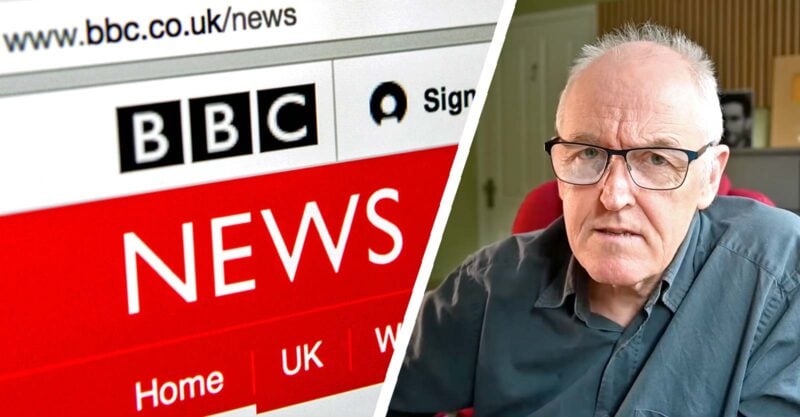


The U.K. is pushing a proposal that could give government officials unprecedented influence over what people see on YouTube and other digital platforms, medical commentator John Campbell, Ph.D., warned this week.
“My concern is that the state is going to mandate what videos are promoted on YouTube,” Campbell said. “That’s basically what this seems to be about.”
In a recent podcast, Campbell examined the U.K. government’s new media green paper, “Watch this space: a new strategic direction for UK media,” and what it could mean for online speech.
He said the proposal could fundamentally change how people discover videos. Instead of seeing content based primarily on their interests or what other viewers are watching, government-backed sources could receive preferential placement.
“It wouldn’t be popularity that determines what videos become top of the YouTube feed, therefore most likely to be watched,” Campbell said. “It’s going to be the ones that the state mandates as appropriate for you because you can’t judge for yourself. … At least that’s the threat from this paper.”
The green paper, published in June by the U.K. Department for Culture, Media & Sport, proposes exploring a “prominence regime” that would ensure public service broadcasters and other designated “trusted” news providers remain easy to find as audiences increasingly consume news online rather than through traditional television.
Campbell suggested the proposals go far beyond the U.K. media industry. “This is going to affect everyone,” he said.
‘If this doesn’t send a bit of a shudder down your spine … it certainly should’
The green paper argues that viewing habits are changing, making it harder for established news organizations to reach audiences.
“Since 2018, overall trust in UK news has dropped,” and people are “increasingly accessing news online,” the paper states. “This is weakening the ability of trustworthy news providers to reach audiences and shape informed public debate.”
To address that shift, the government says it wants to “foster a healthy information environment,” ensure access to “trusted and high-quality television content” and support Britain’s public service media, including the BBC.
In the foreword, Ian Murray, the U.K.’s minister for creative industries, media and arts, wrote that “trustworthy news, subject to rigorous editorial standards, provides the shared understanding and facts needed for people to trust one another.”
Murray also argued that online platforms encourage people to consume information through individualized feeds where “divisive and inaccurate narratives are more likely to thrive.”
Campbell criticized the proposal, asking, “Are we subordinating information to political control? … I fear that we are.”
He said the proposal means that “what is prominently promoted would be dictated by political control. And if this doesn’t send a bit of a shudder down your spine … it certainly should.”
According to Campbell, requiring platforms to prioritize government-approved or regulator-approved news sources would effectively allow politicians to influence what information people see online.
“The government would be mandating what comes first on YouTube and possibly other social media,” he said. “This really is much more concerning than it looks at first glance.”
UK looks to ‘future-proof the BBC’
Although the green paper does not spell out exactly how the system would work, it says the U.K. will “explore legislative options to require social media” to give greater prominence to designated public service media and “trusted” news providers.
The paper argues that making those news sources “easily discoverable” is “crucial for countering misinformation, especially during times of social unrest or crisis.”
According to tech news outlet The Register, “the government claims to be keeping an open mind on this, seeking views on whether it can be achieved voluntarily” and whether all public service content should be favored in search results and recommendation feeds.
At the same time, the government signaled it is prepared to legislate if voluntary measures fall short. The green paper states:
“An agreement between the BBC and YouTube was announced in January 2026 which will see the BBC making content specifically for YouTube including entertainment, news and children’s content. However, should these partnerships not go far enough in delivering our objectives, we would need to consider legislating.”
The paper also says the government is looking to “future-proof the BBC.”
YouTube fights back, urging creators to ‘Keep YouTube Yours’
The proposal prompted YouTube to launch a campaign encouraging creators to participate in the government’s public consultation before it closes Aug. 31, TechTrends reported.
Campbell said YouTube warned creators through its “Keep YouTube Yours” campaign that the proposals “could fundamentally change how your content is discovered, recommended, and viewed in the U.K.”
According to Campbell, YouTube told creators that “digital content discovery works best when driven by user choice, not legal requirements.”
The company also warned that “mandatory prominence” would reduce the visibility of independent creators.
“Mandatory prioritizing of national broadcasters would affect how your content reaches your audience regardless of what your audience actually wants to see,” YouTube said.
The platform added that creators’ work “can be downranked. Pushing this group forward means pushing everyone else downwards.”
Campbell said he shares that concern.
“This is indicating that the government will be controlling the algorithm and what you get to watch,” he said. “It’s not actually banning things, but it might as well be because, you know, if it’s not anywhere on the YouTube algorithm, no one’s going to see it.”
‘We don’t want information to be subordinated to political control’
For Campbell, the proposal raises concerns that go far beyond YouTube’s recommendation system.
He said it reflects a broader shift in which governments and powerful institutions increasingly decide which viewpoints the public should see — a trend he believes accelerated during the COVID-19 pandemic.
“We’ve talked to people around the world who’ve been ostracized and punished really quite severely for having views that don’t fit the mainstream narrative,” Campbell said. “Scientific and academic freedom — where’s it gone?”
He also questioned whether governments should play any role in directing what information people receive.
“The idea of the state controlling media rather than media acting independently,” Campbell said. “We don’t want information to be subordinated to political control.”
Who decides what qualifies as trustworthy?
The green paper repeatedly presents its proposals as a way to ensure people have access to “trusted” news sources. But Campbell said that raises a more fundamental question: Who decides what qualifies as trustworthy?
The danger is that a “‘trusted news provider’ is ‘who I say it is,’” he said. “This is outrageous. Totally outrageous.”
Campbell pointed to the COVID-19 era as an example of what can happen when governments, technology companies and major media organizations align around a single narrative.
During COVID-19, major technology companies and media organizations faced widespread criticism for removing or suppressing content that challenged official public health guidance.
YouTube — the main platform targeted by the green paper — and the BBC, which the U.K. says should receive greater prominence as a “trusted” news provider, were among the organizations accused of censorship.
In August 2023, YouTube updated its medical misinformation policy, removing additional content that questioned official positions on COVID-19, vaccines and certain medical treatments. Critics argued the company lacked the expertise to determine scientific truth and that restricting debate could chill legitimate scientific discussion.
Campbell said he worries the U.K.’s proposal could further marginalize independent voices that already struggle to compete with large, well-funded news organizations.
“I like to get a variance of views, not just political propaganda from mainstream media,” he said.
Those concerns take on added significance because so many people now rely on social media for news. The Register reported that 75% of young people ages 16-24 get most of their news from social media, while more than half of U.K. adults now use social media as one of their news sources.
Campbell worries the U.K.’s proposal could severely limit the range of viewpoints those audiences encounter.
“Young people … actually believe the mainstream agenda completely,” Campbell said. And they believe that “anyone who doesn’t submit to it, anyone who produces good science, for example, which is not part of the mainstream media narrative, well, there’s something wrong with them.”
The Defender is 100% reader-supported. No corporate sponsors. No paywalls. Our writers and editors rely on you to fund stories like this that mainstream media won’t write. 

This article was funded by critical thinkers like you.
CHD lawsuit accused BBC and other ‘trusted’ outlets of suppressing facts
The BBC played a central role in the Trusted News Initiative, an alliance of major news organizations and technology companies formed in 2020 to combat what its members describe as online misinformation.
The BBC spearheaded the initiative. Its partners included Google-owned YouTube, The Associated Press, Reuters and The Washington Post.
In 2023, Children’s Health Defense (CHD) sued the Trusted News Initiative and several of its members, alleging they violated antitrust laws by coordinating with technology companies to suppress competing viewpoints about COVID-19 and other public health issues.
In July 2025, the U.S. Department of Justice submitted a statement of interest to the court, backing CHD’s suit. The case is still pending.
CHD has also challenged government involvement in social media censorship more broadly.
In March 2026, CHD and the U.S. Department of Justice finalized a settlement in CHD’s class-action lawsuit against Biden administration officials accused of coordinating with social media companies to censor protected speech.
Separately, in September 2025, Google acknowledged that it had removed YouTube content questioning official COVID-19 narratives and deplatformed CHD and other users who posted such material.
‘What are mainstream media so afraid of?’
For Campbell, the BBC’s role in censoring COVID-19 content makes the green paper’s proposals especially troubling.
“It’s implicitly saying that I’m less trustworthy than certain mainstream media outlets for the BBC,” he said. “Quite offensive, really.”
He questioned why established broadcasters with large budgets would seek additional government support if they are already producing the most “trusted” journalism.
“What are mainstream media so afraid of with their millions and millions and hundreds of millions of pounds budget?” Campbell asked. How can “people like me on essentially no budget … possibly be a threat to these great people if they are so great? Or is it that they’re not so great?”
Independent journalism has become increasingly important because it offers perspectives that may not appear in legacy media, Campbell said.
“We need independent citizen journalism because mainstream journalism very often has completely let us down,” he said.
He said the debate ultimately goes beyond YouTube, the BBC or government policy. At its core, it is about protecting free inquiry and open scientific debate, he argued.
“So many threats to scientific integrity, so many threats to medical publication, scientific publication, free speech,” Campbell said. “And now it looks like there’s this concerted move to reduce independent expression, which to me is the antithesis of what should happen in a free society.”
Watch Campbell discuss the UK’s proposal here:
Related articles in The Defender
- Children’s Health Defense Wins Settlement in Landmark Censorship Case
- DOJ Backs Children’s Health Defense in Antitrust Suit Against Big Media
- Investigative Journalist Documents Shaping of COVID Narrative: ‘Censorship Begins From the Beginning’
- BBC Interview Is Latest Example of How Media Continues to Ignore COVID Vaccine Safety Signal
