

 Login
Login
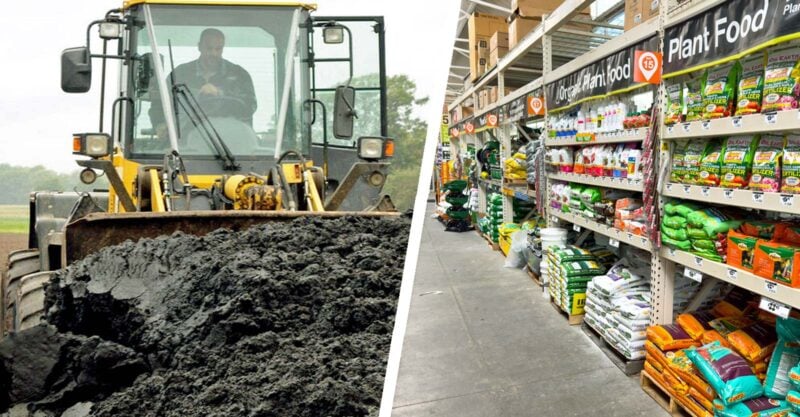


Sewage sludge is being sold in garden stores as “organic compost,” with consumers taking it home and using it in their gardens without knowing what it truly is, filmmaker Galassia Grassetto said in an interview this month.
“It’s a mixture of industrial, human and hospital waste, all concentrated together,” Grassetto said. “You can buy it as organic compost in bags. And people don’t realize, and they take it home and they put it in their gardens.”
That discovery is at the center of a new documentary, “The Sludge War.” In the film, Grassetto investigates what happens to the waste left behind after sewage is treated — a practice she said “has been deliberately hidden from the American public.”
After reviewing the film, John Stauber, who writes for the Organic Consumers Association, said the film documents the “poisoning” of a nation.
“For the very first time a major documentary exposes the massive, ongoing poisoning of every state in America, as each year billions of pounds of toxic sewage sludge is spread on crops, pastures, gardens, parks and lawns, disguised as ‘harmless organic fertilizer and compost,’” Stauber wrote.
In-person screenings of the new film are scheduled in New York, with additional showings planned in other states.

‘I wasn’t safe in my own community’
“The Sludge War” grew out of Grassetto’s realization that her own California community was built on land contaminated by sewage sludge.
“There was a toxic smell in my community, and I couldn’t figure it out,” she said in the interview. Her research led her to discover that sewage sludge had been dumped in the area.
“I was blindsided by that,” she said. “I found out I wasn’t safe in my own community in California. That sewage sludge had been spread in my community, and I had no idea. I was living there for a year, not knowing. And I was shocked when I found out.”
Grassetto spent five years traveling across 10 states and examining how sewage sludge — also marketed as “biosolids” and as “organic” or “natural” fertilizer — has been used “everywhere we live, work and play.”
“It’s happening across the country, in almost every state now,” Grassetto said.
The U.S. Environmental Protection Agency (EPA) regulates the use of treated sewage sludge as fertilizer and soil conditioner under the Code of Federal Regulations Part 503. The material can be applied to agricultural land and public sites such as parks, cemeteries and golf courses. It can also be sold for use in home gardens and private lawns.
‘A lot of wells were contaminated by PFAS … and it was in their blood’
Sewage sludge — which can contain industrial and municipal waste, including human feces, pharmaceuticals, hormones and solvents — is what remains after wastewater treatment separates solids from liquids.
In 2025, the EPA acknowledged that sludge containing elevated levels of per- and polyfluoroalkyl substances (PFAS) — the “forever chemicals” that persist in the environment and accumulate in the body — may pose risks to human health even years after its application.
The agency said the chemicals can contaminate milk, eggs and meat from farm animals raised on land where the sludge was used.
The EPA also warned that drinking water near application sites can be dangerous.
PFAS have been linked to cancer, kidney issues, high cholesterol, birth defects and decreased immunity.
A 2021 Sierra Club investigation found PFAS in all nine brands of biosolids it tested. The products were sold at major retailers including Home Depot, Lowe’s, Menards and Ace Hardware, The Guardian reported.
Grassetto said her investigation took her to communities dealing with contaminated wells after sludge was used.
“A lot of wells were contaminated by PFAS because of the sludge,” she said. “And people realized that they were drinking this, not knowing, and it was in their blood.”
‘We had to leave our own home’
Paula Yockel, who founded Mission503 Charity Inc. after investigating sludge exposure in her own community, is featured briefly in the film.
“We had to leave our own home to save our health from all the sludge illnesses,” Yockel told The Defender.
Yockel said her family spent years testing and studying the problem, documenting “facts that are never revealed to families” living near sludge operations.
“Galassia skillfully tells a powerful story of the crafted deception and disguised harm of our sewage disposal policy and practices,” Yockel said. “The film could almost be titled ‘The Treason of Sludge.’”
The film comes as the federal government has stepped back from further regulation of biosolids.
In July 2026, the Trump administration terminated the EPA’s review of sewage sludge contaminated with PFAS, The Guardian reported.
The EPA discarded scientific work conducted less than two years earlier and concluded that sludge did not represent a broad enough threat to justify the proposed regulatory approach.
At the same time, the EPA said members of the public should be “researching” sludge companies on their own if they wanted to protect themselves from contaminated products, according to The Guardian.
Some states have taken a different approach.
In 2022, Maine became the first state to ban the use of sewage sludge on farmland. Connecticut instituted its own ban in 2024, while Minnesota and Michigan have imposed limits. Several other states have considered partial or full bans, according to Inside Climate News.
In 2025, the Environmental Working Group reported that nearly 70 million acres of cropland across the country could be contaminated with PFAS because of the “widespread use of sewage sludge as fertilizer.”


This article was funded by critical thinkers like you.
The Defender is 100% reader-supported. No corporate sponsors. No paywalls. Our writers and editors rely on you to fund stories like this that mainstream media won’t write.
‘People deserve a choice. They deserve to be informed’
Grassetto said the communities she encountered during her investigation showed her that Americans “deserve better.”
In Pennsylvania, she visited residents facing such a powerful chemical stench that they struggled to breathe.
“I went down there, and my lungs started to burn and I couldn’t breathe,” Grassetto said. “All they want is some dignity and some fresh air. They can’t even open their windows … because the smell is so powerful.”
“They just want fresh air,” she said. “A lot of them have cancer and are getting sick.”
Yockel said Grassetto’s film can help bring public awareness to the dangers of sewage sludge.
“The practice is protected. The American people are harmed,” she said. “The federal 503 rule and our sewage disposal practices are enemies of the people, and no one even knows they exist. Awareness is the only way out of this disaster, and I pray great success for her film.”
For Grassetto, that awareness is the point of the film.
“I want everyone to know what sewage sludge is,” she said. “I think people deserve a choice. They deserve to be informed.”
Watch the trailer for ‘The Sludge War’ here:
Related articles in The Defender
- Oklahoma Mom Tells Trump: Dumping Sewage Sludge on Farmland Won’t Make America Healthy Again
- PFAS Found in Sludge Used as Fertilizer Can Contaminate Milk, Eggs and Meat
- EPA ‘Asleep at the Switch’ When It Comes to Testing Sewage Sludge for PFAS
- Texas Farmers Sue Over ‘Forever Chemicals’ in Sewage Sludge Fertilizer
- She Moved to a Rural Town to Escape City Life. Now PFAS Chemicals May Be Making Her Sick.
