Login
Login
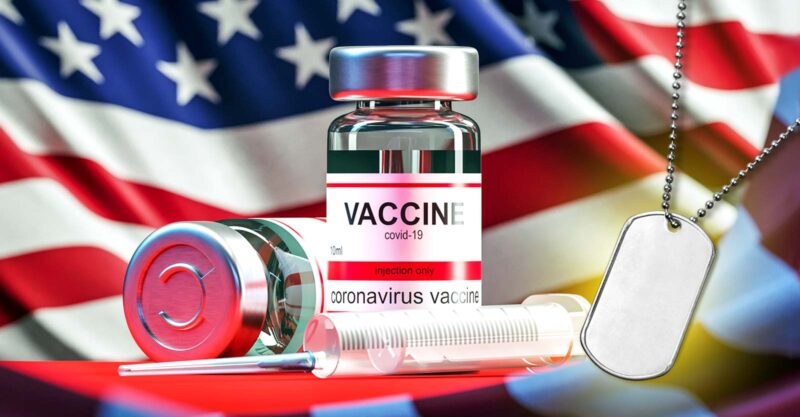


Sen. Ron Johnson (R-Wis.) has asked the top U.S. military official to provide an update by Aug. 19 on U.S. Department of Defense (DOD) efforts to “apologize, reinstate, and provide back pay” to service members who were terminated for refusing to comply with the military’s COVID-19 vaccine mandate.
In a July 29 letter to U.S. Secretary of Defense Pete Hegseth, Johnson said that the military dismissed roughly 8,700 active duty service members for not getting the shot. “This dismissal of thousands of brave men and women from the military was a despicable act that damaged our armed forces,” Johnson wrote.
The mandate, instituted on Aug. 24, 2021, was rescinded on Jan. 10, 2023.
Johnson cited a July 24 Daily Caller article exposing how some veterans who refused the COVID-19 shot still haven’t received back pay, despite President Donald Trump signing an executive order in January to reinstate and provide back pay to dismissed military members.
Johnson, who chairs the U.S. Senate Permanent Subcommittee on Investigations, has been outspoken about the risks associated with COVID-19 vaccines.
“I have no doubt that you are committed to assisting our service members,” Johnson told Hegseth, noting that in February, Hegseth issued guidance to military departments on how to implement the executive order.
On April 9, the DOD announced that the reinstatement and back pay process would be open for one year and gave more guidance on how the process would work.
Yet “some troops who fell through the cracks are still fighting for their rights,” according to the Daily Caller’s report.
The Daily Caller’s article featured the stories of plaintiffs in lawsuits brought by Military Back Pay, a law firm seeking justice for those terminated under the COVID-19 mandate.
Military Back Pay is behind three class action suits: one for active duty or reserves, another for National Guard members and a third for Coast Guard members.
Children’s Health Defense General Counsel Kim Mack Rosenberg applauded Johnson’s letter. She said:
“It is important that DOD makes clear its processes and progress in back pay and reinstatement, so that the lawsuits can move forward efficiently and effectively to address other harms suffered that are not captured by the DOD process or where the DOD process is not effectively administering even the limited remedies it covers.”
The Pentagon told the Daily Caller it will be in touch with Johnson.
Making back pay contingent on reinstatement doesn’t work for everyone
In an email interview with The Defender, Dale Saran, lead attorney in Military Back Pay’s cases, broke down why some ousted military members are falling through the cracks of Trump’s executive order.
Saran said Military Back Pay was “grateful” for the order and Hegseth’s actions to implement it. However, the order focused on reinstating members, so “any backpay or other relief was contingent upon returning to service.”
Rejoining the military isn’t a viable option for some of the dismissed members, according to Saran, who said:
“Many members who were discharged or dropped are now 2-3 years post-service, have had massive life changes in the interim (gotten married, had kids, got a new job), and likely couldn’t pass an entry physical without waivers.
“Additionally, the service members who were targeted for being kicked out (in many cases) were those who had disabilities, requested medical or religious exemptions, and simply cannot come back in.”
Also, ousted members may hesitate to rejoin the military since the DOD still has a flu vaccine mandate. Remedies other than the executive order are needed to ensure these members receive back pay, Saran said.
Mack Rosenberg pointed out that the final clause of the executive order states that it is not “intended to, and does not, create any right or benefit, substantive or procedural, enforceable at law or in equity by any party against the United States, its departments, agencies, or entities, its officers, employees, or agents, or any other person.”
Also, the order applies only to members who involuntarily left the military, not those who voluntarily left when faced with the COVID-19 vaccine mandate.
In other words, the executive order is a wonderful gesture — but it lacks the teeth to ensure that all members affected by the military’s vaccine mandate are justly compensated for the harms they suffered, she said.


This article was funded by critical thinkers like you.
The Defender is 100% reader-supported. No corporate sponsors. No paywalls. Our writers and editors rely on you to fund stories like this that mainstream media won’t write.
Lawsuits needed ‘so there’s a legal basis for financial settlement’
Even if the executive order covered more than just military members who are reinstated, the lawsuits would still be important for ensuring everyone is justly compensated.
The DOD’s April announcement said back pay would be provided, but the DOD didn’t detail a process for how the funds would be approved.
“Military Back Pay’s cases and the executive order complement one another,” Mack Rosenberg said. “The courts need to find that laws were violated, so there’s a legal basis for financial settlement.”
Saran agreed. “Truly fixing” the problem “requires an admission of wrongdoing in Court by the government.”
Plus, Trump can’t just magically create money for military back pay, Mack Rosenberg and Saran said. Congress sets the military’s budget each year by passing the National Defense Authorization Act.
“But on the other hand,” Saran said, “as the Executive Officer for the U.S., the president could settle a lawsuit (or suits) on behalf of the government and pay any judgment out of the Judgment Fund without the need for a Congressional appropriation.”
He added:
“It is our fervent hope that this gets elevated to the President’s attention. … In the meantime, we will continue to move for a judge to make a finding that settles this issue in the service members’ favor.”
Related articles in The Defender
- Military Wants Service Members Ousted for Refusing COVID Vaccine to Reenlist — Here’s Why They Aren’t
- Trump Orders Military to Reinstate Members Booted for Refusing COVID Vaccines
- Military Could Owe Billions to Service Members Involuntarily Discharged for Refusing COVID Shots
- Watch: Military’s COVID Vaccine Mandate ‘Illegal’ Lawyer Says
- 130 Coast Guard Members Sue Federal Government Over Vaccine Mandates