

 Login
Login
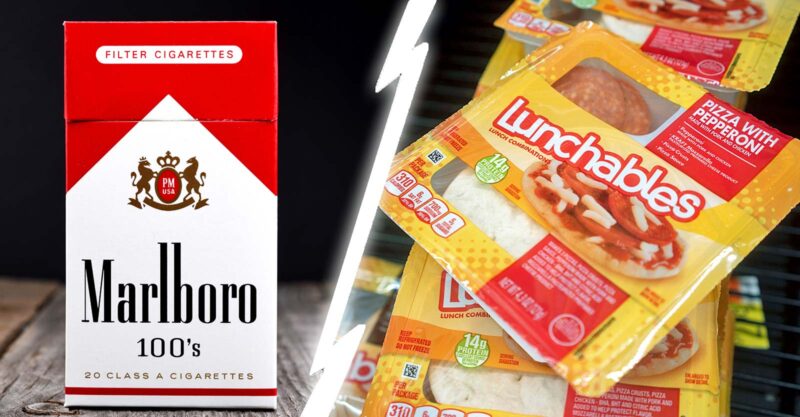


Tobacco giant Philip Morris used its cigarette-industry playbook to develop and market “hyper-palatable” foods — including Lunchables and other highly recognizable ultraprocessed foods — to children, according to internal documents cited in a study published this month in the American Journal of Public Health (AJPH).
The report by Laura Schmidt, Ph.D., is part of a special AJPH series launched alongside Fed UP!, a public education campaign targeting the health effects of ultraprocessed foods.
Lunchables became one of the clearest examples of that strategy. The pre-packaged meals debuted shortly after Philip Morris acquired General Foods in 1985 and later merged it with Kraft.
“We need to know how ultraprocessed foods … are designed and formulated to better understand why these products cause overeating and weight gain, and how to apply appropriate guardrails,” Schmidt, a professor at the Institute for Health Policy Studies, University of California, San Francisco, said in her report.
According to the study, Philip Morris acquired major food companies in part to boost revenue by applying the research, product development and marketing strategies it had honed in the tobacco industry to its food brands.
As part of that strategy, in 1990, longtime tobacco executive Geoff Bible was named CEO of Kraft General Foods to promote “significant cross-fertilization between our businesses,” Philip Morris Chairman Hamish Maxwell said at the time.
“All of our major businesses share common characteristics,” Maxwell told investors. “Most of our products are sold … using common marketing approaches and similar retail outlets.”
Lunchables was removed from school menus in 2024, shortly after a Consumer Reports investigation found lead and high levels of sodium in some versions of its products.


‘Lunchables blurs the boundary between food and toy’
According to Schmidt, Lunchables was developed using Philip Morris’ “consumer-driven product development” strategy for cigarettes.
At a 1990 company symposium, Bible described the company’s approach as uncovering consumers’ deepest “needs and preferences” and designing products to meet them.
“Cigarettes may not have much to do with cheese or beer or mayo. But test methodologies excavating one hierarchy of needs might well apply to the other,” Bible said. “We don’t create demand. We excavate it. We prospect for it. We dig until we find it.”
Company research found that children wanted more say over their lunches and enjoyed interacting with their food.
“Lunchables blurs the boundary between food and toy,” Schmidt told KQED. “The child can take crackers and processed meat and processed cheese and stack it up and play with it before they eat it.”
For moms, ‘the box was there as a gift’
Focus groups showed that mothers saw Lunchables as an “easy to pack, easy to clean up, last-minute lunch” and considered it “better than junk food,” Schmidt reported.
She wrote that mothers also responded positively to the product’s packaging. The familiar Oscar Mayer and Kraft brands were visible through plastic windows, helping reassure parents about the contents. The bright yellow box was designed to resemble a gift and ease parents’ guilt about serving a pre-packaged meal.
As the product’s lead designer later explained, “The box was there as a gift, something precious to elevate its specialness.”
The study also found that Philip Morris relied on common supply chains for refined agricultural ingredients and chemical additives used in both cigarettes and foods such as Lunchables.
In addition, the company applied technologies developed in tobacco to food products, including flavor-encapsulation systems used for “chemically coating flavor compounds for timed release and extended shelf life.”
The strategy proved highly successful. By 1995, Lunchables had grown into a $200 million food category, Schmidt reported.
‘All Natural’ label added to ease concerns about processed ingredients
As concerns about childhood obesity grew in the 1990s, Lunchables increasingly came under fire from health experts who called the product a “nutritional disaster” and a “blood pressure bomb.”
Facing mounting criticism, Philip Morris sought to make Lunchables appear healthier without losing the taste and appeal that had made it successful.
According to Schmidt, the company adopted a “better-for-you” reformulation strategy similar to the approach it had used to market filtered and low-tar cigarettes.
The study found that Philip Morris also transferred technologies between the two businesses. Processes originally used to remove nicotine from cigarettes were later adapted to remove fat from processed meats and cheeses.
The company then turned to artificial flavoring and chemical enhancement methods honed on cigarette products to replace the lost taste in the food.
Schmidt wrote that consumers often had “concerns about ingredient safety” when it came to low-fat meats and cheeses. However, company marketing research found that adding an “All Natural” label provided enough “ingredient reassurance” to ease many of those concerns.
Food industry built to ‘prioritize corporate profits over public health’
The Lunchables case study comes as researchers increasingly scrutinize the role ultraprocessed foods play in the rise of chronic disease.
According to Schmidt’s study, ultraprocessed foods now account for about 62% of the calories consumed by U.S. children each day. Research has linked high consumption of these products to obesity, diabetes, cardiovascular disease, some cancers and premature death.
Nearly 20% of U.S. children are obese — about four times the rate seen in the 1970s, before ultraprocessed foods became a dominant part of the American diet, Schmidt noted.
The Fed UP! campaign, launched alongside the journal series, aims to make research on ultraprocessed foods more accessible to the public.
“This isn’t about blaming individuals or telling families they lack willpower,” Schmidt said in a Fed UP! press release. “The food environment has been engineered to prioritize corporate profits over public health.“
According to the campaign, the journal series explores how ultraprocessed foods encourage overeating and contribute to chronic disease and cognitive decline, while also exploring the tobacco industry’s role in building the modern ultraprocessed food industry.
The movement also supports broader conversations around transparency, regulation and accountability.
In her paper, Schmidt called for applying tobacco-control strategies to ultraprocessed foods, citing evidence that measures such as taxes, warning labels and restrictions on marketing to children can help reduce consumption.


This article was funded by critical thinkers like you.
The Defender is 100% reader-supported. No corporate sponsors. No paywalls. Our writers and editors rely on you to fund stories like this that mainstream media won’t write.
Ultraprocessed foods engineered to ‘hijack human biology’
Schmidt’s findings add to a growing body of research drawing parallels between the tobacco and food industries.
A February 2026 analysis published in The Milbank Quarterly concluded that ultraprocessed foods are engineered to “hijack human biology,” encourage cravings and “contribute heavily to disease” in ways that mirror cigarettes.
The analysis echoes arguments food safety and nutrition advocates have made in recent years that Big Food companies use tactics pioneered by Big Tobacco to market unhealthy products, particularly to children.
The parallels have also drawn legal scrutiny. In December 2025, San Francisco City Attorney David Chiu sued 11 major food manufacturers, alleging they knowingly designed and marketed addictive ultraprocessed foods while targeting children.
Chiu accused the companies of following “the Big Tobacco playbook” of denial, manipulation and profit.
Related articles in The Defender
- ‘Who’s to Blame’? How Lunchables Got on School Lunch Menus
- Public Schools to Start Serving Kraft Lunchables, Thanks to ‘Sweetheart Deal’ With USDA
- Big Food Engineered ‘Public Health Crisis,’ San Francisco Says In Lawsuit Targeting Ultraprocessed Food
- Ultraprocessed Foods Make Up Over Half of Kids’ Diet, CDC Report Says
- ‘An Act of War’: Big Food Intentionally Addicting Kids to Toxic Foods
