Login
Login
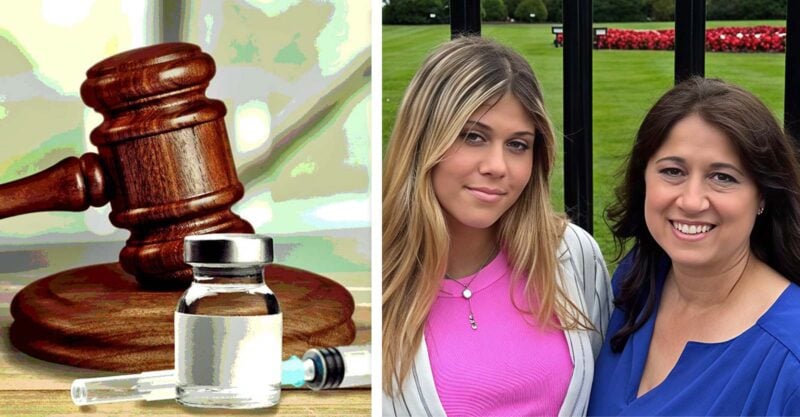


A senior at a New York high school can no longer attend class as of today, after a federal judge declined to extend a medical exemption from the school’s vaccine mandates for the current school year.
Last year, U.S. District Judge Gary Brown of the Eastern District of New York ordered a New York school district to allow Sarah Doe, who had obtained a medical exemption, to attend high school during the 2025-2026 school year.
But in a ruling issued late Wednesday in Jane Doe v. Oceanside Union Free School District, Brown denied the renewed medical exemption request for the 2026-2027 school year.
Last year, Brown granted an emergency preliminary injunction allowing Sarah to attend 11th grade without receiving the third dose of the hepatitis B (Hep B) vaccine — the only recommended shot she hadn’t taken at the time — because her severe reactions to previous doses had left her sick and disabled.
When the lawsuit was filed, at least six treating physicians certified to the school district that Sarah could be harmed by taking the shot, according to court documents. The district nonetheless repeatedly denied her exemption requests. Since then, more doctors have affirmed that assessment.
Brown said last year’s decision rested in part on a physician’s report that Sarah experienced an anaphylactic reaction to an earlier dose, and evidence she had received the first two doses and had some immunity.
Brown also based his previous decision on an appeals court precedent stating that there had never been definitive proof that hepatitis B could be transmitted through “non-parenteral” routes like saliva — meaning passed in ways not transmitted through blood or broken skin.
After attending school last year under the court order, Sarah applied for a medical exemption from the Hep B vaccine and also the second meningococcal vaccine required for this school year.
The school district again denied her request. Sarah’s lawyers responded by filing an emergency motion seeking a new court order allowing her to return to school this year.
Explaining his latest decision, Brown said this year’s circumstances were “substantially different.” This year, Sarah would be attending school without two of the mandated vaccines, instead of one. And, he said, there was insufficient medical evidence showing that she could not receive the meningococcal vaccine.
“At the end of the day, Sarah is a child who just wants to go to school,” her attorney, Sujata Gibson, told The Defender.
Gibson said:
“Nine doctors and specialists have said she needs to defer vaccination. If that still isn’t enough for her to receive an accommodation, then we have to ask what protections medically fragile children actually have in New York.
“Federal disability laws are supposed to protect children like Sarah. We believe that protection failed here, and we intend to seek immediate appellate review.”
Hearing included witness testimony
Brown granted last year’s injunction after hearing oral arguments from attorneys on both sides. However, this year, he also heard witness testimony.
Dr. Carlos Rivera, who wrote Sarah’s latest exemption letter, testified on her behalf that in his professional medical judgment, Sarah qualified for a medical exemption.
Rivera said he testified out of a moral obligation to help the injured girl.
Sarah’s mother, Jane Doe, and Dr. Antwan Haskoor, medical director for the Nassau Board of Cooperative Educational Services of Nassau County, also testified.
Brown found that the medical documentation submitted for Sarah’s exemption was inadequate, particularly for the required meningococcal vaccine. He said that Rivera had not examined or spoken with Sarah and had not reviewed laboratory testing.
He also noted that a second physician, who also provided an exemption, did not testify at the hearing.
The judge said none of the medical documents identified a specific medical contraindication to the meningococcal vaccine. He also said that the district repeatedly sought additional supporting information from the physicians, but never received it.
“When a school is on notice that a disabled child needs an accommodation, the ADA [Americans with Disabilities Act] places the burden on the school to show why it cannot provide it,” Gibson said. “Here, the court effectively flipped that burden. The question became not how to accommodate Sarah and keep her safe, but whether the school district doctor had enough information to be required to accept the medical judgments of her treating physicians.”
Gibson said there is no dispute that the district never followed up with Sarah’s mother for the “supposedly missing information,” and its own doctor did not use the HIPAA authorization to seek records from her treating physician.
“A school should not be allowed to create an information gap and then use that gap to deny a disabled child protection. We believe that standard needs to be clarified, and we intend to appeal.”
About 100 spectators filled the courtroom — the vast majority were there to support Sarah.
Sarah will turn 18 in just a few months, at which point she will no longer need to show documentation of vaccination to attend school, according to New York vaccination rules, which apply to children.
Children’s Health Defense is funding Sarah’s case.
‘Sarah Doe’s case is horrific’
The Does’ lawsuit, filed earlier in 2025, alleges the school district violated the Americans with Disabilities Act and New York Public Health Law by refusing Sarah’s medical exemption, and also violated her family’s First Amendment right to free exercise of religion.
“Sarah Doe’s case is horrific,” Gibson said. “She went from being a healthy 11-year-old child who had never been to the doctor, except for at a well visit, to living in and out of the hospital with severe syndromes that doctors are still only now trying to get to the bottom of.”
Sarah had a religious accommodation exempting her from vaccine requirements until 2019, when New York repealed its religious exemption.
To remain in school, she was forced to take an “aggressive catch-up schedule” of the vaccines she hadn’t yet received — 18 doses in six weeks, including two doses of the Hep B vaccine in quick succession, which left her severely disabled.
After the second dose, Sarah’s health rapidly deteriorated. She experienced intense pain throughout her body, rashes, migraines and other conditions, leaving her unable to attend school.
Sarah was diagnosed with acquired von Willebrand’s disease — a rare bleeding disorder — that could make her vulnerable to future adverse effects of vaccines and acute autoimmune hypersensitivity reactions.
Her symptoms have included kidney issues, migraines and severe immune system reactions, including rashes, seizures, repeated sepsis and other symptoms that required her to be hospitalized and “caused her to come close to dying twice.” She also missed a lot of school, according to court documents.
Autoimmune sensitivity is an adverse reaction to the Hep B vaccine, according to the package label, and von Willebrand’s disease is a contraindication to further doses.
The Defender is 100% reader-supported. No corporate sponsors. No paywalls. Our writers and editors rely on you to fund stories like this that mainstream media won’t write. 

This article was funded by critical thinkers like you.
Six physicians and a nurse practitioner all recommended against Sarah taking the final Hep B shot during the last few years as she and her mother fought for an exemption. A seventh expert witness in the case, Dr. Clayton Baker, confirmed that vaccination would seriously threaten Sarah’s health.
When she tried to get vaccinated on her own against medical advice so she could return to school, even a walk-in clinic at a pharmacy refused to vaccinate the 16-year-old because of her compromised health.
Yet the Oceanside Union Free School District continued to deny her exemption request, arguing that her symptoms are not listed as examples on the Centers for Disease Control and Prevention’s guidelines.
The lawsuit alleges this violates “disability law’s core requirement of individualized assessment and cannot be justified by any compelling interest, as Hepatitis B poses no transmission risk in school settings.”
Sarah and her mother also allege that in addition to denying the teen a reasonable accommodation, school officials have harassed, humiliated and harmed her. The normally happy and resilient girl became so depressed that she spent most of the day in bed and fell behind in school.
Sarah’s case is not over, even though the school district has moved to dismiss the lawsuit.
Brown questioned whether Sarah’s lawsuit even belongs in federal court. Citing a previous 2nd Circuit precedent, he noted that parents who disagree with a determination related to New York’s medical-exemption requirements can appeal to the state commissioner of education and then seek review in state court through an Article 78 proceeding, used to challenge an action by an official or an agency.
He ordered both sides to submit briefs within 14 days addressing whether the case should instead have been brought through that state process and whether that issue provides grounds to dismiss or otherwise dispose of the federal lawsuit.
Related articles in The Defender
- CHD Threatens Legal Action Against New York Schools That Deny Medical Exemptions
- CHD Asks Supreme Court to Hear Case of 9-Year-Old With Asthma Forced to Wear Mask
- Judge Rules in Favor of Teen in Medical Exemption Lawsuit Funded by Children’s Health Defense
- Mom, Teen Sue School That Refused to Grant Hep B Vaccine Medical Exemption
- Hep B Vaccines Come With High Risk, Little Benefit — Why Does CDC Recommend Them for Every Newborn?
- New York’s Strict Medical Exemptions Not Going Away After U.S. Supreme Court Refuses to Hear Appeal