Login
Login
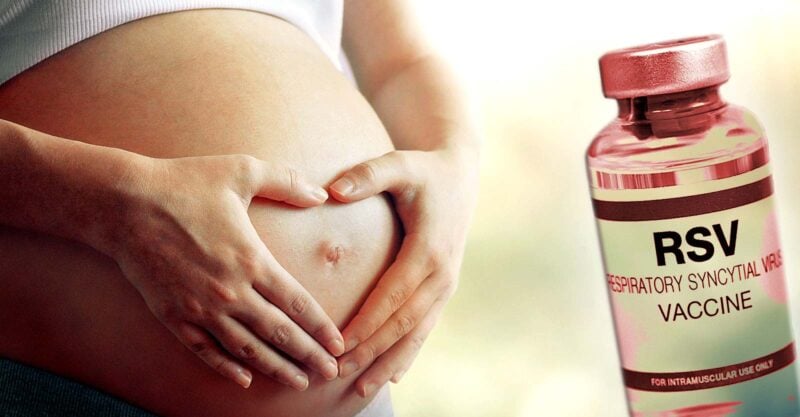


A peer-reviewed post-marketing analysis of Pfizer, GSK and Moderna’s RSV vaccines showed nearly 200 safety signals associated with the shots.
The study in the journal Human Vaccines & Immunotherapeutics analyzed nearly 28,000 adverse event reports associated with the vaccines in the Vaccine Adverse Event Reporting System (VAERS).
The authors identified signals in the data that might indicate links between the shots and adverse events. Using two statistical methods, called odds ratios and Bayesian data mining, they compared the adverse events reported for the RSV shots with those reported for all other shots.
“The findings are alarming,” according to Focal Points’ Nicolas Hulscher. He summarized the results associated with Pfizer’s Abrysvo and GSK’s Arexvy shots:
“Pfizer’s vaccine generated 103 positive safety signals, including fetal death, hemorrhage in pregnancy, and preterm birth, while GSK’s vaccine generated 91 signals, including paralysis, Guillain-Barré syndrome, and mini-strokes.
“Both carried strong signals for immune destruction (thrombocytopenia) and serious neurological damage — in some cases appearing over 200× more likely compared to other vaccines.”
Moderna’s mRNA mRESVIA shot generated too few reports in VAERS to conduct a meaningful analysis. It didn’t come on the market until June 2024, more than a year after the Pfizer and GSK shots.
The authors flagged many serious events, or what they called important medical event (IME) signals, associated with the Pfizer and GSK RSV shots.
These included inflammatory neurologic events such as Guillain-Barré syndrome, loss of consciousness, unresponsiveness to stimuli, ascending flaccid paralysis and facial paralysis. Both shots were also associated with immune thrombocytopenia, or low blood platelet counts.
GSK’s Arexvy shot was also linked to cardiac failure.
Other serious safety signals associated with GSK’s vaccine included mini-strokes, loss of reflexes, and an increase in cerebrospinal fluid (CSF) protein — a marker for neurological injury, Hulscher noted.
Pfizer’s Abrysvo vaccine is the only RSV shot approved for pregnant women. That shot had three IME signals related to pregnancy: hemorrhage in pregnancy, fetal death and fetal hypokinesia, or reduced movement.
Additional safety signals in Pfizer’s vaccine included premature delivery, preterm premature membrane rupture and the need for induced labor and cesarean sections, according to Hulscher.
“These aren’t just nuisance side effects,” he said, adding:
“Taken together, both the clinical trial evidence and real-world surveillance converge on the same conclusion: these vaccines carry disproportionate risks to mothers and infants that cannot be ignored.
“Regulators should pause RSV vaccination in seniors and pregnant women until these alarming safety signals are independently investigated.”
Post-marketing studies ‘critical to identify and assess potential safety risks’
Clinical trials are considered the “gold standard” for evaluating vaccine safety and efficacy, the study authors noted. However, the design, sample size and observation periods of those trials often cannot fully capture the adverse events that happen in real-world settings.
This makes post-marketing surveillance “critical to identify and assess potential safety risks,” they said, adding that safety signals do not necessarily indicate cause, but rather raise important questions that serve as the basis for further research.
The study authors found that, overall, there has been a growing number of adverse events associated with the RSV shots since their approval, which they said raises concerns and highlights the need for ongoing surveillance.
Most adverse events occurred within the first week of vaccination, and serious events often took longer to manifest than non-serious ones.
Older adults and women most commonly reported adverse events, and Pfizer’s vaccine had the most reports.
Dr. Peter Selley, a U.K. general practitioner who has closely followed RSV drug development, said the findings largely confirm the outcomes of other studies reported in The Defender. However, he said that immune thrombocytopenia is a new issue that hadn’t been previously identified.
French scientist Hélène Banoun, Ph.D., who has analyzed adverse events related to the RSV vaccine but was not involved with the study, also said the results confirmed previous reports.
This includes serious concerns about Pfizer’s vaccines in pregnant women that were evident in the Centers for Disease Control and Prevention’s (CDC) own data, she said. For example, that data showed a 75% increased risk of prematurity when Abrysvo was administered before the 34th week of pregnancy.
Selley said that although Moderna’s mRESVIA had not yet generated enough reports to merit analysis, it was noteworthy that one of those reports was a death and others included myocarditis. Myocarditis has been linked to other mRNA vaccines.
Selley also noted that trials for mRESVIA in babies were halted prematurely when vaccinated babies developed serious lung infections. Moderna went on to conduct trials of the drug in pregnant women.
Analysis reinforces safety concerns from clinical trials and early post-marketing studies
RSV vaccines have been generating serious safety issues since the 1960s, when early versions resulted in infant deaths.
In 2023, GSK’s Arexvy and Pfizer’s Abrysvo vaccines were approved by the FDA for adults ages 60 and up. In June 2024, U.S. health officials narrowed their recommendations for the shot to adults 75 and older, after assessing data documenting Guillain-Barré syndrome as a potential safety concern.
In 2022, GSK stopped the development of its RSV vaccine for pregnant women when it found a safety signal for preterm births among vaccinated women. In that study, for every 54 infants born to women who received the vaccine, one additional preterm birth occurred.
In August 2023, the FDA approved Pfizer’s Abrysvo for pregnant women, despite clinical trials showing elevated rates of preterm birth among vaccinated women. The company said the higher rates were not statistically significant.
In September 2023, the CDC recommended Abrysvo be administered to pregnant women during weeks 32-36 of their pregnancies to protect babies from RSV-associated lower respiratory tract disease after birth.
In 2024, an early post-marketing study showed a statistically significant safety signal for preterm birth associated with the shot.


This article was funded by critical thinkers like you.
The Defender is 100% reader-supported. No corporate sponsors. No paywalls. Our writers and editors rely on you to fund stories like this that mainstream media won’t write.
New Pfizer study ignores cardiac risk
The same week the Human Vaccines & Immunotherapeutics paper was published, highlighting safety concerns with RSV vaccines, a Pfizer-funded study by Danish researchers and Pfizer staff reported that its shot reduced hospitalizations in adults over 60.
The results were published in several top medical journals, including the New England Journal of Medicine and the Journal of the American Medical Association (JAMA).
Selley said Pfizer has been “proudly sharing” its RSV trial of Abrysvo in older adults:
“They claimed that Abrysvo prevented hospital admissions. None of them mentioned that when given to patients with pre-existing cardiovascular disease the all-cause death rate in the Abrysvoed patients was 74/14,377 compared with 47/14,285 in the unvaccinated — 56% more deaths.”
The data, included in the JAMA article’s supplemental materials, meant that patients with preexisting cardiovascular disease diagnoses were 56% more likely to die if they received Pfizer’s RSV vaccine than if they did not, Children’s Health Defense Senior Research Scientist Karl Jablonowski said.
“The onus is on the authors to justify why this, one of the strongest statistically significant signals of the entire study, does not rise to the level of noteworthy,” Jablonowski added.
Related articles in The Defender
- Pregnant Women Who Took Pfizer’s RSV Vaccine Were More Likely to Give Birth Prematurely
- New Study Links Pfizer RSV Vaccine for Pregnant Women to Preterm Births
- CDC Walks Back Recommendations for RSV Vaccines
- GSK and Pfizer RSV Vaccines for Pregnant Women Increased Risk of Preterm Births — GSK Ended Its Trials, but FDA Approved Pfizer Shot