Login
Login
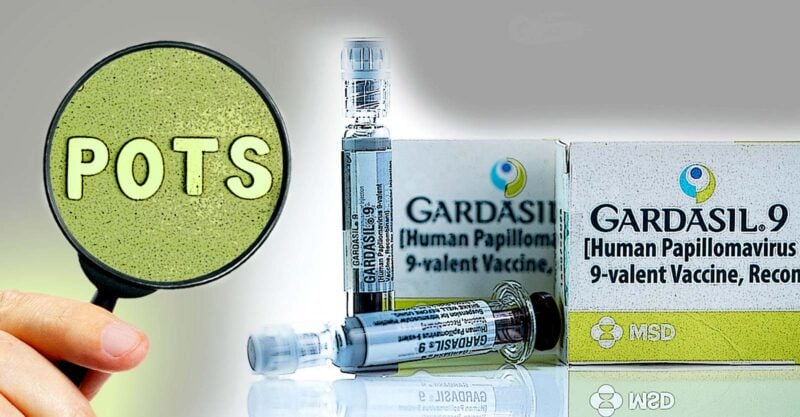


Merck rejected adverse event reports from a clinician working under one of the drugmaker’s own Gardasil trial investigators — and later dismissed the investigator’s analysis linking the HPV vaccine to rare autoimmune and autonomic conditions in some patients, according to a recently released expert report.
Dr. Jesper Mehlsen, a clinical physiologist and former director of research at Frederiksberg Hospital in Denmark, was the principal investigator in several Merck-sponsored clinical trials for Gardasil 4 and Gardasil 9.
He later led one of five regional clinics established by the Danish government in response to a surge in reports of injuries by people who received the human papillomavirus (HPV) vaccine.
Mehlsen identified autoimmune adverse events associated with the shots as early as December 2014. He tried to warn Merck — but said the company’s U.S. offices disregarded his concerns and refused to accept adverse event reports submitted by a researcher working under his supervision.
His findings are detailed in an expert report submitted as evidence in a lawsuit against Merck by Jennifer Robi, a California woman who alleged the Gardasil vaccine permanently disabled her.
Robi and hundreds of other plaintiffs recently settled with Merck on confidential terms. The expert reports submitted during the case are now public.


Denmark funded clinics to treat ‘dramatic increase’ in Gardasil-related injuries
Mehlsen’s report centers on the link between the Gardasil vaccine and postural orthostatic tachycardia syndrome (POTS), a disorder affecting the autonomic nervous system. Symptoms include dizziness, rapid heartbeat, fatigue, fainting and cognitive difficulties when standing.
The report presents evidence, including clinical cohorts, adverse event reports and autoimmune testing, that Mehlsen said supports a probable connection between Gardasil and the development of POTS and conditions resembling myalgic encephalomyelitis/chronic fatigue syndrome (ME/CFS) or long COVID in some recipients.
Mehlsen’s team first began noticing a pattern in 2011, when patients started presenting with similar complaints following HPV vaccination — palpitations, fatigue, blurred vision, cognitive impairment and chest discomfort. The frequency of complaints led the team to begin systematically collecting data: questionnaires, blood tests, autoimmunity tests, analyses of mitochondrial function and measurements of autonomic cardiovascular control.
The Danish government funded the work, bringing in leading biologists and immunologists from Denmark and Germany. Their published findings suggested a link and called for further research.
By 2015, the volume of reports was significant enough that the Danish government established five regional centers to assess and treat affected patients in response to what it described as a “dramatic increase in post-Gardasil vaccination injuries.”
Mehlsen led one of those centers, which received 845 patient referrals. By 2016, the Danish Medicines Agency had logged more than 2,300 adverse event reports from approximately 600,000 HPV-vaccinated women.
Their follow-up study on these cases, published in the Journal of Autoimmunity in 2022, concluded that the girls and young women in the group showed biological markers and symptoms consistent with an autoimmune disease likely linked to the vaccine.
How the HPV vaccine may trigger lasting harm
To explain how Gardasil might cause these reactions, Mehlsen points to the vaccine’s unusual potency.
Gardasil 4 and 9 work by triggering a strong immune response with synthetic particles that closely mimic the outer shell of the HPV virus — close enough to train the immune system to recognize and fight the real thing, but incapable of causing infection.
The vaccine contains an aluminum-based adjuvant to make the response even stronger.
Like all vaccines, Gardasil activates the immune system, producing temporary symptoms — fatigue, low-grade fever, headaches, muscle pain — as the body shifts into what Mehlsen calls a “cell danger response,” temporarily prioritizing defense over normal energy production. For most people, this resolves within a day or two.
In some people, however, it doesn’t. Mehlsen argues that in these cases, mitochondria — the cells’ energy powerhouse — remain locked in defense mode, generating inflammatory molecules instead of energy.
This reduces normal carbohydrate metabolism and drives inflammation in muscle and nerve tissue, contributing to pain, brain fog and heightened sensory sensitivity.
More critically, he argues, the immune system in these individuals begins producing abnormal levels of self-targeting antibodies — proteins that, instead of fighting the virus, interfere with the autonomic nervous system, which governs involuntary functions like heart rate, blood pressure and digestion.
In his team’s Danish cohort, 92% of patients reporting autoimmune side effects showed abnormal levels of these antibodies. Mehlsen said that similar patterns have since been found in other groups of patients who developed POTS after getting the vaccine. The patterns were detected across different laboratories and using different methods.
This disruption explains why some Gardasil recipients develop POTS along with other symptoms like digestive problems, brain fog and unusual sensory sensitivity, Mehlsen said.


This article was funded by critical thinkers like you.
The Defender is 100% reader-supported. No corporate sponsors. No paywalls. Our writers and editors rely on you to fund stories like this that mainstream media won’t write.
Regulators ignored the data
Mehlsen shared his findings with Merck, Sanofi and the Danish Health Authority.
Neither Merck nor the European Medicines Agency (EMA) properly investigated the link his team had identified.
Instead, in 2015, based on literature reviews and data from the drugmakers — and openly disregarding data provided by the World Health Organization Collaborating Centre for International Drug Monitoring in Uppsala, Sweden, and others — the EMA declared there was no link between Gardasil and serious autoimmune or neurological adverse events.
In his report, Mehlsen also highlights broader concerns about the evidence base for HPV vaccine safety. He references research by Dr. Peter Gøtzsche and others, and published criticism alleging that some HPV vaccine clinical trials used “active comparators” rather than inert saline placebos — a design choice that could mask vaccine-related adverse effects.
He also identified significant methodological problems in epidemiological studies that found no increase in POTS, ME/CFS or related conditions among vaccinated populations, arguing that registry-based studies are poorly suited to capture conditions that are difficult to diagnose and frequently miscoded.
“Based on my education, experience, research, investigation, analyses, a review of the literature, and the material identified in this report, it is my opinion to a reasonable degree of medical and scientific certainty that Gardasil has been the probable cause of POTS and an autoimmune condition resembling myalgic encephalomyelitis (ME/CFS) and Post-COVID-19 syndrome.”
Related articles in The Defender
- Woman Confined to Wheelchair Settles With Merck Over HPV Vaccine Lawsuit
- CDC Relied on Cherry-picked Data to Claim No Link Between Merck’s Gardasil Vaccine and POTS
- Merck Used Highly Potent Aluminum in Gardasil HPV Vaccine Trials Without Informing Participants
- ‘Indefensible’: Merck Designed Gardasil Trials to Mask HPV Vaccine Harms