Login
Login
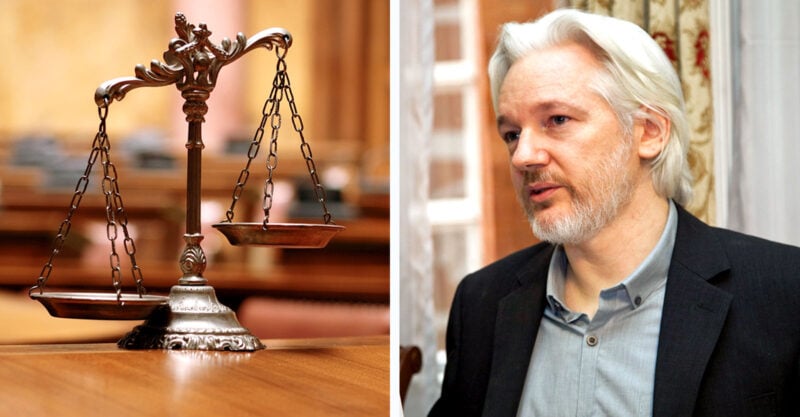


After twelve years of confinement, Julian Assange now stands on the verge of freedom after agreeing to a guilty plea in exchange for his release.
While this news offers cause for celebration, his persecution provides a solemn reminder of how the powerful will usurp our rights to advance their interests.
Western governments, led by the U.S. Security State, abrogated the pillars of our justice system to punish Assange for exposing their crimes. Even the guilty plea reflects their brazen censorship.
Assange will plead guilty to “conspiracy to disseminate national defense information.”
Without the dissemination of classified information, journalism would officially become nothing more than a mouthpiece for the American Intelligence Community.
Assange’s plea could just as readily describe Daniel Ellsberg and the Pentagon Papers, long hailed as a North Star of American journalism.
But while mainstream media increasingly dithers to the U.S. Security State (groups like The Washington Post repeatedly advocated for the jailing of the WikiLeaks publisher), Assange remained resolute in his pursuit of informational freedom.


And that is why his opponents overturned every standard of Western justice to punish him.
The freedoms enshrined in our First Amendment, including freedom of speech and of the press, became subordinate to neoconservatives’ insatiable thirst for war and unrelenting intolerance for dissent.
Due process of law withered away as Assange spent over a decade in confinement despite not being convicted of any crime other than a misdemeanor for skipping bail.
Attorney-client privilege was deemed inapplicable as the CIA spied on Assange’s communications with his lawyers.
As CIA Director Mike Pompeo plotted kidnapping and assassinating the WikiLeaks founder for publishing documents that exposed that the Intelligence Community used taxpayer funds to install bugs in Americans’ Samsung television sets to invade their privacy.
“Assange is not persecuted for his own crimes, but for the crimes of the powerful,” writes Nils Melzer, United Nations Special Rapporteur on torture and author of “The Trial of Julian Assange.”
In 2010, WikiLeaks released “Collateral Murder,” a 38-minute video of American soldiers killing a dozen Iraqi civilians and two Reuters journalists. The recording remains available online, showing two Apache helicopter pilots unleashing fire on the men below as if it were a videogame.
“Look at those dead bastards,” one killer says. “Nice,” his co-pilot responds.
There was no strategic basis for denying American citizens the right to view the video; the coverup was a public relations maneuver designed to evade blowback from the apparent war crimes.
But instead of demanding accountability from the American soldiers or commanders responsible for the killing, the U.S. Government launched a vast inter-agency effort to silence, imprison and potentially assassinate the publisher.
After “Collateral Murder,” Senator Joe Lieberman successfully pressured Amazon to remove WikiLeaks from its server and convinced companies including Visa, MasterCard and PayPal to deny financial services to the platform.
Assange then spent five years at Belmarsh Prison, known as “Britain’s Guantanamo Bay,” where he was held with terrorists and murderers. He stood accused under the Espionage Act, a 1917 law rarely invoked but rather deployed for true enemies of the state.


Now, Assange appears within days of freedom, but his decade-long confinement serves as a stark reminder that the words of The Bill of Rights or the Magna Carta are insufficient safeguards against tyranny. They are merely “parchment guarantees,” as the Framers described.
Justice Antonin Scalia once noted, “If you think a bill of rights is what sets us apart, you’re crazy. Every banana republic in the world has a bill of rights.”
Mere words, he added “do not prevent the centralization of power in one man or one party, thus enabling the guarantees to be ignored.”
In the case of Assange, we saw how the centralization of power in one pro-war party led to the deliberate eradication of those guarantees and the solitary confinement of a journalist for publishing information that the Pentagon found inconvenient for the public to discover.
In 2020, we witnessed the same process occur as a pro-lockdown hegemon took power and again used dominion over corporate interests to cudgel Americans into subservience.
Assange provides a Rorschach test for two sets of worldviews.
Should the powerful be able to indemnify themselves from legal and reputation recourse, or do citizens have a right to hold their officials accountable? Are our rights inalienable, or are they subject to the capricious whims of our leaders?
His case represents more than his right to publish information — it is a question of whether we have a right to the information necessary to expose the crimes and corruption of our leaders.
Some, like former Secretary of State Mike Pompeo and Vice President Mike Pence, remain unwavering in their support for the centralization of power.
What is the fallout from the Assange event? No one has or will apologize for his persecution much less for the war that he exposed, even if no one in public life today is willing to defend it.
This is a personal victory for Julian because he finally tastes freedom after 14 years of imprisonment. Is it a victory for free speech? It could just as easily be a clear statement about what happens to dissent.
Assange’s actions of years ago remain in a gray area. This is the whole idea. Fear fills the void.
Originally published by Brownstone Institute.