Login
Login
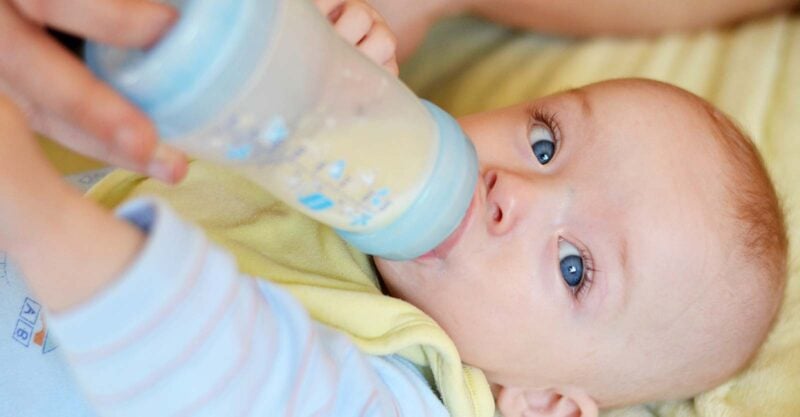


The issue of pesticide contamination hits close to home for parents concerned about potential exposure pathways through food and related products specifically consumed by infants, toddlers and children.
A new piece of legislation, House Bill 9788 (H.R.9788), introduced by Rep. Brian Mast (R-Fla.), would mandate the U.S. Department of Health and Human Services (HHS) to abide by new binding enforcement mechanisms and charge them to set “maximum permissible levels” for a broad array of contaminants now found in baby formula, including metals, per- and polyfluoroalkyl substances (PFAS), microplastics, synthetic pesticides, phthalates and cyanotoxins.
There is a preponderance of scientific evidence not only on the adverse health effects of pesticides on babies and children pre- and post-birth, but also specific evidence of infant formula contamination.
Bill breakdown
H.R.9788 builds on the federal Food, Drugs, and Cosmetics Act (FDCA), specifically on Section 412(a)’s adulteration criteria: formula exceeding a contaminant limit set under new subsection (n) is considered adulterated.
This adulteration status triggers the full weight of FDCA enforcement mechanisms (Section 301 prohibited acts, seizure, injunction, import refusal under Section 801, criminal exposure) without the U.S. Food and Drug Administration (FDA) needing to prove harm on a product-by-product, case-by-case basis.
The bill converts what has historically lived in non-binding, action-level guidance into binding law.
The standard-setting formula is modeled on the Safe Drinking Water Act (SDWA)’s MCL (maximum contaminant levels) provision (42 U.S.C. Section 300g-1(b)(4)). While the MCL structure is applied, the bill does not set MCL goals; that is a feature of SDWA. MCL goals are defined, separately promulgated, and set at a health-based benchmark of zero for non-threshold carcinogens.
FDA would have to set up an MCL goals-setting step through regulation, which could open the door to weakening this bill. In doing so, three core factors must be considered:
- (A) the cumulative health impacts of low-level exposure of the contaminant on infant neurodevelopment;
- (B) the prevalence of the contaminant in agricultural soil and manufacturing source-water; and
- (C) the bioaccumulative nature of the contaminant in the human body.
This legislation is unprecedented in explicitly addressing “synthetic pesticides” by naming pesticides as a regulable contaminant in finished infant formula, layered on top of EPA tolerance-setting under Section 408.
This is critical for addressing the true aggregate and cumulative exposure built into the evaluation of allowed substances under organic law. Cumulative low-level neurodevelopmental impacts and bioaccumulation are critical to a complete health effect review, as is aggregate exposure assessed across the total diet, endocrine disruption, and as a gesture to “cumulative” mixture effects.
However, contaminants are defined as substances that are “man-made or introduced into the environment via human activity,” including heavy metals, PFAS, phthalates, microplastics, synthetic pesticides, and biological toxins including harmful algal bloom-associated cyanotoxins.
The legislation directs the HHS secretary to set limits for both natural and anthropogenic contaminants, which in turn would trigger the designation of “adulteration” and lead to additional actions and interventions with the manufacturer(s) responsible.
In terms of testing regime, as is the case with pesticide safety reviews, the legislation relies on manufacturer self-testing, with details regarding frequency, methodology, lab accreditation, and batch-level requirements subject to rulemaking.
In terms of transparency of data/results, record requirements must be requested by the HHS secretary, with limited public visibility via an aggregated annual report to Congress. In other words, there is no product-level consumer disclosure mandate in this current version of the bill.
Additionally, there is an 180-day deadline for final regulations, which would expedite what would otherwise be a multi-year-long regulatory review process, for example, for the establishment of lead action levels in baby food products.
Other pieces of legislation have been introduced this year that address toxic exposure through baby formula products; however, Mast’s is the only one that addresses pesticide exposure along with other contaminants.
Included are bills introduced by Rep. Rosa DeLauro (H.R.7867), Sen. Gary Peters (Senate Bill 272), and Rep. Tom Barrett (H.R.9949). DeLauro’s bill, co-sponsored by a bipartisan group of 38 representatives, only addresses pathogens and microorganisms, and Peters’ bill only addresses biological contamination, not chemical residues.
Barrett’s bill is similar to Mast’s bill in terms of setting binding action levels that HHS must set for contaminants of concern; however, the focus is narrowly focused on four heavy metals (arsenic, cadmium, mercury and lead).


Previous coverage
Congress is clearly behind the curve on childhood exposure to contaminants during a critical window of vulnerability and is only starting to catch up with the independent, peer-reviewed scientific literature.
An analysis of scientific literature on pesticide contamination of infant formula reveals a public health issue of food safety for young children with potential lifelong impacts, as published in Environmental Toxicology and Pharmacology.
Through a systematic review of research from 1975 to 2025, the authors, from the Department of Public Health and Infectious Diseases at the Sapienza University of Rome (Italy), find residues of pesticides that are linked to deleterious health impacts from infant formula, including insecticides such as organochlorines, organophosphates, pyrethroids, and neonicotinoids, and many herbicides.
As the researchers find, the results highlight that:
“The contamination of infant formula does not concern a single class of substances but manifests itself as a heterogeneous and simultaneous set of risks: pesticide residues, heavy metals, persistent environmental contaminants, mycotoxins and compounds released from packaging materials can coexist within the same product.”
This co-presence of contaminants of different origins confirms that the problem cannot be traced back to a single critical point, but reflects a complex supply chain context, in which each stage — from raw material production to industrial processes, storage and packaging — can contribute to the infant’s final exposure. (See Daily News here.)
In 2023, nine pesticides were found in nearly 40% of nonorganic conventional baby foods tested, according to a study conducted by the Environmental Working Group. The study found no residues of the pesticides studied in a sample of certified organic baby food.
While the study finds no traces of the highly neurotoxic insecticide chlorpyrifos, associated with brain damage in children, the chemical has been allowed back on the agricultural market after being removed in 2021 — raising an alarm for parents who purchase baby food with ingredients grown in chemical-intensive (“conventional”) agriculture. (See Daily News here.)
Recently published in Reproductive Toxicology, researchers in Denmark and Iceland investigate the impacts of pesticides on sex hormones, finding that “prenatal exposure to [the insecticide] chlorpyrifos and [weedkiller] 2,4-D may affect the reproductive hormones in girls, but not boys, during mini-puberty, which may have long-term implications.”
Based on their analysis of urinary maternal concentrations of the pesticides and their metabolites and hormone levels in infants, the authors report, “This study examined the association between maternal pesticide exposure and pituitary, gonadal, and adrenal hormones in offspring during infancy.”
The sex-specific findings highlight a public health concern with potentially long-lasting transgenerational effects. (See Daily News here.)
There is little dispute that modern industrial culture has produced a constellation of related chronic conditions contributing powerfully to human disease.
In recent decades, attention has begun to focus on the developmental origins of health and disease — prenatal exposures to pesticides, for example, that contribute to diseases in adulthood, such as cardiovascular and metabolic problems, along with the combination, known as cardiometabolic syndrome.
Cardiometabolic disorders include obesity, hypertension, cholesterol imbalances and insulin resistance. The usual suspects blamed for the syndrome are poor diet, physical inactivity, and genetic predisposition.
These are all well-established risk factors, but they fail to fully account for the sharp rise in cardiometabolic syndrome globally. Obesity prevalence has doubled, and diabetes quadrupled over the last 40 years, according to the Non-Communicable Diseases Risk Factor Collaboration.
In a study on early life exposure to a pesticide mixture, researchers analyzed sex differences in cardiometabolic outcomes from prenatal and early life.
The study was conducted by an international team of scientists led by Dr. Ana M. Mora, of the Center for Environmental Research and Community Health at the University of California, Berkeley, using data from the Center for the Health Assessment of Mothers and Children of Salinas cohort — a long-term project covering more than 20 years and 300,000 biological samples of Latino mothers and children in an agricultural community. (See Daily News here.)
In related research, a study in Environmental Science & Technology shows that maternal exposure to organophosphate (OP) and pyrethroid insecticides adversely affects newborn health, suggesting that additional exposure through infant formula exacerbates a preexisting condition.
Through amino acid and acylcarnitine metabolomics (the study of small-molecule metabolites in cells, tissue, and body fluids) with over 400 mother-infant pairs, this research analyzes metabolic pathways linking pesticide exposure to negative birth outcomes.
“To our knowledge, this study is the first to reveal the effect of OP and pyrethroid insecticide exposure on neonatal metabolic signatures, which may elucidate a key role of metabolites in insecticide exposure and birth outcomes,” the authors state.
In collecting maternal urine samples in the first and third trimesters, as well as neonatal blood samples after birth, OP and pyrethroid metabolites and metabolomic biomarkers are assessed.
Notably, the authors report:
“Results indicated that third-trimester maternal urinary levels of 3- phenoxybenzoic acid (3-PBA) and diethyl dithiophosphate (DEDTP) were negatively associated with birth weight. Specifically, a one-unit increase in their ln–transformed [natural logarithm form] concentrations was associated with a 1.508% decrease in birth weight for 3-PBA and a 1.366% decrease for DEDTP.”
Additionally, the analyses show that OP and pyrethroid exposure is associated with “disrupted neonatal amino acids and acylcarnitine profiles, with patterns varying by trimesters and sexes.”
As a novel study, this research reveals a link between neonatal metabolomics and OP/pyrethroid exposure to developmental toxicity not previously seen, which, as the authors explain, suggests “that disruptions in acylcarnitine-mediated energy metabolism may contribute to adverse birth outcomes.” (See Daily News here.)
Originally published by Beyond Pesticides.